Skip to content
You can now search across every topic, entity and event.What's new
Iran Conflict 2026
7JUL

IRGC missiles hit a Qatari gas tanker

2 min read
09:35UTC

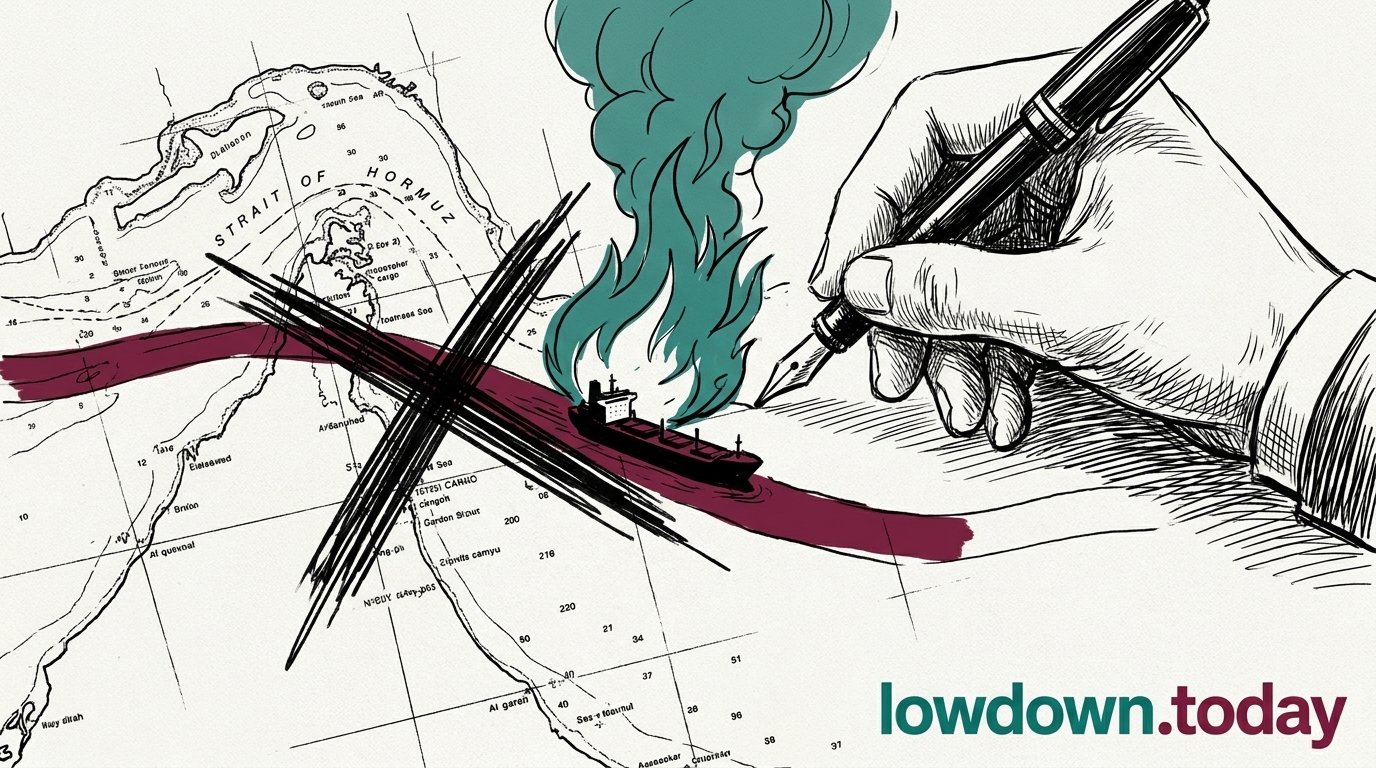
The IRGC fired at least two missiles into Gulf shipping overnight, setting the Qatari LNG carrier Al Rekayyat ablaze off Oman and striking a second tanker; all crew are reported safe.

ConflictDeveloping
Key takeaway

Iran enforced with missiles the shipping corridor it had only argued over for six weeks.

The Islamic Revolutionary Guard Corps (IRGC), Iran's ideological military force, fired at least two missiles at commercial shipping in the Strait of Hormuz overnight into 7 July. One hit the Qatari liquefied natural gas carrier Al Rekayyat on the port side about eight nautical miles east of Limah, Oman; the vessel, operated by the Qatar Gas Transport Company (Nakilat), caught fire, though all crew are reported safe and no spill has been recorded 1. UK Maritime Trade Operations (UKMTO), the Royal Navy body that logs Gulf incidents, reported a second, unnamed tanker struck in the same window.

For six weeks the corps had answered the Hormuz corridor dispute with statements and boarded no one. It struck the container ship Ever Lovely inside the maritime safe-passage corridor on 25 June , then suspended that corridor outright , and disputed Oman's fee proposal without boarding a single ship . Traffic had returned to pre-war levels only days earlier . Overnight the grievance became live fire.

Rear Admiral Ali Azmaei surfaced as IRGC Navy commander last week without a published decree , and Iran's central command is consumed by the funeral of former Supreme Leader Ali Khamenei. That timing muddies any clean reading of who ordered the strike: a single attack mid-funeral could be a newly installed commander flexing locally as much as a Tehran-level decision. Against that, the escalation sits on the exact corridor the corps has contested for six weeks, not a random target, which points the other way. No Iranian official has yet claimed or disowned the attack.

Deep Analysis

In plain English

Iran's naval force, the IRGC, fired missiles at two commercial ships passing through the Strait of Hormuz, a narrow sea lane between Iran and Oman that carries about a fifth of the world's oil and gas by tanker. One of the ships, a gas carrier called Al Rekayyat, caught fire but nobody died. What makes this confusing is that nobody in Iran's government has officially said 'we did this and here is why'. State media gave a reason, but that is not the same as Iran's leadership formally claiming the attack. Iran is also mid-funeral for its recently killed supreme leader, so normal chains of command are stretched thin, which is one reason it is hard to tell whether this was ordered from the top or decided locally.

Deep Analysis
Root Causes

Iran's naval command over Hormuz runs through two separate chains, the regular Islamic Republic of Iran Navy and the IRGC Navy, which report through different ministries and have clashed publicly over corridor policy since the Oman-IMO lane opened in June.

Rear Admiral Ali Azmaei took over the IRGC Navy last week by informal announcement rather than published decree, at the exact moment Iran's senior civilian and clerical leadership is occupied with Khamenei's funeral. A command vacuum at the top makes it structurally harder to establish, tonight, whether a mid-level Navy decision or a Tehran order pulled the trigger.

What could happen next?
  • Risk

    If Tehran claims the strike as policy, insurers are likely to reimpose blanket Hormuz exclusions rather than vessel-specific risk pricing.

  • Precedent

    A confirmed hit on an LNG carrier, rather than a crude tanker, would be the first extension of the corridor dispute to gas shipping.

First Reported In

Update #148 · Iran shoots the Hormuz route it rejected

The National· 7 Jul 2026
Read original
Causes and effects
This Event
IRGC missiles hit a Qatari gas tanker
The first missile strike on the Hormuz corridor Iran had spent six weeks contesting only on paper.
Different Perspectives
India
India
New Delhi has a national unaccounted for among GFS Galaxy's eleven-strong Indian crew, turning a standoff over transit rights into a consular emergency for a state with no seat at either table.
Oman
Oman
Muscat's 9 July arrangement to jointly manage Hormuz traffic with Iran, outside the frozen US channel, is overridden within days by Tehran's own unilateral closure and strike on GFS Galaxy.
Qatar
Qatar
Doha keeps mediating from an exposed position: Al Udeid hosts the CENTCOM strikes it is trying to broker a stand-down around, a week after a Qatari carrier was itself hit in the strait.
United States / CENTCOM
CENTCOM flew a third strike wave in a week, roughly 140 targets, killed Lieutenant Dehghani at Jask, and insists the strait remains open. It signed no instrument making that claim enforceable against Iran's closure.
Iran / IRGC
Iran / IRGC
Tehran struck GFS Galaxy and declared Hormuz closed, reasserting IRGC toll authority after its Oman-brokered management track failed to bind Washington to anything. The strike restores unilateral control after days of a negotiated alternative gaining ground.
Russia
Russia
Grossi's non-confirmation came from Kaliningrad, hours after Rosatom, the state agency that built and fuels Bushehr, hosted his talks. A refusal delivered from inside Russia's own nuclear orbit carries weight a Western capital could not manufacture, though Moscow itself made no statement on Iran's strike claim.