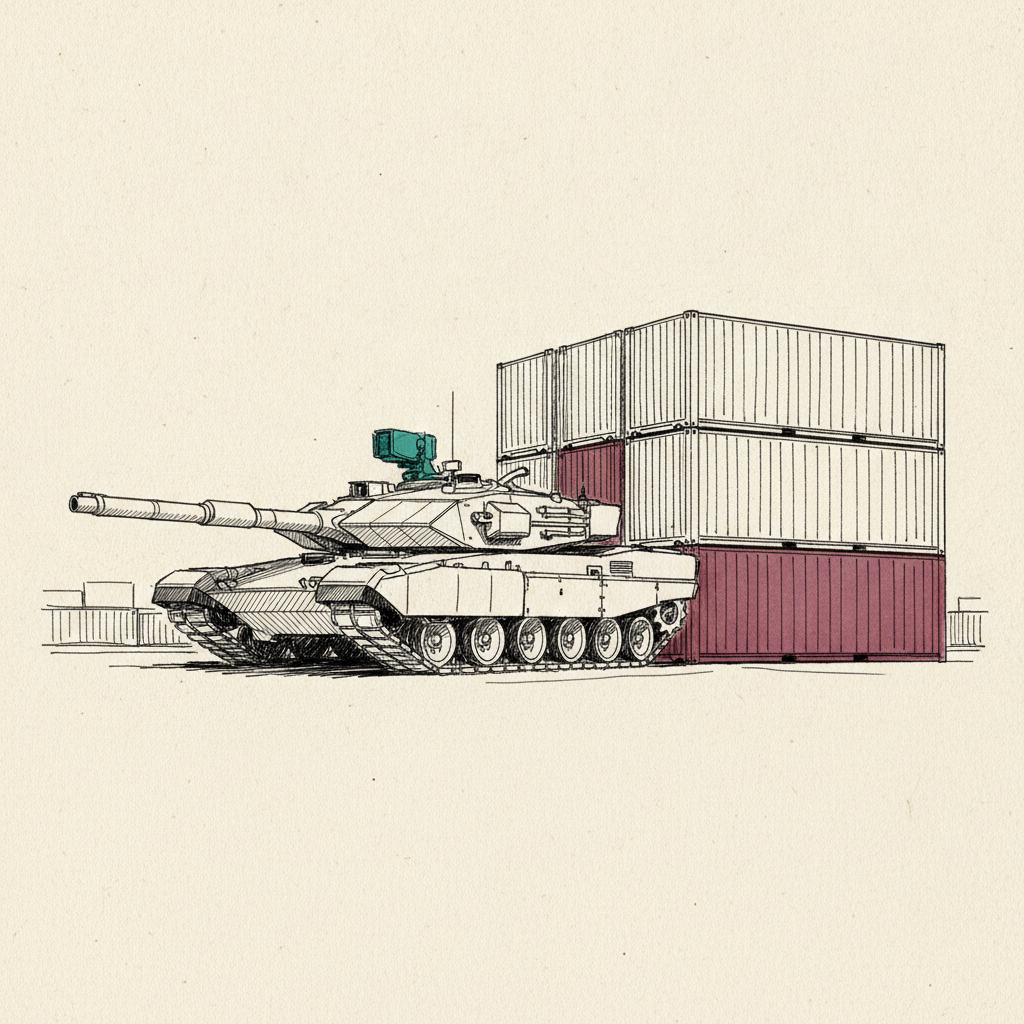
K2
South Korea's main battle tank, approved for a counter-drone equipment upgrade.
On 11 August, South Korea approved a 3.448 trillion won K2 upgrade programme that will ADD jammers against drones and roadside bombs from 2028 to 2046.
Last refreshed: 1 October 2026 · Appears in 1 active topic
Will jammers specified in 2026 still stop drones on K2 tanks in 2046?
Timeline for K2
Mentioned in: DAPA approves VTOL drone for Korean army
Drones: Industry & DefenceSeoul buys jammers with its new tanks
Drones: Industry & DefenceBackground
K2 is South Korea's main battle tank. Its current relevance lies in how an established armoured platform is being adapted to threats from small drones and roadside bombs. On 11 August, the Defence Acquisition Program Administration approved a programme to ADD jammers as part of a wider fleet upgrade.
The tank remains a core land-warfare product rather than a drone system. Its planned upgrade places electronic protection within the vehicle's long-term equipment cycle, with work scheduled from 2028 to 2046.
That schedule matters because counter-drone equipment changes faster than most armoured-vehicle subsystems. K2's lasting significance is therefore its role as a test of whether a conventional tank can retain protection through a lengthy modernisation programme.
Why is South Korea putting drone jammers on its tanks?
How much does South Korea's K2 tank upgrade cost?
What is in South Korea's K2 tank upgrade?






