Red Sea
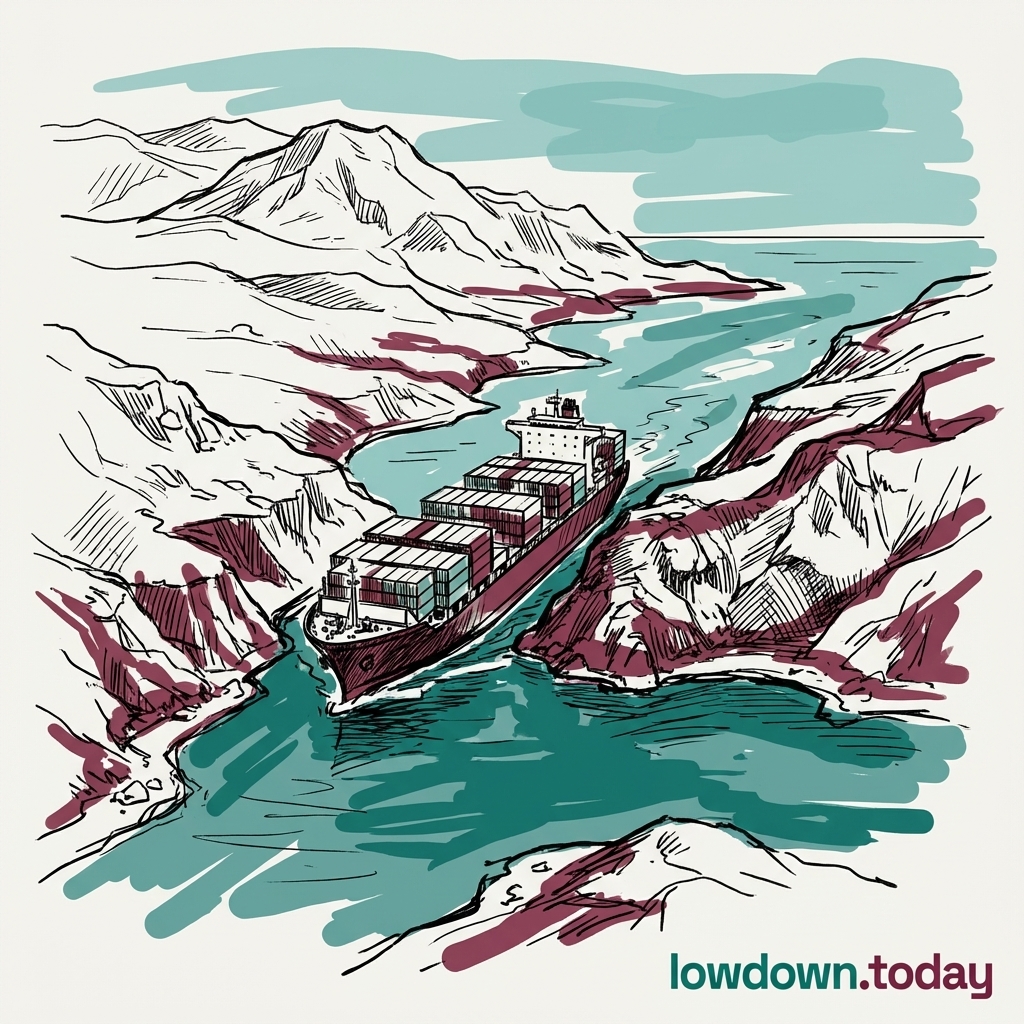
Strategic shipping lane between Africa and Arabia; Bab al-Mandeb is a critical world-trade chokepoint.
The Red Sea, carrying about 12% of world trade through Bab al-Mandeb and Suez, lost all Saudi crude loadings on its own shores after a Houthi blockade declared on 20 July 2026 forced traffic onto the Cape route.
Last refreshed: 20 August 2026 · Appears in 1 active topic
With both Hormuz and Bab al-Mandeb under hostile authority at once, where can Israeli-linked shipping safely go?
Timeline for Red Sea
Mentioned in: IMO logs three new merchant casualties
Iran Conflict 2026Mentioned in: Six men board a tanker off Mukalla
Iran Conflict 2026Mentioned in: DP World builds around the strait
Iran Conflict 2026Mentioned in: Detour route writes off a cargo ship
Iran Conflict 2026Mentioned in: Gulf ports plan for a shut strait
Iran Conflict 2026Background
The Red Sea runs roughly 2,250km between the Gulf of Aden and the Suez Canal, bordered by Saudi Arabia, Egypt, Yemen, Sudan, Eritrea and Djibouti. Its strategic weight rests on two chokepoints, the Suez Canal in the north and the Bab al-Mandeb narrows in the south, through which about 12% of world trade passes.
The sea has long served as a structural hedge against trouble at the region's other chokepoint, the Strait of Hormuz: Saudi Arabia's East-West Petroline carries crude from the Eastern Province to Yanbu on the Red Sea specifically to bypass Hormuz, a route restored to full capacity in April 2026 . China's only overseas military base sits at Djibouti near the sea's southern entrance, and the US Navy has run maritime security missions here since 2023 without a template for defending both Middle Eastern chokepoints at once.
Egypt and Djibouti depend on Suez Canal and port revenues that collapse whenever traffic diverts around the Cape of Good Hope, a detour adding ten to fourteen days to Asia-Europe voyages. The event record includes and .
Its own trade route stopped moving
Saudi crude loadings through Bab al-Mandeb had already fallen 36% in the two weeks before the Houthis formally blockaded the strait on 23 July, and none has loaded through the sea since . Suez Canal traffic jumped 106% in a week as tankers rerouted north instead, since the Red Sea offers only two exits and a single blockade forces a total switch rather than a gradual shift.
By 30 July daily tanker transits through Bab el-Mandeb had thinned to 7.5 a day, and Saudi Red Sea diesel loadings had collapsed alongside the crude trade. The sea's usual role as a Hormuz-bypass route, via the Yanbu pipeline terminus, briefly closed off both of the kingdom's export options at once.
A blockade shuts its southern gate
On 20 July the Houthis declared Bab al-Mandeb closed to Saudi-flagged shipping using open radio warnings alone; six vessels, including the Chinese tanker Xin Long Yang, changed course within 48 hours without a shot fired. Three days later, Saudi crude loadings through the strait had fallen sharply over the prior two weeks, pushing exporters onto the slower Cape of Good Hope route.
Saudi Arabia answered on 30 July by founding a 43-nation maritime Coalition covering the Red Sea, Bab al-Mandeb and the Gulf of Aden as a single security zone, its first meeting held in Riyadh. Thirteen states signed on as founders, though Oman and the UAE stayed out and the bloc carries no US seat, leaving the sea's southern gate patrolled by a Coalition still short of the region's two largest navies.
A blockade shuts its southern gate
Yemen's Houthi forces barred all Israeli-linked shipping from the Red Sea on 8 June 2026, firing rockets at Jaffa in their first strike on Israeli territory since April. The move closed off the sea's role as a Hormuz workaround: vessels that had been rerouting through the Red Sea to dodge the Gulf blockade found both peninsulas shut at once.
By 20 July the blockade had widened to Saudi-flagged shipping. The Houthis declared Bab al-Mandeb closed to Saudi vessels using open radio warnings alone, and six ships changed course within 48 hours without a shot fired, a sign that a radio warning now diverts tankers as effectively as gunfire once did.
Reference
What is Bab al-Mandeb and why does it matter?
How much of world trade passes through the Red Sea?
Why are Houthis attacking ships in the Red Sea?
What's the difference between the Red Sea and the Suez Canal?
What is the Bab al-Mandeb chokepoint?
Has a ship been destroyed on the Red Sea diversion route around Hormuz?
What happens to global shipping if both the Red Sea and Strait of Hormuz are closed?
Why did the Houthis ban Israeli ships from the Red Sea in June 2026?
Why is the Red Sea dangerous for shipping right now?
What happens to oil prices if the Red Sea closes?
Are ships going around Africa instead of through the Red Sea?

