Skip to content
You can now search across every topic, entity and event.What's new
European Oil Markets
23JUL

Brent clears $100 first time since May

2 min read
19:27UTC

Brent settled near $101 on 23 July, its first close above $100 since May, yet southern Red Sea war-risk premiums at 0.75% of hull value still sit far below the 5% Hormuz band.

EconomicDeveloping
Key takeaway

War-risk cover reprices on losses, so watch the next re-mark after the Encelia and Layla strikes.

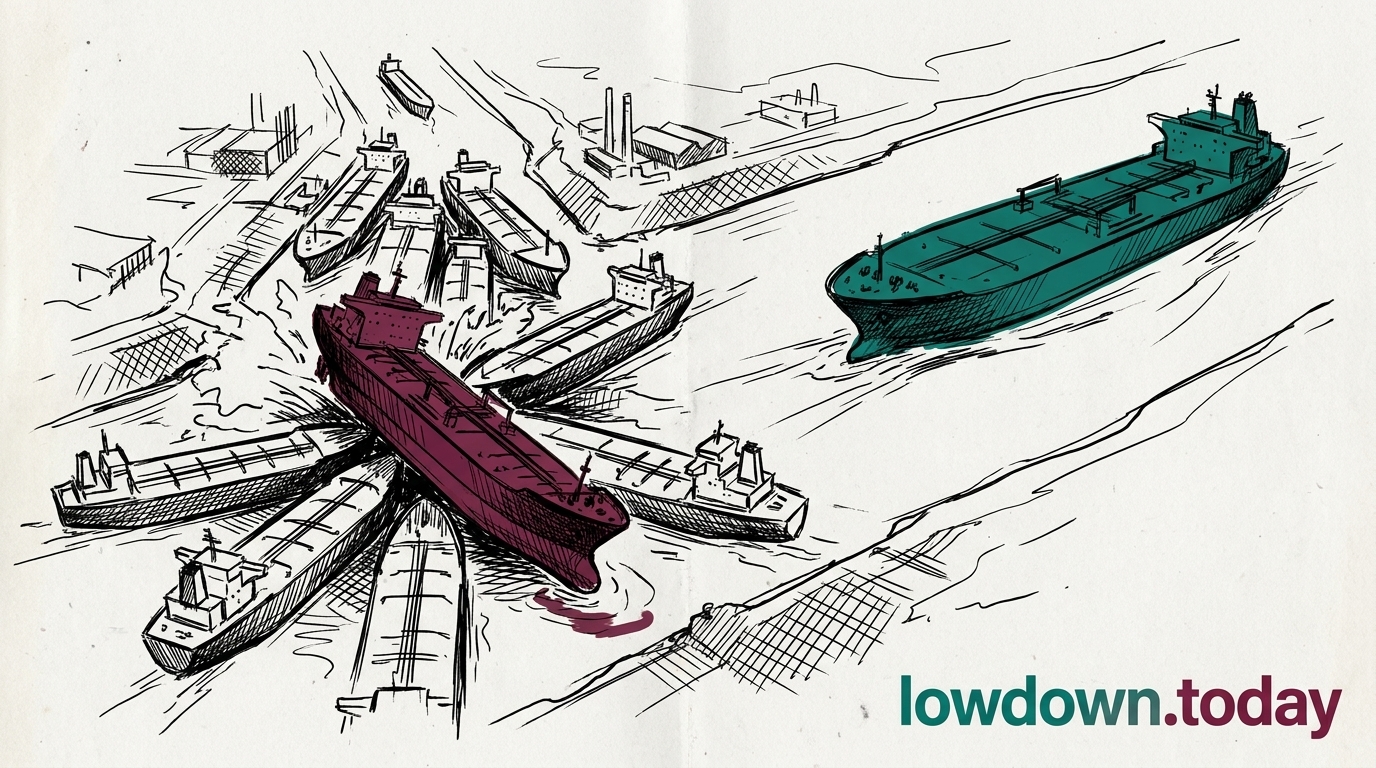
Brent crude traded through $100 a barrel for the first time since 26 May, settling near $101 on 23 July after an 8% single-session jump, with WTI around $92 to $93 1. Brent is the international seaborne benchmark; WTI, its US counterpart, is delivered inland at Cushing, Oklahoma, and carries less chokepoint exposure. The move was a fifth consecutive up-day and left Brent roughly 38% higher month-to-date. Red Sea war-risk cover tells a cooler story. Hull premiums for southern Red Sea transits rose 150% to about 0.75% of hull value after the 20 July blockade, still a fraction of the roughly 5% band underwriters now charge for Strait of Hormuz transits 2.

Underwriters reset on evidence of loss, not on a blockade declaration. As of 19 July no merchant ship had been hit in the southern Red Sea, so the premium sat low. The 23 July strikes on the Encelia and Layla are the first realised losses in the basin, and the next re-mark will show whether Bab el-Mandeb closes toward the Hormuz number or holds well below it.

The gap between a $101 flat price and a 0.75% war-risk loading matters for anyone pricing a Med-delivered cargo. The freight and insurance legs carry the physical chokepoint story; the flat price carries the headline. When the two diverge this far, the delivered-cost read sits with the underwriters, not with the screen.


Deep Analysis

In plain English

Brent crude is the main international price benchmark for oil; when people say 'the oil price', they usually mean Brent. It settled near $101 a barrel on 23 July, the first time it has closed above $100 since 26 May. War-risk insurance is a separate cost shipowners pay to cover their vessel against attack in a dangerous area, priced as a percentage of the ship's value. The Red Sea premium jumped 150% but is still far below the roughly 5% charged for the Strait of Hormuz, because insurers only raise prices once they have seen actual attacks in a given area rather than warnings alone. That gap matters because it shows the oil price reacting faster to overall danger than the insurance market is reacting to the Red Sea specifically. Insurance costs will likely keep climbing if strikes on Saudi-linked tankers continue.

Deep Analysis
Root Causes

War-risk hull premiums are set by a small syndicate market centred in London and Scandinavia that prices on realised loss history within a defined geographic box, not on political risk assessments. The Red Sea box has recorded fewer confirmed hull losses than the Hormuz box accumulated over the preceding weeks of strikes, which is the direct mechanical reason its premium still sits at roughly a seventh of the Hormuz level.

Brent's move through $100 draws on both boxes simultaneously: the futures market prices aggregate supply risk across the whole Gulf-Red Sea theatre, while hull insurance prices each chokepoint separately, so the benchmark can outrun the insurance market's slower, evidence-based repricing.

What could happen next?
  • Precedent

    If Red Sea war-risk premiums converge toward the Hormuz band, insurance costs alone could add several dollars a barrel to Mediterranean-bound cargoes independent of any further crude price move.

First Reported In

Update #19 · Second chokepoint doubles Med freight

TradingEconomics· 23 Jul 2026
Read original
Different Perspectives
US money managers (CFTC-tracked)
US money managers had trimmed WTI net long positioning into July's rally, doubting the Hormuz premium would hold without freight or war-risk confirmation, and the crude stock build reported for the week to 17 July gives that scepticism a fundamentals basis. The 25 July CFTC data will show whether Brent's move above $100 changed their calculus.
Asian distillate buyers (Singapore)
Singapore's distillate holders kept retaining middle-distillate barrels as the East-West arbitrage window narrowed further this week, a pattern that sharpened as Fujairah light distillates hit a record low. Cargoes are being held rather than released west into the tightening Mediterranean market.
Bulgaria
Bulgaria
Bulgaria secured the removal of Lukoil founder Vagit Alekperov and Patriarch Kirill from the 21st package, with President Rumen Radev calling a personal listing 'shooting ourselves in the foot'. Sofia is protecting its position in Lukoil's EUR 3bn compensation claim over the 2023 Neftohim Burgas nationalisation.
Russia
Russia
Russia loses the roughly $14 a barrel of legal headroom the price-cap formula would have released toward $58, even as Urals continues trading below Moscow's $59 budget floor. The shadow-fleet insurance workaround that lets sanctioned crude clear above $44 in practice remains untouched by the freeze itself.
European Union
European Union
The EU adopted its 21st sanctions package on 23 July, freezing the $44 Russia oil cap for 12 months rather than letting the formula drift it toward $58, and listed shadow-fleet support vessels for the first time. The package cleared only after three failed Coreper votes.
Marine war-risk underwriters (Lloyd's-linked syndicates)
War-risk syndicates lifted southern Red Sea hull premiums 150% to about 0.75% of hull value after the 20 July blockade declaration, still a seventh of the roughly 5% Hormuz band. Underwriters reset on realised loss, not declared threat, so the 23 July Encelia and Layla strikes set up the next re-mark.