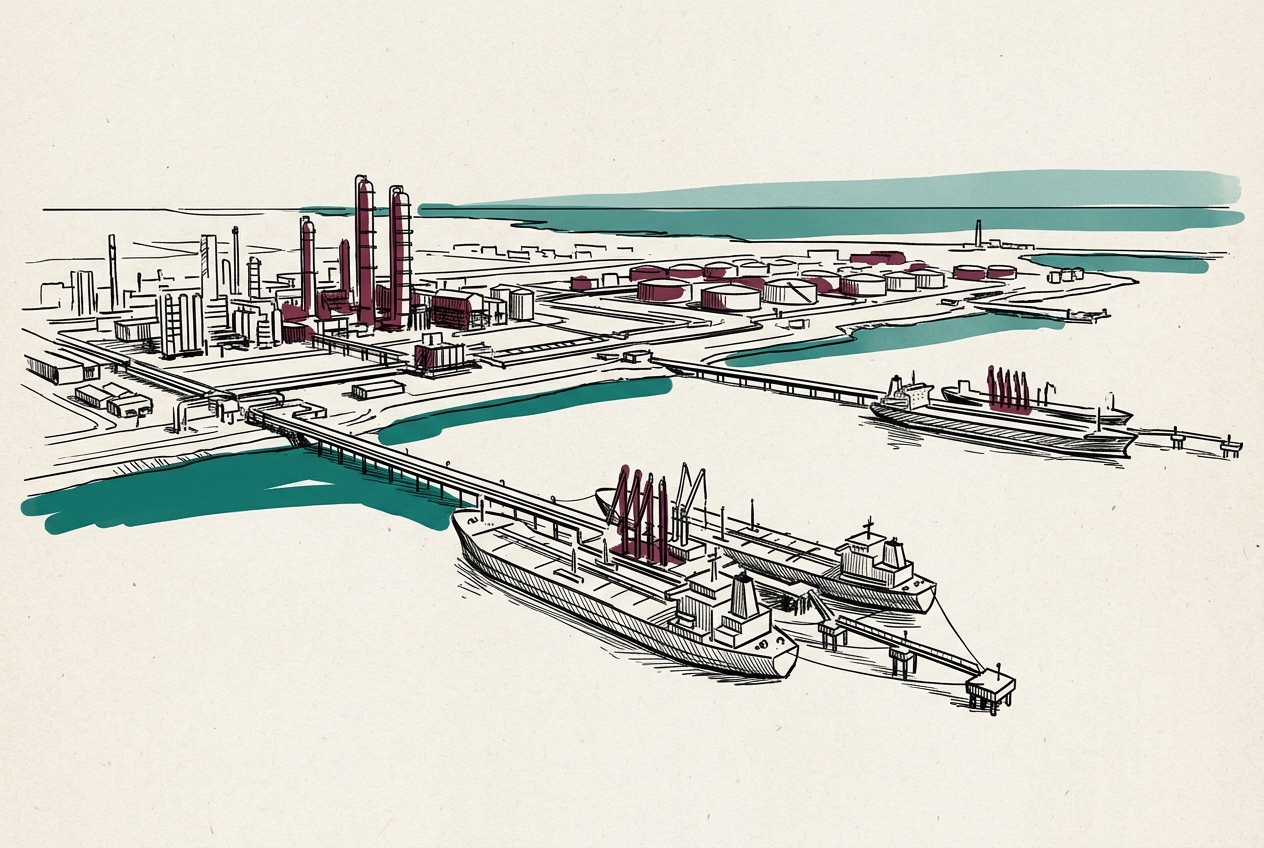
Ras Tanura
The world's largest offshore oil loading terminal, operated by Saudi Aramco in Saudi Arabia.
On 2 March, an Iranian strike shut Ras Tanura's Saudi Aramco refinery, exposing a key Gulf oil export hub to direct attack.
Last refreshed: 22 September 2026 · Appears in 1 active topic
Can Ras Tanura be repaired fast enough to prevent a global oil supply crisis?
Timeline for Ras Tanura
Anchored the benchmark voyage that set the record rate
Iran Conflict 2026: Supertanker hire passes $1.2m a dayLoaded 6.5 million barrels a day while the pipeline was out
Iran Conflict 2026: Aramco restarts Petroline but not fullyAramco cuts Europe off for October
Iran Conflict 2026Mentioned in: DP World builds around the strait
Iran Conflict 2026Mentioned in: Yanbu funnels nine-tenths of Saudi crude
European Oil MarketsBackground
Ras Tanura is an oil-loading terminal and refinery complex on Saudi Arabia's Gulf coast in the Eastern Province. Saudi Aramco operates it. Its Marine facilities connect Saudi crude supplies to seaborne buyers, making the site an important part of The Kingdom's export system.
The complex belongs to the Eastern Province hydrocarbon corridor, alongside processing, storage and transport infrastructure that moves oil from production fields towards global markets. Its importance rests on that connection between inland supply and Marine loading capacity.
The strike of 2 March 2026 showed that Ras Tanura is not only commercial infrastructure but a potential target in a regional conflict. The wider fall in Hormuz vessel traffic reported on 3 March underlined how terminal capacity and safe shipping routes depend on each other.
Ras Tanura faces direct attack
On 2 March, an Iranian strike shut Saudi Aramco's refinery at Ras Tanura during The Gulf conflict. The attack put a major oil-loading complex at the centre of a campaign against regional energy infrastructure.
By 15 March, Saudi Arabia had intercepted more than 60 drones in one day targeting Ghawar and the Abqaiq complex. For Ras Tanura, that wider pressure matters because the terminal sits within The Kingdom's concentrated eastern oil system, where disruption at one site can narrow export and refining options.
What is Ras Tanura?
Was Ras Tanura attacked in 2026?
How much oil does Ras Tanura export?
What is the difference between Ras Tanura and Ras Laffan?
Did Iran threaten to attack Ras Tanura?
Is Ras Tanura the same as Yanbu?




Written with AI from Lowdown's published reporting. Not individually reviewed by an editor. Updated 22 September 2026. Editorial standards.