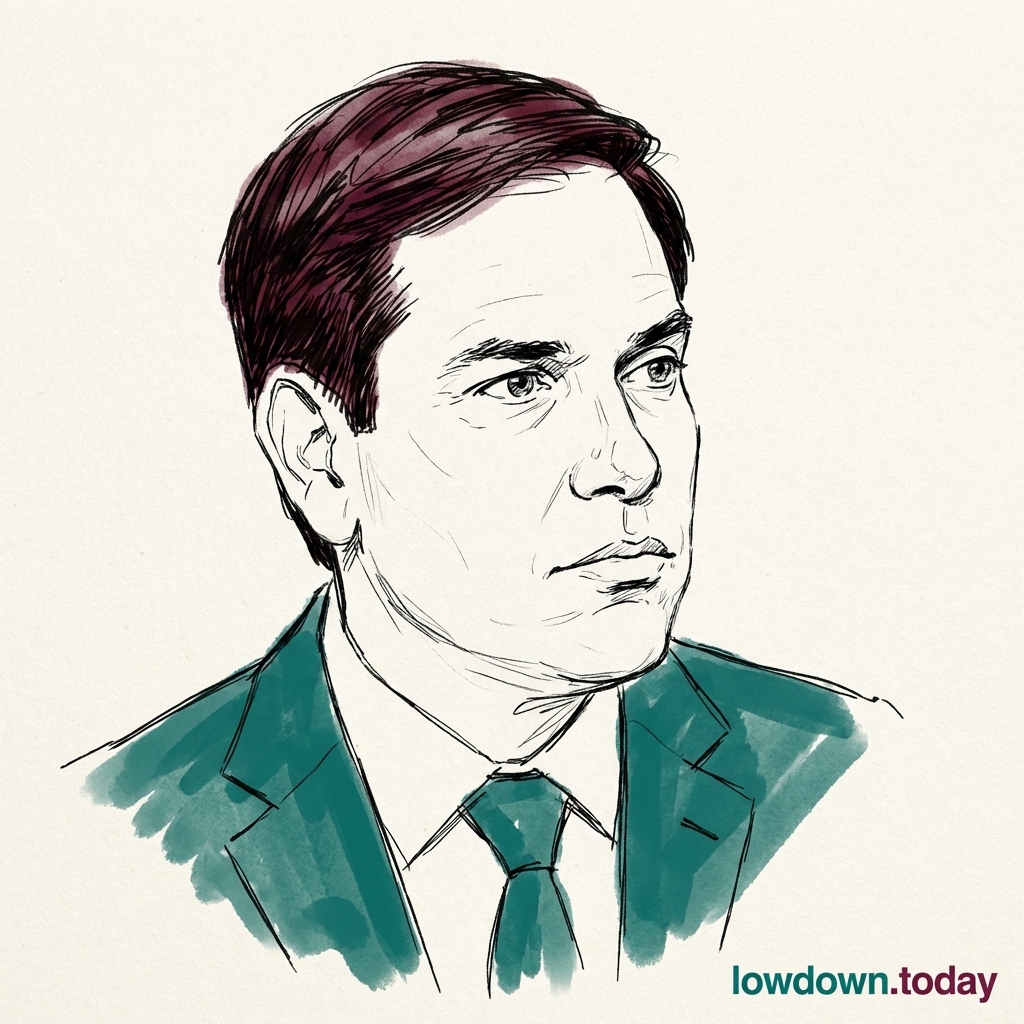
Marco Rubio
US Secretary of State under President Trump, whose disclosure that America pre-emptively joined Israel's Iran strikes became the central legal controversy of the 2026 conflict.
Marco Rubio's framing of Cuba as a security threat drew a public rebuttal from Havana's foreign minister on 2 August, the latest round in a year of hawkish rhetoric that has outpaced any single signed instrument against the island.
Last refreshed: 4 August 2026 · Appears in 5 active topics
With US mediation stalled, can Istanbul produce a real ceasefire without Washington?
Timeline for Marco Rubio
NIAC asks Treasury to restore licences
Iran Conflict 2026Attributed US public sympathy for Cuba to anti-Americanism
Cuba Dispatch: Havana calls the threat framing a lieHouthis widen their strikes to Yanbu
Iran Conflict 2026What the threat assessment actually says
Cuba DispatchReceived the letter urging CSMC sanctions
Cuba Dispatch: Florida four target the medical missionsBackground
Marco Rubio is US Secretary of state, confirmed in January 2025 after three terms as a Republican senator for Florida and a run for the 2016 Republican presidential nomination. Cuban-American and Miami-Born, he built his Senate career on hawkish positions toward Cuba, Venezuela and Iran, a record that now shapes how each government reads him in office.
That record cuts both ways diplomatically. Iran has refused to negotiate with Rubio directly, demanding Vice President JD Vance instead, an unusual dynamic in which Tehran trusts the vice president's restraint more than the secretary of state's hawkish reputation. His public positions have instead come to function as the outer boundary of US demands, giving the administration room to offer concessions while framing any climb-down as a retreat from Rubio's maximum rather than a genuine compromise.
As the senior US diplomat, Rubio holds portfolio responsibility across the year's major fronts simultaneously: Iran, Cuba, Ukraine and Gulf security, giving him more simultaneous exposure to unresolved conflicts than any other cabinet member.
Rubio's threat framing draws a rebuttal
Cuba's foreign minister Bruno Rodriguez Parrilla dismissed Rubio's characterisation of the island as a security threat as a 'ridiculous, clumsy lie' on 2 August, hours after Rubio said US sympathy for Cuba reflected anti-Americanism . Neither side shifted position; the exchange restates a standoff that has run all year.
That standoff sits awkwardly against the Pentagon's own private assessment, reported on 16 July, that a contingency operation against Cuba is unlikely now because forces are tied up in the Iran war, a gap between Rubio's public tone and the military's measured internal read .
Rubio keeps predicting deals that stall
Rubio told reporters on 8 June that a resolution to Iran's enrichment dispute remained months away, one entry in a run of predictions that has not converted into a signed instrument; the administration went nearly 100 days without a new Iran order over the same stretch. Tehran has meanwhile refused to negotiate with Rubio directly, insisting on Vice President JD Vance instead, leaving the secretary's hawkish public line to function as the outer edge of US demands rather than a live negotiating channel.
That dynamic gives Washington room to offer concessions later while framing any climb-down as a retreat from Rubio's stated maximum, not a genuine compromise.
Congress presses Rubio on Cuba sanctions
Four members of Congress, Maria Elvira Salazar, Mario Diaz-Balart, Carlos Gimenez and Chris Smith, wrote to Rubio and Treasury Secretary Bessent on 10 July urging sanctions on Cuba's overseas medical-mission operator, calling it a forced-labour scheme . The 13 July sanctions wave that followed hit tourism and trade entities but Left the medical-mission operator untouched, leaving the letter's central request unanswered for now.
The episode shows Rubio's Cuban-American Miami base pressing him toward the harder end of the administration's own Cuba policy, a pull his prior Senate record makes hard for him to resist publicly.
What did Rubio say at the GCC ministerial in Manama about Hormuz tolls?
What is the Istanbul channel in the Ukraine peace talks?
Has the US given up on mediating in Ukraine?
Why did Lavrov call Rubio about Kyiv?
Has Rubio signed any Iran deal or agreement?
What did Rubio say about Iran's Hormuz tolls?
What is Rubio's position on reopening the Strait of Hormuz?
What happened at the Israel-Lebanon talks in April 2026?
Why does Iran refuse to negotiate with Marco Rubio?
Is Marco Rubio hawkish on Iran?
Did Rubio bypass Congress on Iran war spending?
What did Rubio disclose about the US joining Israel's war?