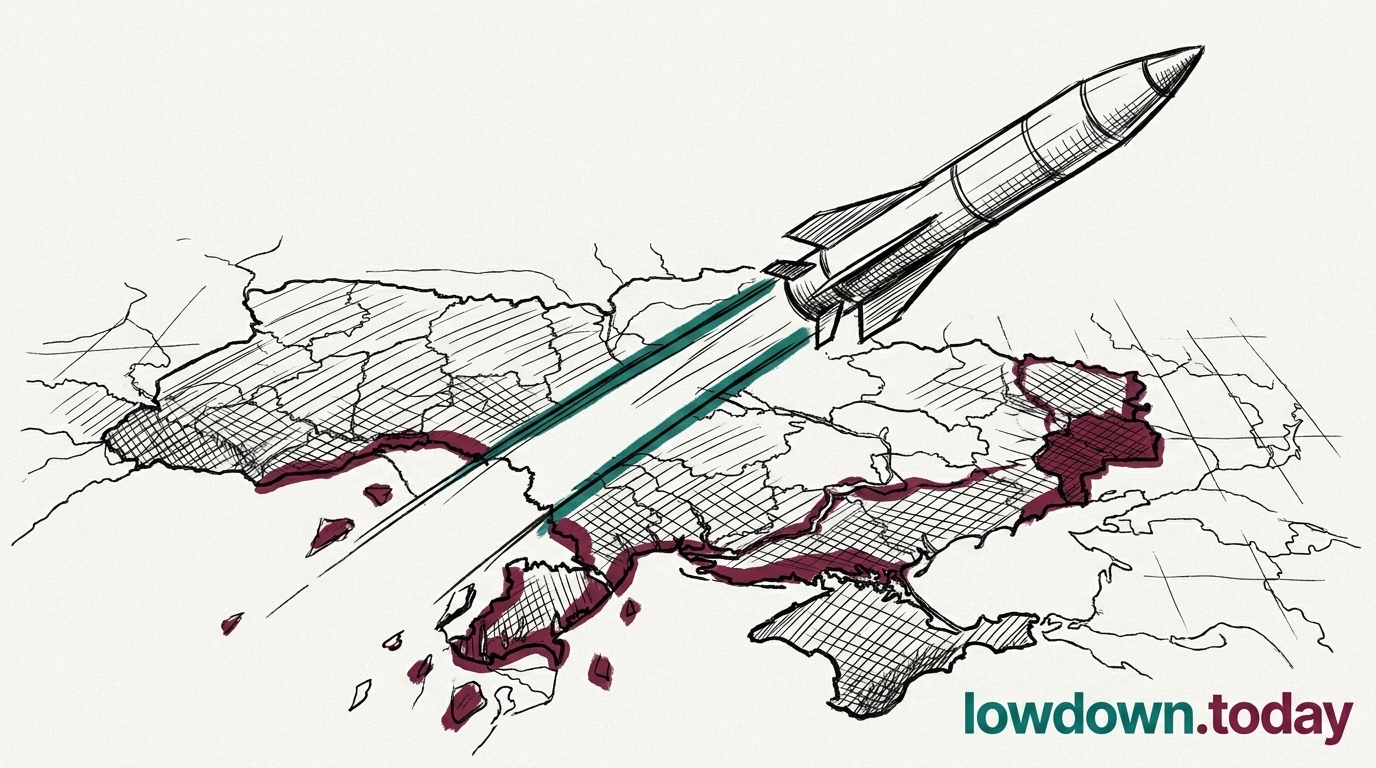
Russia and Ukraine met at Istanbul's Ciragan Palace on 2 June for a second round of direct talks lasting just over an hour, with near-identical delegations, venue and mediator to Round 1. Rustem Umerov again led Kyiv's 14-member delegation; Vladimir Medinsky again led Russia's. The consistency points to institutionalisation, not improvisation.
The prisoner mechanism works because it sidesteps the territorial geometry that blocks everything else. Both sides can exchange up to 1,200 prisoners each without conceding the other's claim to contested land. The pledge to return 6,000 bodies of fallen Ukrainian service members is not a tactical concession, but it carries domestic political weight in Ukraine.
Ukraine demands all-domain cessation because partial truces historically aid Russian force reconstitution. Russia offers localised pauses, specifically because a full Ceasefire at the current front line would freeze its worst territorial position since August 2024. Neither side can move without changing territorial red lines.
Ukraine's submitted peace memorandum, covering EU membership, international guarantees, phased sanctions relief and frozen-asset reparations, is Kyiv's formal opening position. Russia tabled no comparable document. That asymmetry, paper submitted versus paper withheld, will define Round 3's agenda. Round 2 builds directly on the Istanbul Round 1 framework.




