Majlis
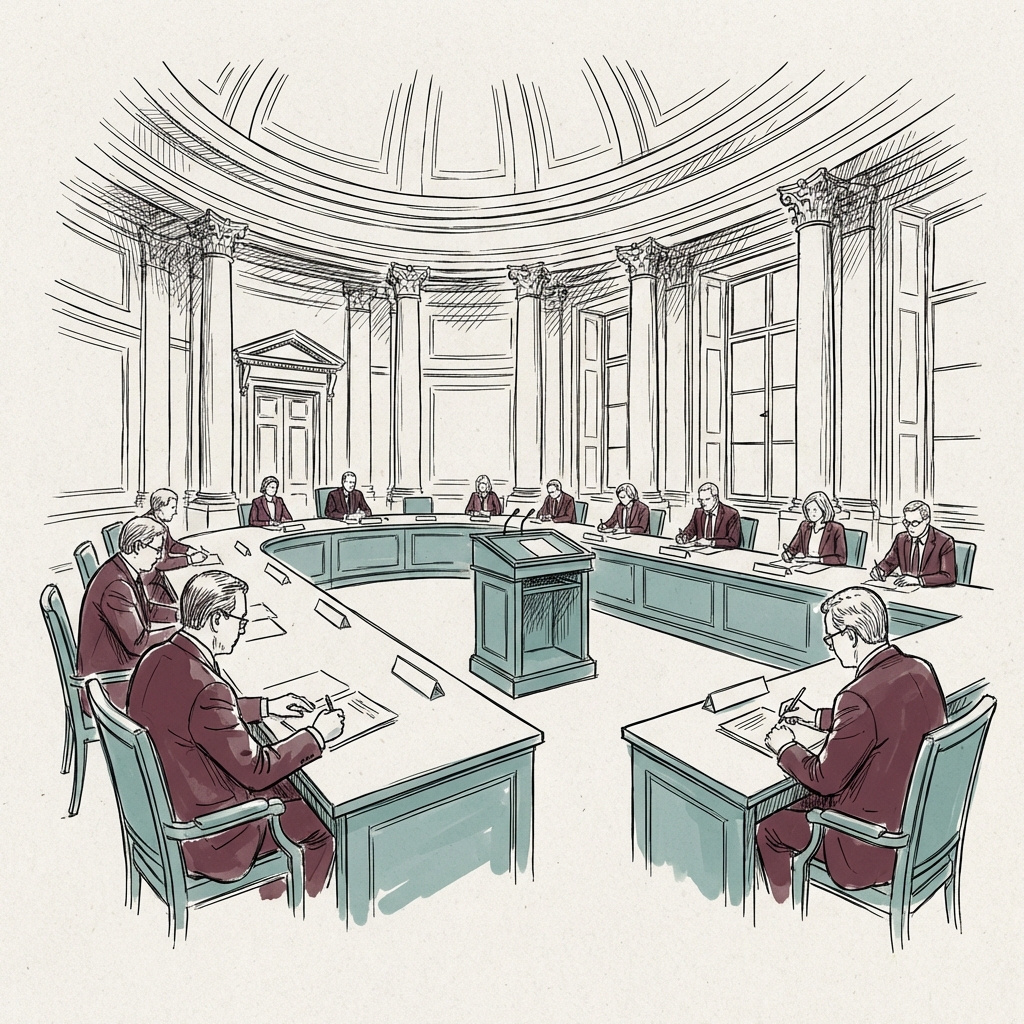
Iran's 290-seat unicameral parliament, the Islamic Consultative Assembly.
Last refreshed: 1 July 2026 · Appears in 1 active topic
Has the Majlis locked in permanent war powers that outlast any ceasefire?
Timeline for Majlis
Mentioned in: Grossi won't back Iran's Bushehr claim
Iran Conflict 2026Ghalibaf says Iran will not fold
Iran Conflict 2026Mentioned in: Trump declares the Iran deal over
Iran Conflict 2026Mentioned in: Qom clerics draw Tehran's red line
Iran Conflict 2026Mentioned in: Iran and Oman claim the strait
Iran Conflict 2026Background
The Islamic Consultative Assembly, known as the Majlis, is Iran's 290-seat elected Parliament. Members serve four-year terms and are pre-screened by the Guardian Council before standing for election. Under the doctrine of velayat-e faqih, the Majlis is formally subordinate to the Supreme Leader, and all legislation must pass The Guardian Council before taking effect. Speaker Mohammad Bagher Ghalibaf has held the speakership continuously since 2020 and was re-elected in May 2024 by 198 of 287 MPs present.
The Majlis has been the hardest institutional voice of the 2026 war. Its three most consequential wartime acts have been the 221-0 vote on 11 April 2026 to suspend all cooperation with the IAEA (which President Pezeshkian signed into law), the bill codifying the Strait of Hormuz transit toll into domestic statute, and the NPT withdrawal legislation filed by MP Malek Shariati on 28 March 2026. The Hormuz toll bill, approved by the National Security and Foreign Policy Committee on 30 March 2026, is now operationalised as the Persian Gulf Strait Authority.
On 20 May 2026, the Majlis National Security Committee passed an 11-article Strategic Action Plan for Hormuz and Persian Gulf Security, mandating rial-only passage fees, banning hostile-nation vessels, and requiring war-damage reparations, internally contradicting the PGSA's existing yuan and Bitcoin payment channels. On 20 April 2026, Speaker Ghalibaf warned that continued concessions would amount to a "table of surrender", publicly breaking with President Pezeshkian's more conciliatory posture, yet Pezeshkian signed the 221-0 IAEA suspension the same week. Both the IAEA suspension and the Hormuz toll bill encode wartime postures into durable statute, raising the cost for any future government seeking to reverse course. The speaker's approval of the draft MOU framework in late May, sitting alongside Ghalibaf's hawkish public statements, illustrates the Majlis's dual function as legislative ratchet and diplomatic back-channel simultaneously.