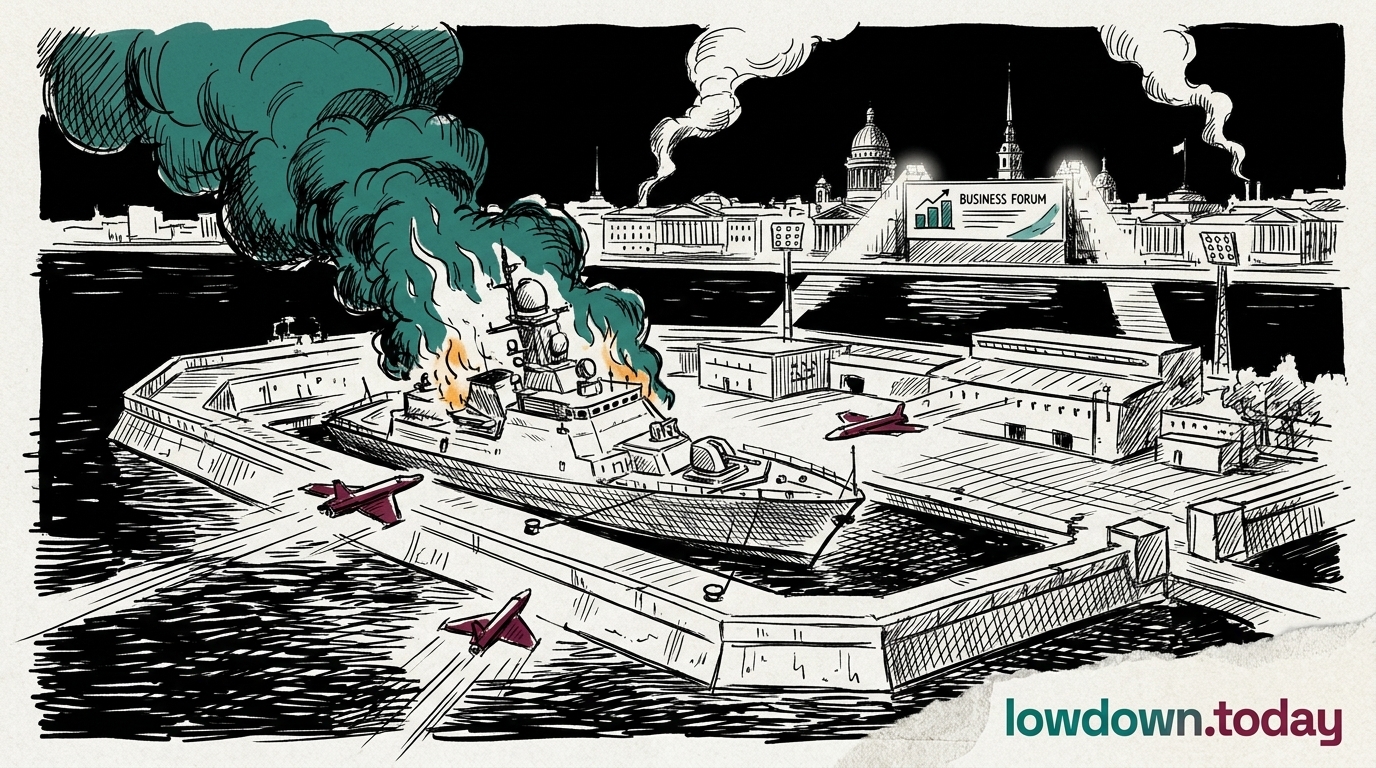
Russia's oil and gas revenue jumped 32.4% year-on-year in May, to 678.9bn rubles, a sharp reversal from the 38.3% Jan-April fall reported last week1. The cause was the Hormuz disruption from the Iran war, which pushed Urals crude to nearly $97 a barrel on average; by 4 June Urals had already fallen back to $87.40, unwinding the windfall. The May total still leaves Russia below its full-year revenue pace, on top of a Q1 deficit that already overshot the whole-year target.
The candour came from Russia's own boardrooms. At the forum, Deputy Prime Minister Alexander Novak cut the 2026 GDP growth forecast to 0.4%, from 1.3%; Severstal chairman Alexei Mordashov disclosed a 24% cut to capital spending and negative cash flow; and Aeon founder Roman Trotsenko said "the old model has stopped working"2.
Brussels moved to lock in the squeeze: the EU's 21st sanctions package, due this week, would freeze the oil price cap to stop Russia capturing exactly the kind of windfall May delivered. GL 134C, the US Treasury licence that lets Russian crude keep reaching global buyers, expires on 17 June with no successor in sight, leaving the decisive move to Washington, and at $87 a barrel the market-stability rationale Treasury used for past extensions is thinner than it was.


