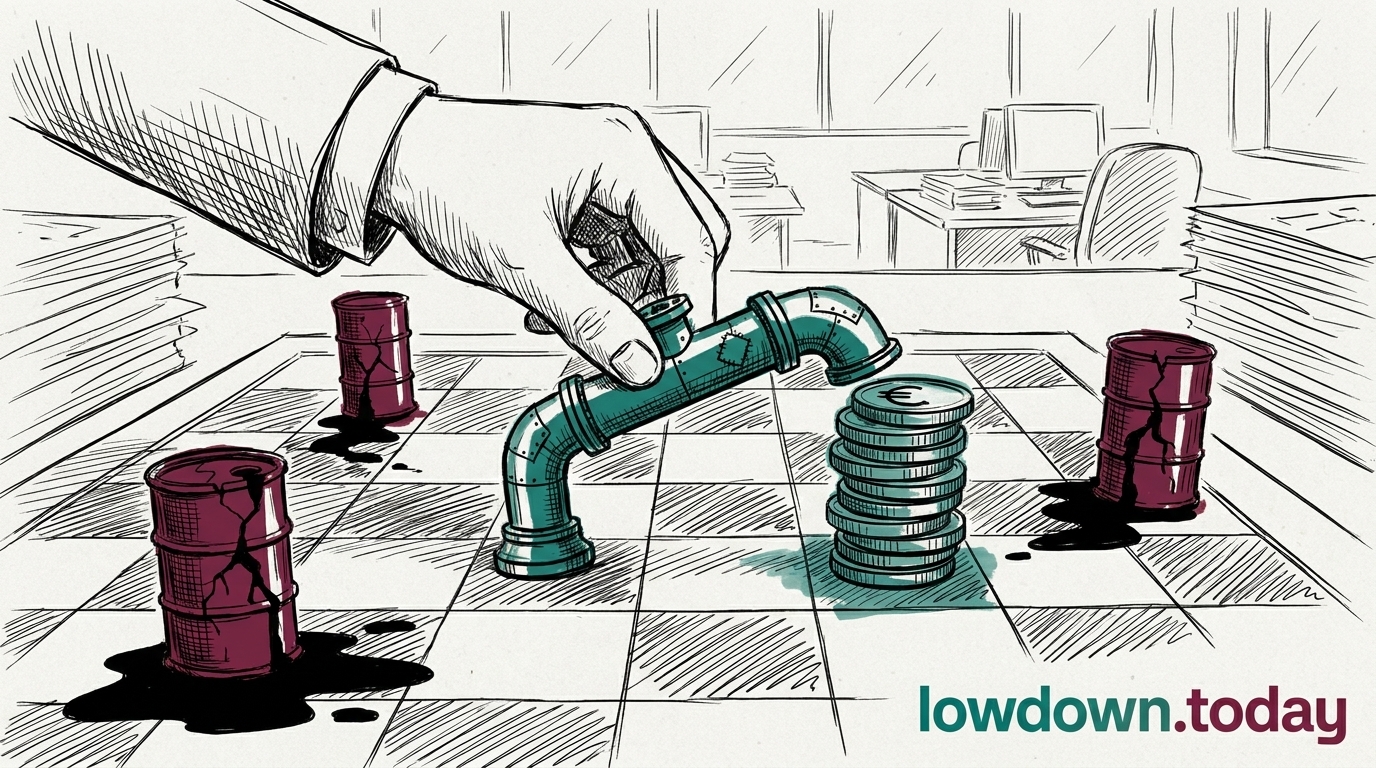
Russian Economic Development Minister Maxim Reshetnikov told Meduza on Friday 17 April that Moscow's internal reserves are "largely exhausted, and the macroeconomic situation is genuinely significantly more difficult"1. Businesses had earlier absorbed the shock, he said, "by drawing on internal reserves"; that capacity has run down. Reshetnikov's portfolio runs investment climate and industrial policy. His remit is supposed to produce growth, not explain its absence.
The admission lands two days after Vladimir Putin had publicly demanded government and Central Bank "explain why macroeconomic indicators had fallen short of expectations", blaming "seasonal factors" at a Kremlin meeting on Wednesday 15 April2. A serving minister calling the constraint structural while his President calls it seasonal is the disagreement Kremlin messaging usually closes within days. Meduza, a Russian-language exile outlet based in Riga, was the only publication Reshetnikov spoke to on the record.
Fortune reported on 18 April that the federal budget deficit reached 3.45 trillion roubles, roughly $42 billion, in January and February alone, already near the full-year target of 3.79 trillion3. First-quarter oil tax revenue halved year-on-year. Value-added tax rose from 20% to 22% in January. The National Wealth Fund had lost $4.8 billion over the two months preceding the interview; Reshetnikov's "largely exhausted" is the structural diagnosis of which that drawdown was the quantified symptom. The historical pattern to watch is 1990, when Gosbank governor Viktor Gerashchenko publicly broke with the Politburo line on rouble structural crisis; ministerial contradictions on macro conditions have tended to precede, not lag, hard policy shifts. That precedent is not a prediction, it is a reference point for how quickly the gap between Putin and Reshetnikov's framing closes.




