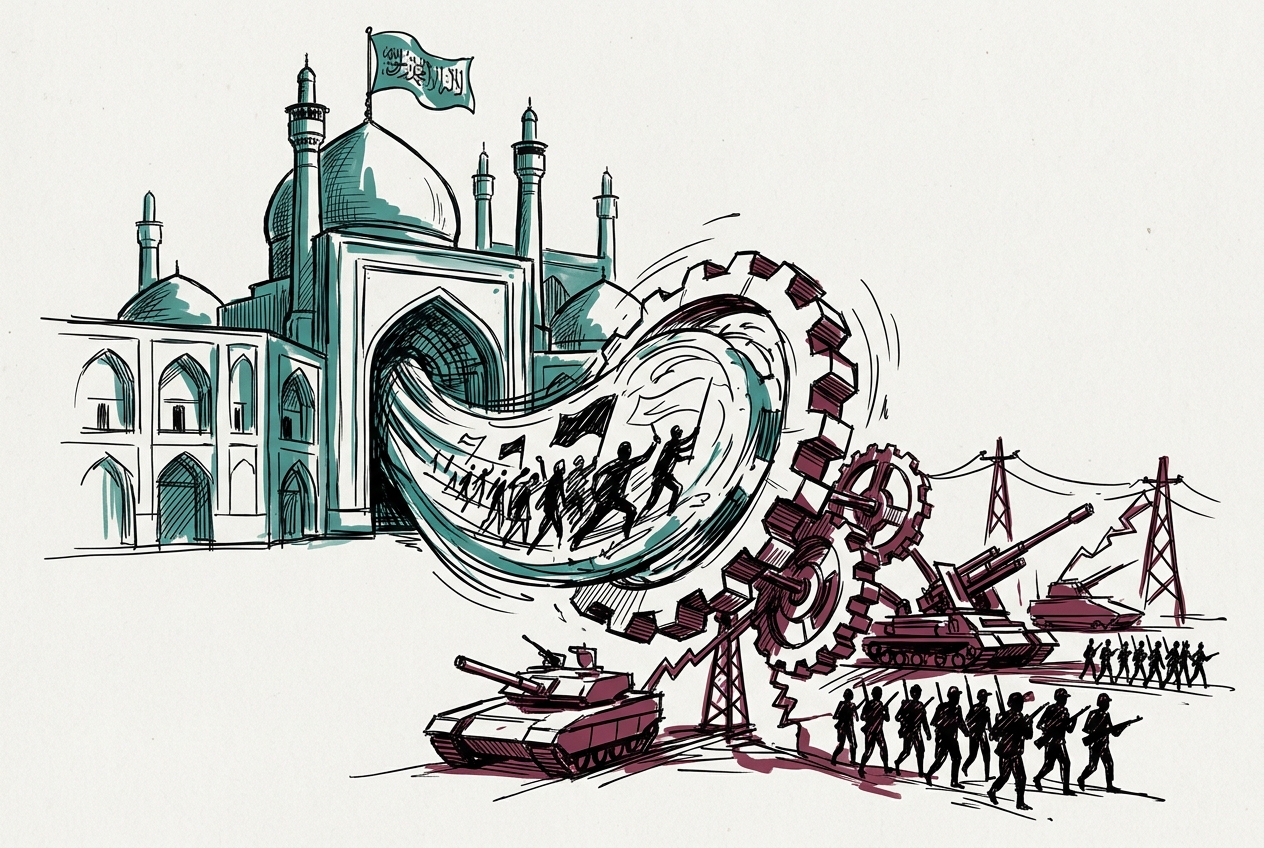
Iranian Revolution
1979 Islamic Revolution that overthrew the Shah and founded Iran's clerical Islamic Republic.
The Iranian Revolution overthrew Shah Mohammad Reza Pahlavi in February 1979, ending 2,500 years of Persian monarchy and founding the clerical Islamic Republic under Ayatollah Ruhollah Khomeini.
Last refreshed: 19 August 2026
Is the Islamic Republic about to become the dynasty the revolution destroyed?
Timeline for Iranian Revolution
Mentioned in: Iran and Oman claim the strait
Iran Conflict 2026Mentioned in: Aramco warns of a 17.5% shock
Iran Conflict 2026Mentioned in: US gasoline hits $4.54 as Hormuz premium sticks
Iran Conflict 2026Mentioned in: OIES frames Iran shock as multi-year
European Energy MarketsMentioned in: Brent settles $105.30 with no fresh seizure
Iran Conflict 2026Background
The Iranian Revolution of February 1979 toppled the Pahlavi monarchy and replaced it with the Islamic Republic under Ayatollah Ruhollah Khomeini. Its central legal innovation, Velayat-e Faqih (guardianship of the jurist), made clerical authority the constitutional basis of the state, subordinating elected institutions to The Supreme Leader. The Islamic Revolutionary Guard Corps was founded immediately afterwards to defend the new order and now runs a parallel military-economic structure through the Bonyad system of revolutionary foundations.
The revolution ended a hereditary monarchy stretching back to Cyrus the Great, but the republic it created has itself acquired dynastic features: authority passes between senior clerics rather than through open contest, and succession has repeatedly concentrated power within a small circle around The Supreme Leader's office.
Understanding the revolution matters because every current Iranian institution, from the IRGC's naval doctrine to the Bonyad economic empire, traces its founding Charter to 1979. It is the constitutional root of the Islamic Republic, not a live participant in today's events; it explains why the state behaves as it does, without itself being an actor in the present war.
Reference
How does the Iranian Revolution explain the 2026 Iran war?
Why did the Iranian Revolution create the IRGC?
When was the Islamic Republic of Iran established?
When did the Shah leave Iran?
What is Velayat-e Faqih?
What was the Iranian Revolution?



Written with AI from Lowdown's published reporting. Not individually reviewed by an editor. Updated 19 August 2026. Editorial standards.