Skip to content
Briefings are running a touch slower this week while we rebuild the foundations.See roadmap
Iran Conflict 2026
1MAY

Bab el-Mandeb returns as second chokepoint

4 min read
10:38UTC

International Crisis Group's Yemen analyst Ahmed Nagi told PressTV Houthi forces are "very likely to escalate" in Bab el-Mandeb if the US blockade bites Iran. Brent has not priced a dual-chokepoint scenario.

ConflictDeveloping
Key takeaway

A Bab el-Mandeb closure alongside Hormuz would cut 25% of seaborne energy supply and neutralise Saudi Arabia's pipeline backup.

Ahmed Nagi, senior Yemen analyst at the International Crisis Group, told PressTV that Houthi forces are "very likely to escalate in Bab el-Mandeb" if the US blockade begins to bite Iran 1. A Yemeni military official quoted by the same outlet in late March called closure of the Red Sea strait "among the primary options" if escalation continued. Ali Akbar Velayati, a former Iranian foreign minister with continuing influence in the Iranian establishment, told PressTV that "the unified command of the Resistance front views Bab al-Mandeb as it does Hormuz".

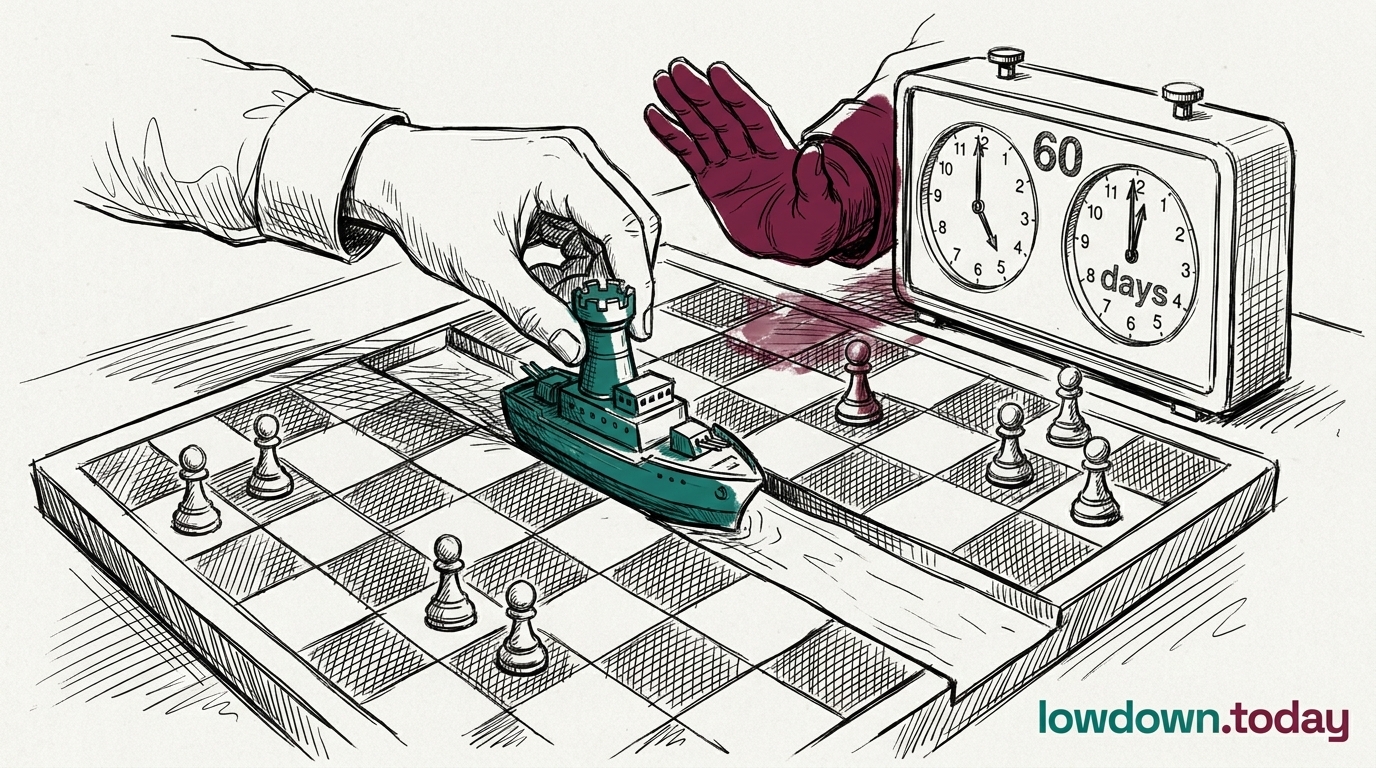
Bab el-Mandeb is the narrow strait at the southern end of the Red Sea, between Yemen and Djibouti, that every Gulf-origin cargo bound for Europe via Suez must pass through. If it closes at the same time as Hormuz, the two closures together remove roughly 25% of global seaborne energy supply from market. Every Gulf-origin cargo bound for Europe or Asia then needs a Cape of Good Hope detour, 10 to 20 extra days at sea, with freight rates rising sharply before any insurance uplift. The scenario exceeds any case modelled in IEA emergency-release protocols.

Saudi Arabia's East-West pipeline, Petroline, was restored to its full 7 million barrels per day capacity as the contingency backup if Hormuz closed. Petroline bypasses Hormuz. It does not bypass Bab el-Mandeb. The pipeline ends at Yanbu on the Red Sea coast, and a Red Sea chokepoint closure eliminates that alternative routing entirely. The dual-chokepoint scenario is the one contingency the published Saudi infrastructure cannot resolve.

Markets already treat the Hormuz operation as a partial action rather than a full closure on the pullback). The dual-chokepoint scenario has not yet been re-priced into Brent at all. The caveat from Nagi matters: Houthi operational capacity in the Red Sea was degraded by the 2025 US campaign, and "very likely to escalate" from a senior analyst is not the same as confirmed operational readiness. The separate development that Hezbollah has received a new jet-powered Iranian loitering munition (see event 11) suggests the resupply network is still partially functional, which tilts the probability towards the Houthis having more than rhetoric to deploy.

Deep Analysis

In plain English

There are two narrow sea passages that most of the world's oil and gas must travel through. One is the Strait of Hormuz, between Iran and the Gulf states, which the US is currently blockading. The other is the Strait of Bab el-Mandeb, at the southern end of the Red Sea, between Yemen and Djibouti. The Houthi movement in Yemen, which fought a successful campaign against shipping in the Red Sea in 2023 and 2024, is now signalling it might close the second strait as well, if the US blockade starts hurting Iran. If both straits were closed at the same time, roughly a quarter of the world's energy supply would have no sea route. The Saudi pipeline that was restored as a backup route for Hormuz ends on the Red Sea coast, so it would be useless if Bab el-Mandeb were also blocked. Oil and gas prices for European and Asian buyers would rise sharply. The important caveat is that the Houthis' ability to actually close Bab el-Mandeb is uncertain after the US degraded their forces in 2025. The threat is real but the capability is unconfirmed.

What could happen next?
  • Risk

    A dual-chokepoint closure would cut roughly 25% of global seaborne energy supply and eliminate Saudi Arabia's Petroline alternative routing, exceeding any scenario modelled in IEA emergency-release protocols.

  • Consequence

    Current Brent crude pricing reflects partial Hormuz closure only; a credible Bab el-Mandeb threat materialising would trigger a repricing well above the blockade-day $103 peak.

First Reported In

Update #68 · Sanctioned tankers slip the blockade

PressTV· 14 Apr 2026
Read original
Different Perspectives
Oil markets
Oil markets
Brent fell $1.05 to $106.0 on summit Day 1 but remains $5-7 above the post-ceasefire equilibrium analysts modelled in March; the market is pricing a holding pattern, not a breakthrough. OilPrice.com and Aramco CEO Nasser converge on buffer-exhaustion before Hormuz reopens if the blockade extends past mid-June.
Iranian dissidents and human rights monitors
Hengaw documented a five-prison simultaneous execution cluster on 13 May, with Gorgan appearing for the first time in the wartime register. Espionage charges framed as Israel-linked moharebeh now extend across Mashhad, Karaj, and Gorgan, using the war as judicial cover for protest-era detainees.
BRICS / Global South
Araghchi's Delhi appearance positioned Iran as a victim of US aggression before non-Western foreign ministers, with Deputy FM Bagheri Kani calling on BRICS to act against US aggression. India, as the largest non-Chinese user of Iranian-routed crude, faces pressure to balance bloc solidarity against its own shipping and sanctions exposure.
China
China
Beijing accepted the Nvidia chip clearance on summit Day 1 and gave Rubio verbal acknowledgement of Iran as an Asian stability concern, having already put Pakistan on paper as the mediatory channel on 13 May (ID:3253), deflecting the US ask for direct Chinese action without refusing it.
Iran (government and civilian diplomatic track)
Araghchi denied any Hormuz obstruction at BRICS Delhi on 14 May while Iran's SNSC had finalised a Hormuz security plan the day before. Israel Hayom's single-sourced 15-year freeze offer gives Tehran a deployable figure in non-Western forums regardless of corroboration; the state attributed 3,468 wartime deaths with no independent verification.
United States (Trump administration and Senate moderates)
Trump signed a chip clearance for 10 Chinese firms on summit Day 1 and zero Iran instruments across 76 days; Rubio and Vance made verbal Iran asks without paper. Murkowski voted yes on the 49-50 war-powers resolution after Hegseth told the Senate that Article 2 makes an AUMF unnecessary.