Skip to content
Briefings are running a touch slower this week while we rebuild the foundations.See roadmap
Iran Conflict 2026
21APR

CENTCOM redirections rise to 61, disabled count holds at four

4 min read
10:51UTC

Three vessels added to the cumulative count since 7 May; smokestack-disabling pattern unchanged

ConflictDeveloping
Key takeaway

CENTCOM redirections rose to 61 by 10 May; the disabled-tanker count held at four with two still unnamed.

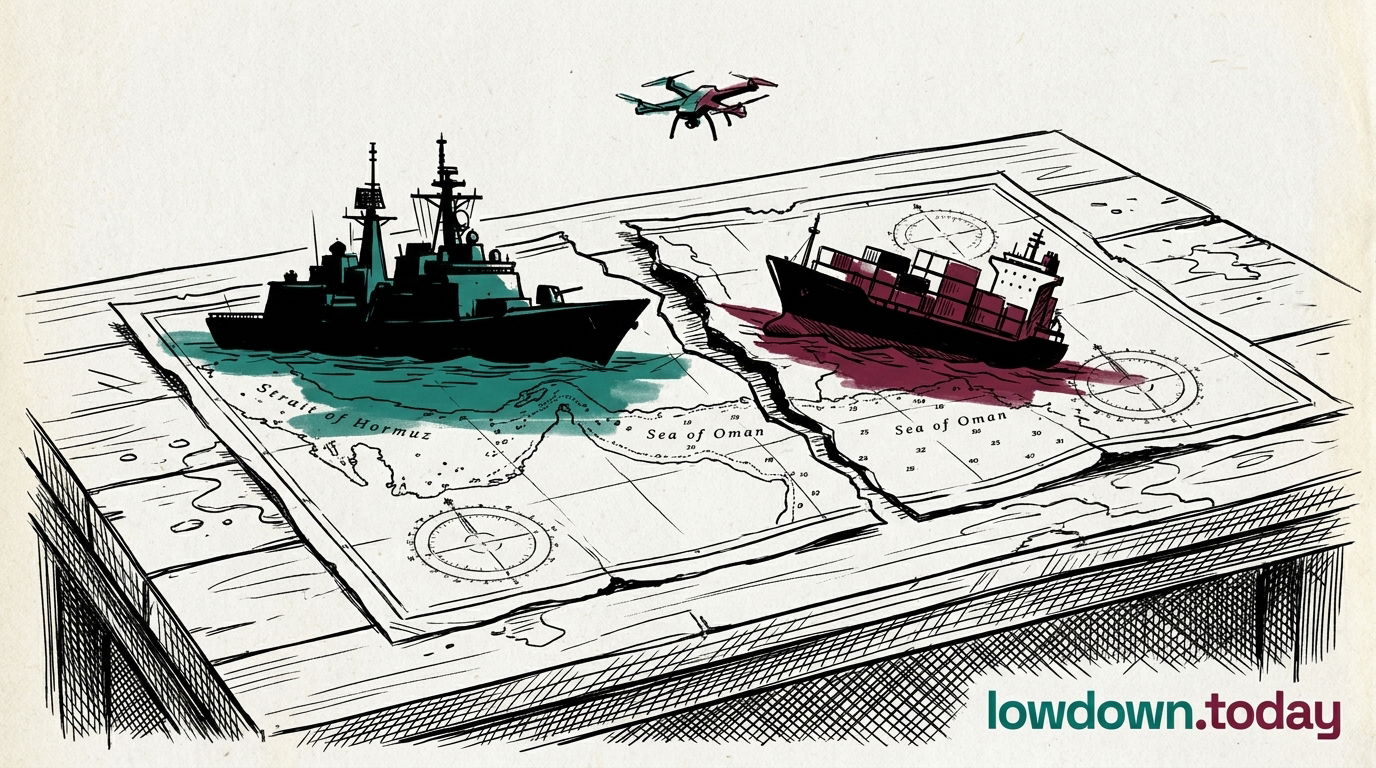
CENTCOM added three commercial vessels to its cumulative Iranian-port redirection count between 7 May and 10 May, taking the running figure to 61 . The pace has slowed from the early-blockade rhythm of one to two vessels per day to a roughly one-per-day tempo, suggesting that the dark-fleet community has largely re-routed around the visible enforcement architecture or stopped sending tonnage into the corridor entirely.

The disabled-ship count held at four for the third straight day. The 8 May F/A-18 smokestack-disabling strikes against the tankers M/T Sea Star III and Sevda remain the most recent recorded immobilisations; the other two disabled vessels have not been publicly named by CENTCOM, an attribution gap that has now persisted for a fortnight despite repeated press-grid statements naming the operational pattern.

For Asian refiners the redirection figure translates to roughly two-to-four weeks of delivery delays on cargoes diverted from Bandar Abbas to alternative anchorages. For European buyers it shows up in the bid premium on Atlantic-basin barrels backfilling the lost volume. Brent's Monday Asian open at $104.71 set the prior $101.29 baseline is consistent with the market pricing that lost volume as a structural rather than transient gap.

The slowing tempo cuts against the U#90 framing that CENTCOM was scaling a sustained kinetic operation; the operational rhythm now looks more like enforcement maintenance than a widening engagement. The two-unnamed-tankers attribution gap is the open question: whether CENTCOM is holding the names for operational security, the targets are non-state-flagged dark-fleet vessels Washington does not wish to identify, or the War Powers Resolution documentation review is delaying public naming.

The operational floor under all of this is 20 US warships that Tribune India's ANI wire reported enforcing the strait, the largest sustained US naval presence in the Persian Gulf since 2003.

Deep Analysis

In plain English

Think of the Strait of Hormuz as a single-lane motorway carrying about a fifth of the world's oil. The US Navy has been telling about two tankers a day to turn around if they were heading to Iranian ports, and the running total is now 61 since mid-April. Four tankers have actually been damaged. Two of those four have never been publicly named, which is unusual: usually the Navy says which ships it hit.

Deep Analysis
Root Causes

The cumulative redirection count is constrained by CENTCOM's standing order, which covers Iranian-port-destined traffic only and excludes the toll-interdiction track Trump posted to Truth Social on 12 April but never converted into a signed executive order.

The structural driver is the **War Powers Resolution** Section 1544(b) clock, which according to the Trump administration's 1 May formal position never started running because the United States is 'not at war' with Iran / U#85 framing. Without a signed AUMF, CENTCOM cannot broaden the operational rules to cover non-Iranian-port traffic in commercial vessels carrying Iranian-origin cargo; the standing order's narrow scope produces the slowing tempo.

The unnamed-tanker attribution gap is downstream of the same constraint: publishing the names risks creating a verification record that intersects with the pending Murkowski AUMF's reporting requirements (event 6).

What could happen next?
  • Meaning

    Pace of CENTCOM redirections has slowed; analysts will watch for whether the running total reaches 75 by 17 May (one-per-day tempo) or stalls at 65 (target-depletion signal).

    Short term · Assessed
  • Meaning

    Two unnamed disabled tankers remain an attribution gap that may become a press-freedom or congressional-reporting story.

    Short term · Assessed
  • Meaning

    Without an AUMF, the standing order's narrow scope limits CENTCOM's ability to act against non-Iranian-port-destined traffic carrying Iranian cargo.

    Short term · Assessed
  • Meaning

    Atlantic-basin barrel-backfill demand may continue to keep WTI above $95 even if Brent eases back toward the $101 floor.

    Short term · Assessed
First Reported In

Update #94 · Tehran writes, Trump tweets, Brent breaks

ABC News· 11 May 2026
Read original
Different Perspectives
Israel
Israel
The IDF struck a Lebanese army unit on 6 June, killing a colonel, and privately told Moscow that shelling near Bushehr was accidental, per Putin's SPIEF disclosure. Israel is advancing in Lebanon past an unenforced ceasefire text while maintaining a back-channel to Russia on nuclear-site deconfliction.
Lebanon
Lebanon
President Aoun told CNN on 5 June that Iran uses Lebanon as a bargaining chip and urged Hezbollah toward diplomacy; on 6 June an IDF strike killed a Lebanese army colonel on the Khardali-Nabatieh road. The Lebanese state is publicly rejecting Iranian tutelage while the army sustains casualties from Israeli fire and the Washington framework remains unenforced.
Bahrain
Bahrain
Bahrain's US Fifth Fleet headquarters was among the targets in the 5-6 June two-country salvo; its PAC-3 magazine stands at 87 per cent depletion with an 18-month resupply gap and no comparable arms sale has been announced. The state is defending a critical US regional command on a thinning interceptor stock.
Kuwait
Kuwait
Kuwait received a $1.98bn US counter-drone sale approval on the same day IRGC missiles targeted its bases; it expelled two Iranian diplomats on 4 June and filed a formal protest. The arms approval gives Kuwait a future capability but leaves a 6-18 month delivery gap that the salvo tempo is already pressing.
Russia
Russia
Putin reaffirmed Russia's offer to hold Iran's 440.9 kg HEU at SPIEF on 6 June, said Russia is not arming Iran, and disclosed that both the US and Israel privately told Moscow that shelling near Bushehr was accidental. The restatement casts Moscow as the only remaining mediator both sides call, a position serving Russian interests whatever the nuclear file produces.
Iran
Iran
The IRGC, per Iranian state media, fired seven ballistic missiles at US bases in Kuwait and Bahrain, the largest two-country salvo of the war, and framed the launches as lawful retaliation; Foreign Minister Araghchi rejected Aoun's bargaining-chip accusation and Velayati warned Beirut against diplomatic naivety. Tehran has sent no HEU counter-proposal since Araghchi confirmed no progress on 4 June.
