Skip to content
Briefings are running a touch slower this week while we rebuild the foundations.See roadmap
Iran Conflict 2026
21APR

CENTCOM redirections hit 58; four ships disabled

3 min read
10:51UTC

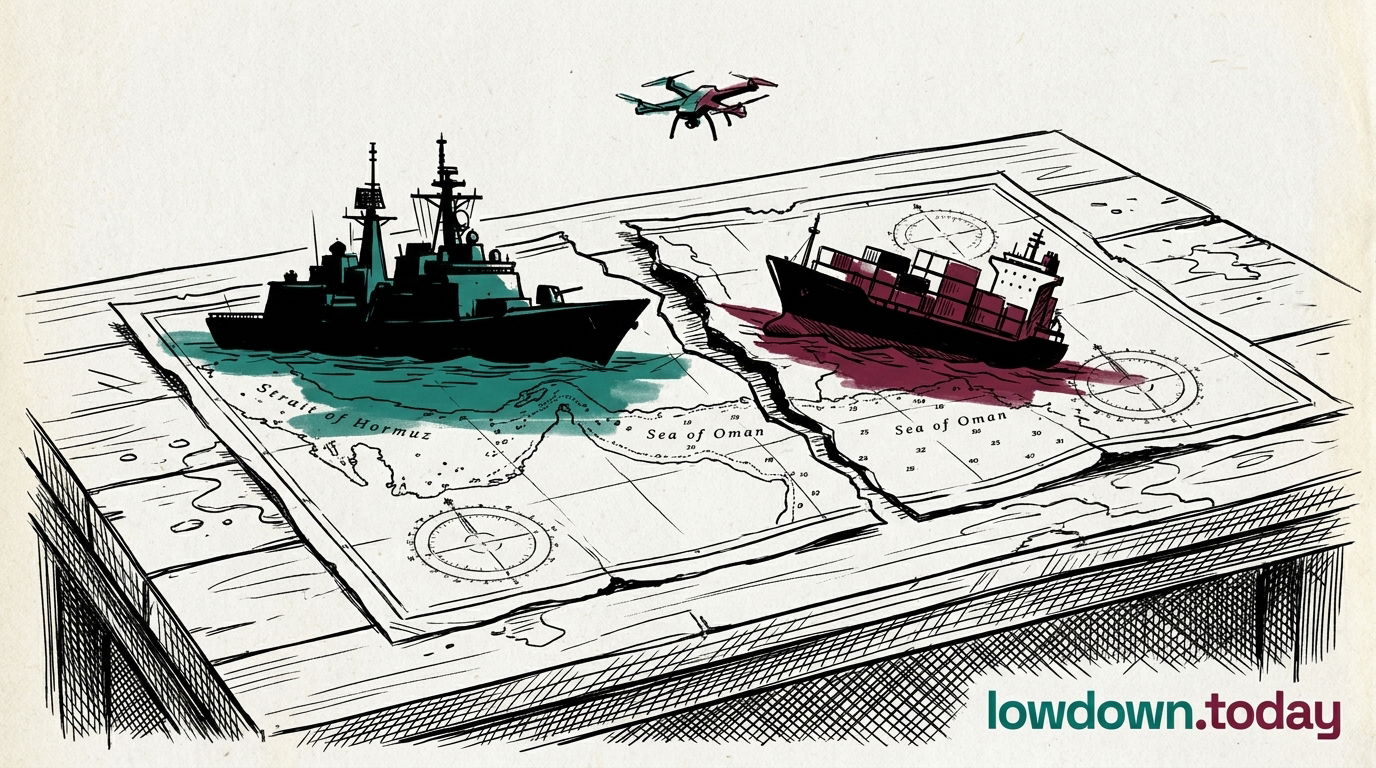
CENTCOM has now turned 58 commercial vessels away from Iranian ports since 13 April, six more in three days. The disabled-ship total stands at four, with two of them still unnamed.

ConflictDeveloping
Key takeaway

Project Freedom is accelerating during the negotiation window, with no instrument tying the two timetables.

CENTCOM (United States Central Command, the combatant command for the Middle East) has redirected 58 commercial vessels from Iranian ports since 13 April, Al Jazeera reported on Sunday 10 May, citing the command's own statement 1. That is six further redirections in three days; the figure stood at 52 on 7 May . Four ships have been disabled in total since the Project Freedom operation opened , up from two named in the F/A-18 smokestack-bombing run on M/T Sea Star III and M/T Sevda on 8 May . Two of the disabled vessels remain unnamed, despite a month of public CENTCOM statements naming the operational pattern.

Disabled means engines damaged or steering knocked out, not sunk; the hulls drift or limp to anchor. The standard CENTCOM technique uses precision strikes on the smokestack and rudder housings to immobilise without setting fuel oil on fire. The two unnamed actions raise the question of which flag states are quietly absorbing the loss without protesting publicly. Liberian, Marshall Islands and Panamanian flags account for most Gulf-bound tonnage; reflagging delays of two to four weeks would be the most visible second-order effect for the rest of the supply chain.

The pace matters because it falsifies the public-diplomacy framing. The verbal track between the two governments describes a negotiation moving towards a reply; the kinetic track shows CENTCOM accelerating, not pausing, while that reply is supposedly being drafted. Six redirections in three days is roughly twice the cadence of the first three weeks of the operation, when the average ran at one to two per day. For Asian refiners that translates to two-to-four-week delivery delays on diverted crude and condensate cargoes; for European buyers it means bidding up Atlantic-basin barrels to backfill.

The operational signal is that CENTCOM has standing authority to widen Project Freedom independent of the diplomatic timetable. The Pentagon decides cadence; the State Department runs the talks; the White House signs nothing tying the two together. That structural separation between the operational and political tracks is the same pattern Treasury exploited with Friday's CGSTL designation. Different US institutions are running their own Iran policy at their own pace, with no coordinator named to synchronise them.

Deep Analysis

In plain English

CENTCOM is the US military command responsible for the Middle East. Since 13 April it has been stopping commercial ships from reaching Iranian ports, turning them away or, in four cases, actually damaging them so they cannot proceed. By 10 May that count had reached 58 redirected vessels and four disabled ships. Disabling a ship means firing weapons to knock out its engines or steering so it cannot move under its own power, as happened to two tankers on 8 May when a US aircraft fired munitions down their exhaust stacks. The two additional unnamed disabled vessels add to that total. Each disabled ship is effectively taken out of service for weeks, and insurance costs for any ship trying to transit the area keep rising.

Deep Analysis
Root Causes

CENTCOM's redirection mandate requires it to turn away vessels heading to Iranian ports regardless of whether the vessel is Iranian-flagged. The 58-vessel count includes third-country commercial ships whose cargoes have nothing to do with Iranian crude, a scope that exceeds the narrower interdiction logic of the original blockade announcement.

Separate from redirections, the four disabled ships represent a different instrument category: redirections compel cooperation; disabling removes the choice. CENTCOM used disabling for the first time on 7 May with the rudder strike and escalated to smokestack-targeting on 8 May. The two unnamed additional disabled vessels suggest that disabling actions are now running ahead of public attribution, a pattern consistent with CENTCOM managing escalation optics while expanding operational reach.

The unnamed vessels also create a verification gap that matters for any ceasefire: a credible ceasefire requires both sides to account for all actions taken. Two unacknowledged disabled ships complicate that accounting before talks have even produced a draft.

What could happen next?
  • Consequence

    Six redirections in three days during the MOU negotiation window signals the blockade widening even as both sides describe the talks as live. The rate increase contradicts any reading of the MOU dialogue as a de-escalatory pause.

  • Risk

    Two unnamed disabled vessels suggest CENTCOM is conducting disabling actions it has not yet publicly acknowledged, creating a gap between operational reality and official communications that complicates third-party verification of any ceasefire.

First Reported In

Update #93 · Tanker hits Doha while Qatar mediates

Al Jazeera· 10 May 2026
Read original
Different Perspectives
Israel
Israel
The IDF struck a Lebanese army unit on 6 June, killing a colonel, and privately told Moscow that shelling near Bushehr was accidental, per Putin's SPIEF disclosure. Israel is advancing in Lebanon past an unenforced ceasefire text while maintaining a back-channel to Russia on nuclear-site deconfliction.
Lebanon
Lebanon
President Aoun told CNN on 5 June that Iran uses Lebanon as a bargaining chip and urged Hezbollah toward diplomacy; on 6 June an IDF strike killed a Lebanese army colonel on the Khardali-Nabatieh road. The Lebanese state is publicly rejecting Iranian tutelage while the army sustains casualties from Israeli fire and the Washington framework remains unenforced.
Bahrain
Bahrain
Bahrain's US Fifth Fleet headquarters was among the targets in the 5-6 June two-country salvo; its PAC-3 magazine stands at 87 per cent depletion with an 18-month resupply gap and no comparable arms sale has been announced. The state is defending a critical US regional command on a thinning interceptor stock.
Kuwait
Kuwait
Kuwait received a $1.98bn US counter-drone sale approval on the same day IRGC missiles targeted its bases; it expelled two Iranian diplomats on 4 June and filed a formal protest. The arms approval gives Kuwait a future capability but leaves a 6-18 month delivery gap that the salvo tempo is already pressing.
Russia
Russia
Putin reaffirmed Russia's offer to hold Iran's 440.9 kg HEU at SPIEF on 6 June, said Russia is not arming Iran, and disclosed that both the US and Israel privately told Moscow that shelling near Bushehr was accidental. The restatement casts Moscow as the only remaining mediator both sides call, a position serving Russian interests whatever the nuclear file produces.
Iran
Iran
The IRGC, per Iranian state media, fired seven ballistic missiles at US bases in Kuwait and Bahrain, the largest two-country salvo of the war, and framed the launches as lawful retaliation; Foreign Minister Araghchi rejected Aoun's bargaining-chip accusation and Velayati warned Beirut against diplomatic naivety. Tehran has sent no HEU counter-proposal since Araghchi confirmed no progress on 4 June.