Skip to content
Briefings are running a touch slower this week while we rebuild the foundations.See roadmap
Iran Conflict 2026
18APR

Khamenei claims 'new management' of Hormuz

4 min read
14:57UTC

Mojtaba Khamenei, Iran's Supreme Leader, issued a written statement read on Iranian state television on 30 April 2026 announcing "new management" of the Strait of Hormuz.

ConflictDeveloping
Key takeaway

Khamenei's 'new management' declaration is Iran's highest-authority sovereignty claim on Hormuz since the war began.

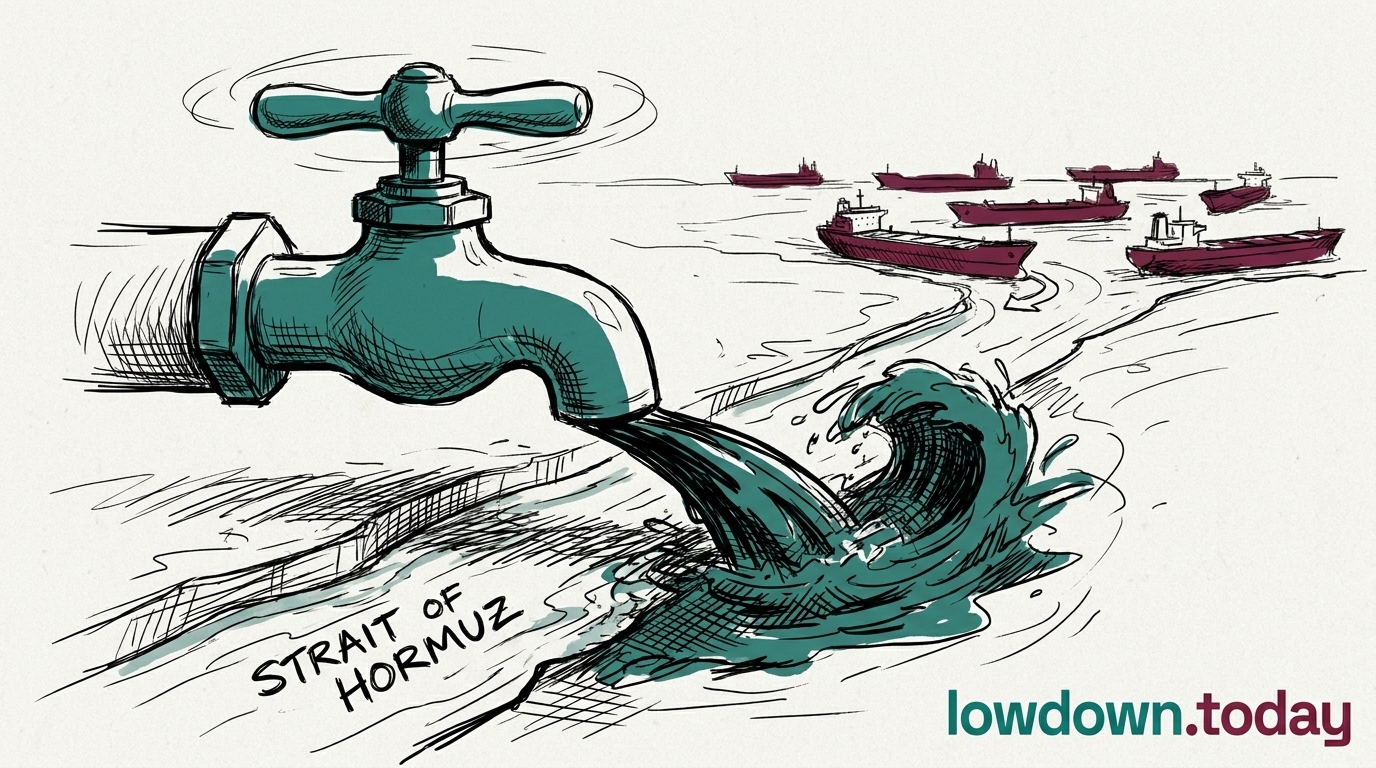
Mojtaba Khamenei, Iran's Supreme Leader, issued a written statement read on Iranian state television on 30 April 2026 announcing "new management" of the Strait of Hormuz 1. the strait is the 33km maritime chokepoint at the mouth of the Persian Gulf through which roughly a fifth of seaborne crude transits. Foreigners arriving "from thousands of kilometres away to act with greed and malice", Khamenei wrote, would have "no place in it, except at the bottom of its waters". He added that Iran's nuclear and missile capabilities are national assets that "ninety million proud and honourable Iranians will protect just as they protect the country's waters".

This is Khamenei's first substantive public declaration on Hormuz governance since taking office in March 2026. Iran's Supreme Leader communicates exclusively via written statement read on state television, citing his medical condition; the medium is the established channel rather than a downgrade of seriousness. The framing distinguishes "foreigners" from "all Gulf nations", leaving Indian, Pakistani and Chinese tanker operators a differentiated risk profile from US and European-flagged vessels.

Khamenei's text appeared the same afternoon Washington unveiled its rival framework, the Maritime Freedom Construct, for vessel transit through the same channel. The structural backdrop is the UAE's formal OPEC exit also taking effect the same week , an event that pushed Brent to a wartime settle high. Three sovereignty postures converged on the strait on 30 April.

Deep Analysis

In plain English

The Strait of Hormuz is a narrow waterway between Iran and Oman. About one fifth of the world's oil supply passes through it in normal times. Since the US blockade began in February 2026, that traffic has been dramatically reduced. On 30 April 2026, Iran's Supreme Leader Mojtaba Khamenei made his first major statement about the strait since taking office. He said Iran would take 'new management' of it, meaning Iran, not the US Navy, would control who gets through. He warned that foreigners who come 'with greed and malice' would end up 'at the bottom of its waters'. Just hours later, the US State Department launched its own 'Maritime Freedom Construct' to do essentially the same thing from the opposite side: coordinate which ships get through and keep them safe. Two competing authorities, one 33km channel, and neither side has signed a framework that would bind the other.

Deep Analysis
Root Causes

Mojtaba Khamenei's communication method, written statements read on state television, reflects an internal security calculation, not merely style. His father communicated through direct public speeches; Mojtaba communicates through sealed envelopes and televised readings because the IRGC's security apparatus has assessed in-person public appearances as too exposed after the 28 February decapitation strikes.

The 'new management' framing for Hormuz derives from a specific legal gap: Iran never ratified the 1982 UN Convention on the Law of the Sea (UNCLOS). Tehran's domestic maritime law claims jurisdiction over the strait in ways incompatible with UNCLOS transit passage rights.

The 30 April statement is not a new legal theory; it is the first Supreme Leader articulation of a doctrine that Iran's domestic maritime law has carried since 2024 regulatory updates that classified 'hostile-linked vessels' as subject to Iranian coastal jurisdiction.

What could happen next?
  • Risk

    Two competing sovereign-governance claims for the same 33km waterway, with no international arbitration mechanism, increase the probability of an unplanned naval incident.

  • Opportunity

    The 'calm, progress and economic benefits' framing creates an opening for Gulf state intermediaries to propose a revenue-sharing transit regime that neither the US nor Iran need formally endorse.

First Reported In

Update #85 · "Not at war": three claims, no treaty

Euronews· 1 May 2026
Read original
Different Perspectives
Lloyd's of London underwriters
Lloyd's held its Hormuz war-risk rate at $10-14 million per voyage; underwriters need a UN Security Council resolution or formal PGSA de-listing before repricing, not a Senate testimony. The PGSA remains on the SDN list under EO 13224, so any vessel transiting a nominally reopened strait still deals with a sanctioned counterparty.
Saudi Arabia and Gulf states
Brent crude at $95-97 on 2-3 June reflects Gulf producers benefiting from the conflict premium; a genuine Hormuz deal would likely cut that premium by $10-15 per barrel. Riyadh's $87 per barrel budget breakeven means the current price is comfortable, reducing the Gulf's urgency to push for a rapid settlement.
China
China
OFAC's Nobitex designation leaves China's informal bilateral currency-swap lines with Iran as the CBI's remaining rial-defence mechanism; Chinese financial institutions face secondary-sanctions risk if they interact with successor wallets. Beijing's MOFCOM Blocking Rules protect mainland refineries from direct designation but do not shield informal swap-line counterparties.
Lebanon / Hezbollah
Lebanon / Hezbollah
Lebanon's Washington delegation demanded full Israeli withdrawal and the return of 1.2 million displaced; Hezbollah deployed an FPV drone that killed an Israeli soldier at Yohmor while talks ran, demonstrating it can impose costs even at Israel's deepest penetration point. Lebanon's government cannot deliver the Hezbollah disarmament guarantee Israel demands.
Israel / Benjamin Netanyahu
Israeli forces seized Beaufort Castle above the Litani on 1-2 June and advanced to within 10 km of the Zaharani river while ceasefire delegations sat in Washington; the advance ran entirely outside the Beirut-only truce Netanyahu accepted on 1 June. Each kilometre taken raises Israel's withdrawal price before any permanent text is signed.
Iran: Foreign Ministry and domestic population
Araghchi rang six capitals in 48 hours to reopen talks the SNSC had suspended, calling the IRGC line 'speculation'; at home, 37 political prisoners were executed since 19 March while students marched in Tehran, Mashhad and Hamadan. The diplomatic thaw has not eased the state's wartime repression tempo.