Skip to content
Briefings are running a touch slower this week while we rebuild the foundations.See roadmap
Iran Conflict 2026
18APR

Iran names a Hormuz toll authority

4 min read
14:57UTC

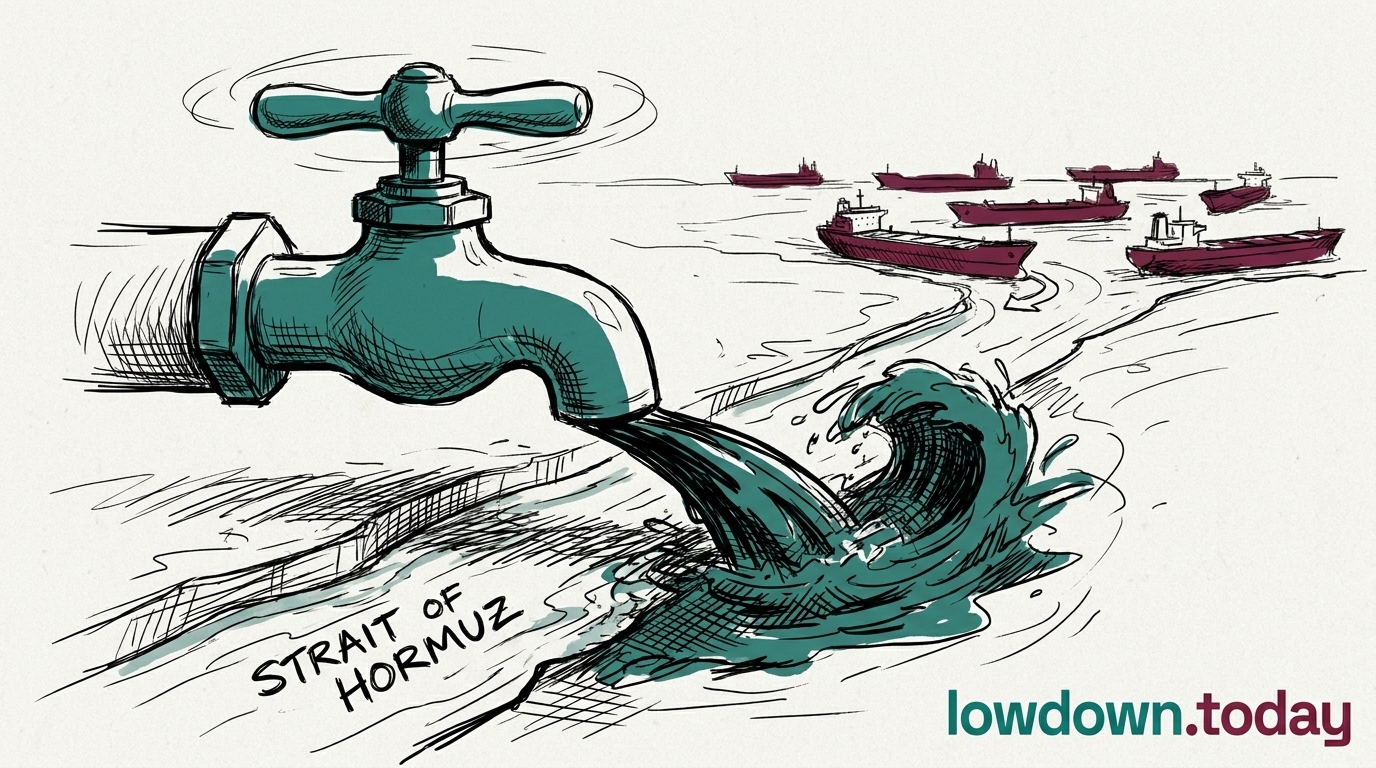
Iran created the Persian Gulf Strait Authority on 5 May, requiring vessels to register, document and pay a transit toll before clearance; MARAD's advisory 2026-004 acknowledged the new regime in writing.

ConflictDeveloping
Key takeaway

Pay the toll, breach OFAC; refuse the toll, face Iranian fire. Third-flag vessels have no lawful route.

Iran created the Persian Gulf Strait Authority on Tuesday 5 May, a named state body that requires vessels to register, complete documentation and pay a transit toll before receiving clearance to enter a designated corridor through the strait 1. Deviation from the corridor, the authority states, triggers military intervention. MARAD (the US Maritime Administration) issued advisory 2026-004 acknowledging the new authority alongside the pre-existing 2026-001 advisory on Iranian seizures 2. The advisory is the first written US-government recognition that Iran has produced an institution Washington's own posture cannot reconcile with.

Iran named the new body the 'Persian Gulf Strait Authority', not the 'Strait of Hormuz Authority', refusing the international-waterway designation that UNCLOS (United Nations Convention on the Law of the Sea) Article 38 attaches to the strait. Article 38 guarantees transit passage 'without prior authorisation' for ships of all flags. The new authority requires exactly that: a registered email contact, formal documentation, a paid toll, and adherence to a designated corridor before clearance is granted. The institutional architecture rests on the Majlis 12-article sovereignty law and Mojtaba Khamenei's 'new management' written claim .

The legal squeeze runs in both directions. OFAC's General Licence W, issued 1 May , , names the Iranian Red Crescent, Bonyad Mostazafan and Iranian embassy accounts as toll-payment channels that trigger US sanctions exposure. A non-US-flagged tanker that pays the new Iranian toll to clear the corridor exposes itself to OFAC secondary sanctions; a tanker that refuses to pay risks Iranian military intervention. There is no lawful path for a third-flag vessel to comply with both regimes at once. The Northwood mission template, drafted by British and French officers on 22-23 April under UNCLOS transit-passage doctrine, was designed for a permissive strait; it now confronts a counter-instrument with the force of Iranian domestic law and no written US answer to the toll-payment bind.

Deep Analysis

In plain English

On 5 May, Iran created a new government body called the Persian Gulf Strait Authority. Any ship that wants to sail through the Strait of Hormuz must now contact this authority, fill in paperwork, and pay a fee. If a ship enters the strait without permission, Iran says its military will intervene. The problem is that international law, specifically a treaty signed by 170 countries, says ships have the right to sail through international straits without asking anyone's permission. Iran never signed that treaty. The US government acknowledged the new authority in a written maritime warning, which is the first time Washington has formally recognised in writing that Iran has created an institution to control the strait.

Deep Analysis
Root Causes

UNCLOS lacks an enforcement mechanism for transit-passage violations. The International Tribunal for the Law of the Sea can adjudicate disputes, but Iran's non-ratification of UNCLOS means it has no compulsory jurisdiction over Tehran. Iran can violate Article 38's transit-passage guarantee without triggering any automatic legal consequence.

OFAC General License W creates a second structural trap for non-US-flagged vessels: complying with the PGSA by paying the toll violates US sanctions, because PGSA toll payments flow through Bonyad Mostazafan, a designated entity. Refusing to pay the toll exposes the vessel to IRGC interdiction. No lawful path exists for a non-US vessel to satisfy both frameworks simultaneously.

What could happen next?
  • Precedent

    The PGSA's codification of a toll-and-permit regime for an international strait sets a precedent other states (China over Taiwan Strait, Russia over Northern Sea Route) could cite to advance their own sovereign-access claims.

  • Consequence

    Any ceasefire agreement must now explicitly dissolve a named Iranian regulatory body; dissolving the PGSA requires Iranian parliamentary action, raising the domestic political cost of any deal.

First Reported In

Update #89 · Truxtun gets through; Trump pulls back

Maritime Executive· 6 May 2026
Read original
Different Perspectives
Lloyd's of London underwriters
Lloyd's held its Hormuz war-risk rate at $10-14 million per voyage; underwriters need a UN Security Council resolution or formal PGSA de-listing before repricing, not a Senate testimony. The PGSA remains on the SDN list under EO 13224, so any vessel transiting a nominally reopened strait still deals with a sanctioned counterparty.
Saudi Arabia and Gulf states
Brent crude at $95-97 on 2-3 June reflects Gulf producers benefiting from the conflict premium; a genuine Hormuz deal would likely cut that premium by $10-15 per barrel. Riyadh's $87 per barrel budget breakeven means the current price is comfortable, reducing the Gulf's urgency to push for a rapid settlement.
China
China
OFAC's Nobitex designation leaves China's informal bilateral currency-swap lines with Iran as the CBI's remaining rial-defence mechanism; Chinese financial institutions face secondary-sanctions risk if they interact with successor wallets. Beijing's MOFCOM Blocking Rules protect mainland refineries from direct designation but do not shield informal swap-line counterparties.
Lebanon / Hezbollah
Lebanon / Hezbollah
Lebanon's Washington delegation demanded full Israeli withdrawal and the return of 1.2 million displaced; Hezbollah deployed an FPV drone that killed an Israeli soldier at Yohmor while talks ran, demonstrating it can impose costs even at Israel's deepest penetration point. Lebanon's government cannot deliver the Hezbollah disarmament guarantee Israel demands.
Israel / Benjamin Netanyahu
Israeli forces seized Beaufort Castle above the Litani on 1-2 June and advanced to within 10 km of the Zaharani river while ceasefire delegations sat in Washington; the advance ran entirely outside the Beirut-only truce Netanyahu accepted on 1 June. Each kilometre taken raises Israel's withdrawal price before any permanent text is signed.
Iran: Foreign Ministry and domestic population
Araghchi rang six capitals in 48 hours to reopen talks the SNSC had suspended, calling the IRGC line 'speculation'; at home, 37 political prisoners were executed since 19 March while students marched in Tehran, Mashhad and Hamadan. The diplomatic thaw has not eased the state's wartime repression tempo.