Skip to content
Briefings are running a touch slower this week while we rebuild the foundations.See roadmap
Iran Conflict 2026
12APR

Khamenei claims 'new management' of Hormuz

4 min read
08:59UTC

Mojtaba Khamenei, Iran's Supreme Leader, issued a written statement read on Iranian state television on 30 April 2026 announcing "new management" of the Strait of Hormuz.

ConflictDeveloping
Key takeaway

Khamenei's 'new management' declaration is Iran's highest-authority sovereignty claim on Hormuz since the war began.

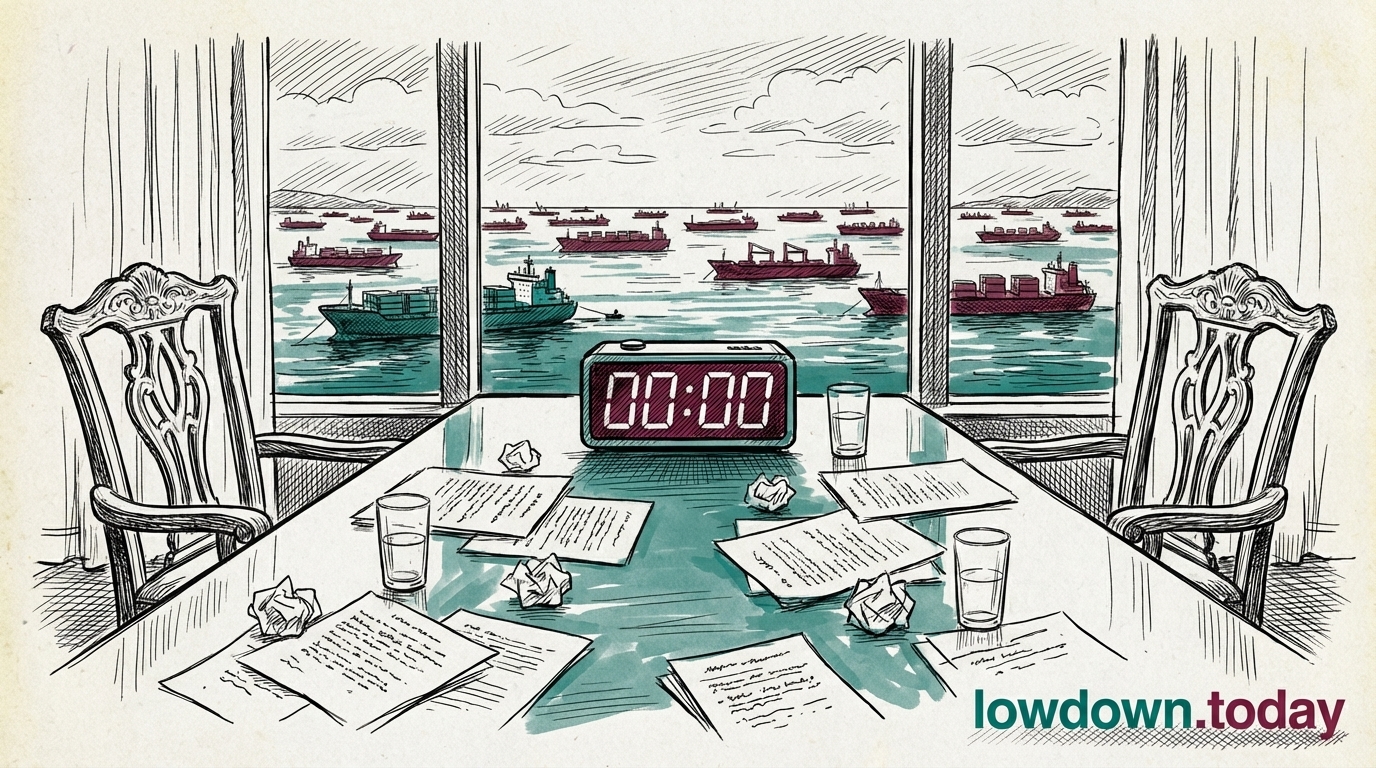
Mojtaba Khamenei, Iran's Supreme Leader, issued a written statement read on Iranian state television on 30 April 2026 announcing "new management" of the Strait of Hormuz 1. the strait is the 33km maritime chokepoint at the mouth of the Persian Gulf through which roughly a fifth of seaborne crude transits. Foreigners arriving "from thousands of kilometres away to act with greed and malice", Khamenei wrote, would have "no place in it, except at the bottom of its waters". He added that Iran's nuclear and missile capabilities are national assets that "ninety million proud and honourable Iranians will protect just as they protect the country's waters".

This is Khamenei's first substantive public declaration on Hormuz governance since taking office in March 2026. Iran's Supreme Leader communicates exclusively via written statement read on state television, citing his medical condition; the medium is the established channel rather than a downgrade of seriousness. The framing distinguishes "foreigners" from "all Gulf nations", leaving Indian, Pakistani and Chinese tanker operators a differentiated risk profile from US and European-flagged vessels.

Khamenei's text appeared the same afternoon Washington unveiled its rival framework, the Maritime Freedom Construct, for vessel transit through the same channel. The structural backdrop is the UAE's formal OPEC exit also taking effect the same week , an event that pushed Brent to a wartime settle high. Three sovereignty postures converged on the strait on 30 April.

Deep Analysis

In plain English

The Strait of Hormuz is a narrow waterway between Iran and Oman. About one fifth of the world's oil supply passes through it in normal times. Since the US blockade began in February 2026, that traffic has been dramatically reduced. On 30 April 2026, Iran's Supreme Leader Mojtaba Khamenei made his first major statement about the strait since taking office. He said Iran would take 'new management' of it, meaning Iran, not the US Navy, would control who gets through. He warned that foreigners who come 'with greed and malice' would end up 'at the bottom of its waters'. Just hours later, the US State Department launched its own 'Maritime Freedom Construct' to do essentially the same thing from the opposite side: coordinate which ships get through and keep them safe. Two competing authorities, one 33km channel, and neither side has signed a framework that would bind the other.

Deep Analysis
Root Causes

Mojtaba Khamenei's communication method, written statements read on state television, reflects an internal security calculation, not merely style. His father communicated through direct public speeches; Mojtaba communicates through sealed envelopes and televised readings because the IRGC's security apparatus has assessed in-person public appearances as too exposed after the 28 February decapitation strikes.

The 'new management' framing for Hormuz derives from a specific legal gap: Iran never ratified the 1982 UN Convention on the Law of the Sea (UNCLOS). Tehran's domestic maritime law claims jurisdiction over the strait in ways incompatible with UNCLOS transit passage rights.

The 30 April statement is not a new legal theory; it is the first Supreme Leader articulation of a doctrine that Iran's domestic maritime law has carried since 2024 regulatory updates that classified 'hostile-linked vessels' as subject to Iranian coastal jurisdiction.

What could happen next?
  • Risk

    Two competing sovereign-governance claims for the same 33km waterway, with no international arbitration mechanism, increase the probability of an unplanned naval incident.

  • Opportunity

    The 'calm, progress and economic benefits' framing creates an opening for Gulf state intermediaries to propose a revenue-sharing transit regime that neither the US nor Iran need formally endorse.

First Reported In

Update #85 · "Not at war": three claims, no treaty

Euronews· 1 May 2026
Read original
Different Perspectives
Iran human rights monitors (Amnesty International, Iran HRM, Hengaw)
Monitors documented 30 women held on capital moharebeh charges in a basement prison ward, Benyamin Naqdi's death sentence with a forced-confession broadcast, and 39 political executions since February. Iran's security courts have processed protest cases at uninterrupted wartime tempo regardless of the diplomatic track.
Lloyd's of London (war-risk underwriters)
Lloyd's held its Hormuz war-risk designation at $10-14 million per voyage while Brent fell 19%, maintaining a structural divergence from futures pricing. Underwriters require a UN Security Council resolution or government certification letter, not diplomatic optimism, before de-listing the strait.
Oman (Sultan Haitham's government)
Muscat issued a mine alert in its own territorial waters while denying any Hormuz toll plan after US Treasury threatened sanctions. A suspected mine in Omani waters on the same weekend as US financial pressure forces Muscat to demonstrate sovereignty without appearing to choose sides.
China (PRC)
China (PRC)
Beijing sent scholars rather than its defence minister to Shangri-La for the second year running and addressed Taiwan and multilateralism without mentioning Iran. China maintains its bilateral energy corridor protection with Tehran while refusing the diplomatic exposure of a public position at multilateral forums.
Iran Supreme National Security Council
The SNSC framed the unsigned MOU as a 10-point Iranian victory with enrichment already recognised, and the foreign ministry rejected Trump's nuclear conditions within hours. Tehran treats each unsigned day as validation that Iran has retained its stockpile without surrendering it.
Trump administration (CENTCOM/White House)
Trump posted three non-negotiable public conditions while CENTCOM disabled a commercial ship and Hegseth threatened resumed strikes from Singapore. The administration treats the unsigned MOU as leverage to extract maximum Iranian concessions before any ceasefire instrument is committed to paper.