Skip to content
Briefings are running a touch slower this week while we rebuild the foundations.See roadmap
Iran Conflict 2026
9APR

Seven VLCCs at Chabahar, three at Hormuz

3 min read
11:02UTC

Lowdown Wire

ConflictDeveloping
Key takeaway

Seven VLCCs gathered at Chabahar on 20 April while only three vessels transited the strait the same week.

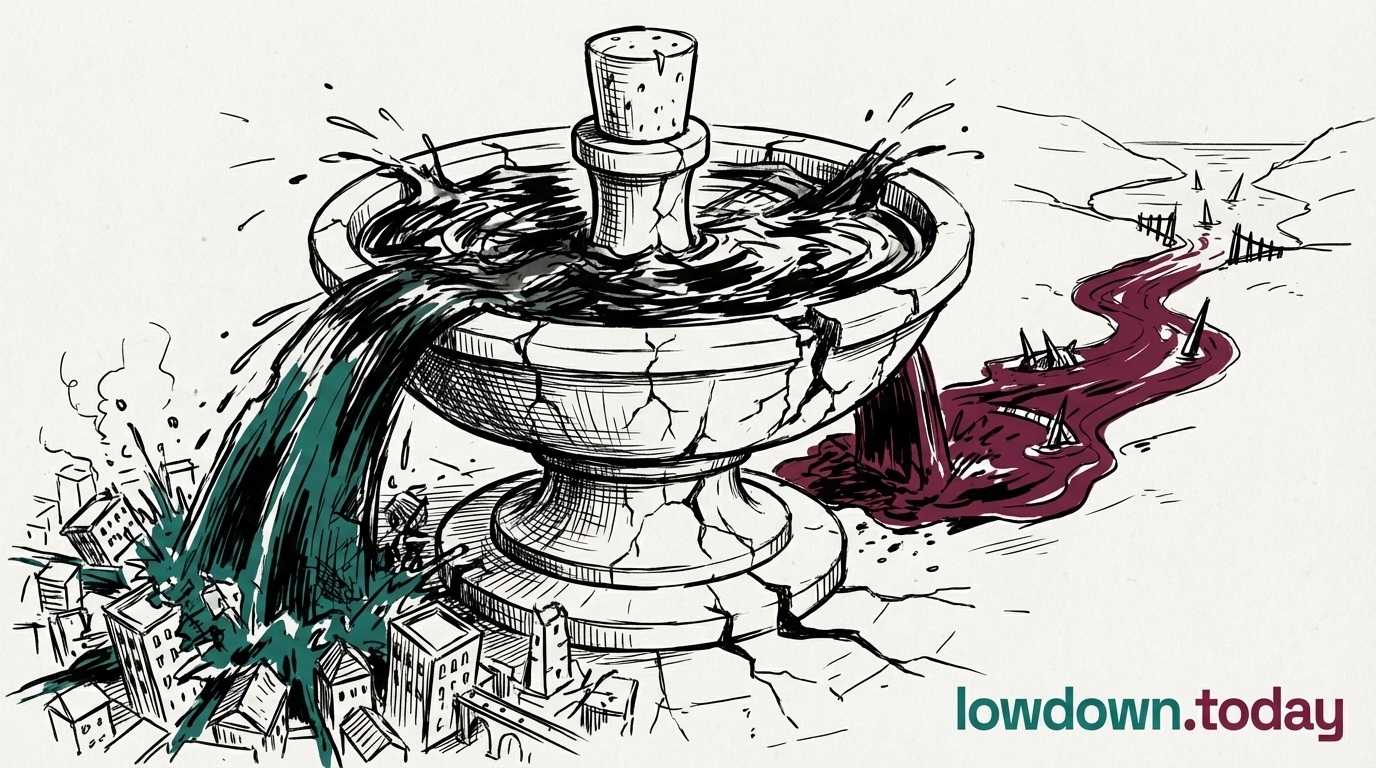
Windward detected seven Very Large Crude Carriers (VLCCs, the standard two-million-barrel oil tankers that carry Gulf crude) near Chabahar on Iran's Makran coast on 20 April 1. Chabahar is Iran's only deep-water port on the Arabian Sea and sits east of the geometry Admiral Brad Cooper's narrower port-interdiction order covers. The same Windward log counted three strait transits the day before, a fraction of the 135-per-day pre-war baseline and the lowest count since the blockade began.

Earlier mid-transit reroutings from India to Chinese ports ahead of the OFAC General License U lapse established the Chabahar-routing adaptation; seven VLCCs at anchor there indicate the same workaround now running at capacity. The USS Spruance's firing into the Touska's engine room earlier in the same window hardened the Hormuz risk premium on the kinetic side, but the structural story is sideways: vessels avoiding the strait do not need the strait reopened to clear cargo.

Deep Analysis

In plain English

The US Navy has been blocking oil tankers from using the Strait of Hormuz, the narrow sea passage through which most Gulf oil normally flows. Iran has responded by loading oil onto tankers at a different port, Chabahar, which sits on Iran's other coastline , the Arabian Sea side , and has no connection to the strait at all. Windward, a maritime tracking company, spotted seven large tankers near Chabahar on 20 April. Only three vessels transited the strait in the same period. This matters because it shows the blockade has not stopped Iran from shipping oil , it has just changed which port the oil leaves from. Chabahar is operated under a 2016 agreement with India, which adds a political complication: any US attempt to block Chabahar would directly affect India's interests.

Deep Analysis
Root Causes

CENTCOM's written blockade order was drafted around the Strait of Hormuz and Iranian Gulf ports, reflecting the operational assumption that Iranian crude exports require the strait. Chabahar sits on the Makran coast, outside the Gulf, accessible from the Arabian Sea without any Hormuz transit.

The legal gap was present from the order's inception: Iran never ratified UNCLOS, leaving its domestic maritime law , updated in 2024 to claim jurisdiction over 'hostile-linked vessels' , as the operative legal text on the Iranian side, while the US order covers only Iranian-port traffic rather than the full territorial sea.

India's 2016 Chabahar agreement, originally designed to give Delhi access to Afghan and Central Asian markets bypassing Pakistan, created an operational control structure that places Chabahar partially inside Indian sovereign jurisdiction, complicating any US enforcement action.

What could happen next?
  • Consequence

    Chabahar routing at capacity would reduce the blockade's supply-disruption component while leaving the kinetic risk premium intact, potentially splitting the oil price signal into two separable factors.

    Short term · 0.72
  • Risk

    Any CENTCOM attempt to extend interdiction to Chabahar creates a direct India-US collision over India's 2016 operational rights agreement with Tehran.

    Medium term · 0.78
  • Precedent

    The Chabahar bypass establishes a template for sanctions evasion at ports outside written enforcement geometry, applicable to any future blockade scenario.

    Long term · 0.8
First Reported In

Update #76 · Trump posts an exit Iran can't reach

Windward· 22 Apr 2026
Read original
Different Perspectives
Civilians and prisoners inside Iran
Mojtaba Kian was hanged in under 50 days from arrest, the fastest wartime espionage case in Hengaw's record, as Trump announced a peace deal. Amnesty places Iran's 2026 execution count above 200 at its fastest pace in 44 years; the diplomatic track has not altered the internal enforcement tempo.
China
China
Beijing accepted a Pakistani civilian briefing mission on the same day OFAC's GL V expired, keeping itself inside the deal architecture without being a named signatory. How Chinese banks respond to Monday's Hengli dollar-clearing decision is the first real-world test of whether the verbal MOU carries any institutional weight.
Pakistan
Pakistan
Islamabad split its highest-level delegation: army chief Munir to Tehran on the security track, Prime Minister Sharif and Foreign Minister Dar to Beijing before Monday's GL V-driven bank compliance decision. The architecture routes the deal's hardest problem, IRGC buy-in, through the general-officer channel that has extracted every wartime concession.
Israeli government
Israeli government
An unnamed Israeli official told the Times of Israel that Trump privately told Netanyahu the deal will dismantle Iran's nuclear programme and remove all its uranium, terms incompatible with what Tehran and a Reuters source describe. If Netanyahu believes he was promised full dismantlement and the deal delivers less, Israel holds a sabotage veto before any signature.
Iranian Foreign Ministry
Spokesman Esmail Baghaei told state agency IRNA that nuclear issues are 'not in the current negotiations text' and the sequencing is: end the war first, then negotiate nuclear over two months. Baghaei's formulation preserves Khamenei's 21 May uranium-stay directive while letting the civilian diplomacy track continue.
Donald Trump / White House
Trump declared the Iran deal 'largely negotiated' on 23 May via Truth Social and signed nothing; the White House's only paper was a Memorial Day proclamation. The verbal-track method converts maximum political signalling into minimum legal exposure: no congressional notification, no Senate treaty ratification, no instrument for Iran to formally reject.