Skip to content
You can now search across every topic, entity and event.What's new
Iran Conflict 2026
31JUL

Iran fires at Qatar's Ras Laffan hub

4 min read
09:24UTC

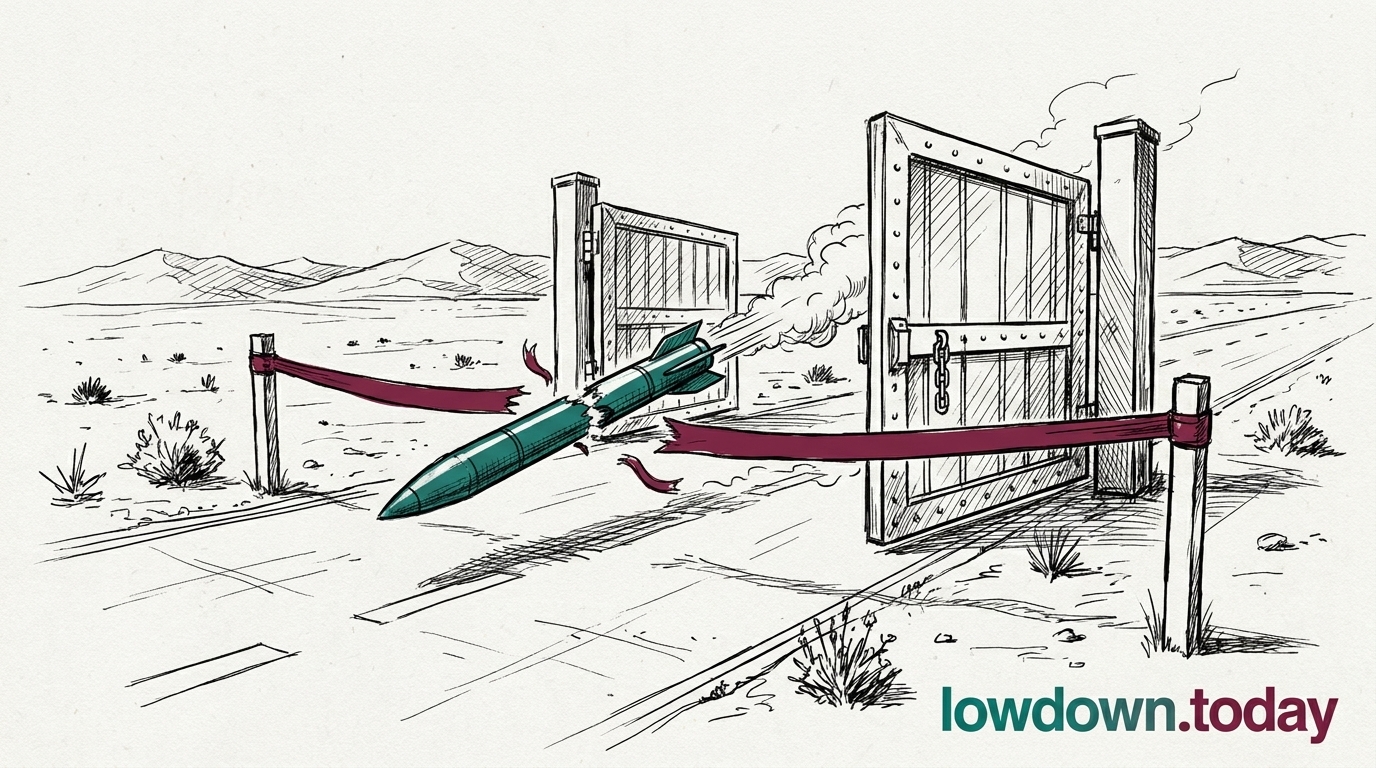
Ballistic missiles struck the world's largest LNG processing complex, taking a fifth of global supply offline and dragging Qatar — Iran's last diplomatic interlocutor in the Gulf — directly into the war.

ConflictDeveloping
Key takeaway

Iran struck a diplomatic partner to impose global energy costs on the US alliance.

Within hours of the South Pars strike, Iran fired ballistic missiles at Qatar's Ras Laffan Industrial City — the world's largest LNG processing complex, handling approximately 77 million tonnes per year, roughly 20% of global LNG supply. QatarEnergy reported "extensive damage" and "sizeable fires" 1. Civil defence teams extinguished the flames. No injuries were reported. The target was the one Tehran's earlier threats had promised: after the US struck Kharg Island , Iran warned it would hit regional energy infrastructure in retaliation . The South Pars strike appears to have triggered that contingency.

But Iran did not strike Israel or American bases. It struck Qatar — a neighbour that had maintained diplomatic channels with Tehran throughout the conflict and, intermittently, since 1979. Qatar hosts Al Udeid Air Base, the largest US military facility in the Middle East and CENTCOM's forward headquarters. Tehran's calculus appears to treat Gulf hosting of American operations as complicity, regardless of any individual state's efforts at neutrality or mediation. The message to Doha, Riyadh, and Abu Dhabi is blunt: there is no diplomatic middle ground while the infrastructure that enables strikes on Iran sits on your territory.

Ras Laffan has no substitute at scale. Qatar's LNG goes to Japan, South Korea, China, India, the United Kingdom, and continental European states that increased LNG imports after cutting dependence on Russian pipeline gas in 2022. The Atlantic Council warned this week that European gas storage stands below 30% — a five-year low — as the critical autumn refill season approaches 2. The European gas benchmark jumped more than 30% on the news 3. Brent Crude surged toward $110.90 per barrel, up from $106.18 the previous day and more than 64% above the pre-war $67.41 — its highest level since 2014. Three weeks ago, oil was at its cheapest since 2021.

The repair timeline will determine whether this is a shock or a crisis. QatarEnergy's description — "extensive damage" — could mean days or months of reduced output. Each week offline tightens a market already stretched before the war began. For the roughly 450 million people in the European Union who pivoted from Russian pipeline gas to diversified LNG as an energy security strategy after 2022, the destruction at Ras Laffan tests that strategy's core assumption: that supply spread across multiple seaborne sources would prove more resilient than dependence on a single pipeline from Moscow. A fifth of global LNG now flows from a facility within range of Iranian ballistic missiles, in a war with no ceasefire framework and an Iranian foreign minister who has publicly stated he does not believe in one 4.


Deep Analysis

In plain English

Ras Laffan is essentially the world's largest gas processing complex — it takes natural gas from beneath the Gulf and converts it into the liquefied form shipped to homes and power stations across Europe and Asia. Qatar had maintained friendly relations with Iran for decades, even as other Gulf states broke with Tehran. By striking Ras Laffan, Iran chose to punish a friendly state rather than a direct adversary. The message is stark: Iran is willing to damage any relationship and threaten any country's economy to impose costs on the US-Israeli alliance. That calculation closes diplomatic options while opening a direct confrontation with a state that hosts America's largest regional military base.

Deep Analysis
Synthesis

Iran achieved a triple strategic effect with one strike: it closed Qatar's diplomatic back-channel to Tehran, signalled to other Gulf US-base hosts that they are exposed, and triggered a 20% global LNG supply shock.

The simultaneity of these effects suggests deliberate strategic design. An improvised retaliation would have targeted a military asset; striking Ras Laffan required advance intelligence and a pre-planned targeting package.

Root Causes

Iran's selection of Qatar as the retaliation target reflects a coercive deterrence calculation aimed beyond Qatar itself. Qatar hosts Al Udeid Air Base — the forward headquarters of US Central Command — making it the logistical hub of US military operations in the theatre.

Striking Qatar's economic crown jewel sends a direct signal to Riyadh and Abu Dhabi: hosting US forces makes your energy infrastructure a legitimate Iranian target.

What could happen next?
  • Consequence

    Closure of the Qatar-Iran diplomatic channel removes the most operationally productive US-Iran back-channel, eliminating the route used for the 2023 prisoner exchange and multiple indirect communications.

    Immediate · Assessed
  • Risk

    Sustained Ras Laffan production curtailment could prevent Europe from refilling gas storage to the minimum threshold needed to avoid energy rationing next winter.

    Medium term · Assessed
  • Consequence

    Asian LNG buyers exposed to Qatari supply disruption — Japan, South Korea, India — face immediate spot-market price shocks and potential force majeure disputes with QatarEnergy.

    Short term · Assessed
  • Risk

    Iran's willingness to strike a diplomatic partner signals that no Gulf state's neutral posture will protect its infrastructure, potentially triggering a security realignment drawing all Gulf states closer to US military coordination.

    Medium term · Suggested
First Reported In

Update #41 · South Pars struck; Iran hits Qatar's LNG

Al Jazeera· 19 Mar 2026
Read original
Causes and effects
This Event
Iran fires at Qatar's Ras Laffan hub
The strike removes roughly 20% of global LNG processing capacity from an already strained market, directly threatens European energy security ahead of the critical refill season, and destroys Iran's last functioning diplomatic channel in the Gulf — the same channel that hosted Hamas negotiations and backchannel communications with Washington for decades.
Different Perspectives
Shipping and insurance underwriters
Underwriters can price Houthi strikes because the group announces its targets, but an unclaimed drone at Damietta and a mandatory Iranian insurance scheme both deny them a pattern to price against. War-risk premiums are increasingly being set by the absence of a claimant, not the scale of the damage.
Jordan
Jordan
Azraq absorbed its fourth Iranian strike in seven weeks, again drawing no direct Jordanian retaliation, only an American one. Amman's exposure, hosting US basing without the Patriot density of Gulf allies, has not changed even as the war around it widens.
Houthi movement
Houthi movement
The Houthis' 20 July blockade of Saudi-linked shipping is the injury Riyadh's new 43-nation coalition directly answers, yet the group itself was never asked to join and remains outside every proposal on the table. Sanaa-aligned commentators call the coalition a paper reassurance for insurers rather than a deployable force.
Egypt's Cabinet
Egypt's Cabinet
Egypt confirmed the Damietta blaze was an attack, not an accident, on soil the war had never touched before. Cairo now faces an unclaimed threat to a facility supplying roughly 7% of its domestic gas, with no author to hold accountable and no pattern yet to defend against.
Oman
Oman
Muscat is running the only channel Iran will use, a voluntary Hormuz fee modelled on Malacca, but stayed out of Saudi Arabia's new naval coalition entirely. Oman's mediating leverage depends on treating Hormuz as shared and non-exclusive, the opposite of what Tehran is now demanding of it.
Iraq's Prime Minister
Al-Zaidi cancelled his first official Riyadh visit and convened the Coordination Framework, the coalition that keeps him in power and whose factions sit inside the PMF that Saudi jets just struck. He is caught between a five-year Saudi investment relationship and armed groups inside his own state he does not fully control.



