Skip to content
You can now search across every topic, entity and event.What's new
Iran Conflict 2026
26JUL

Iran switches to constant dispersed hits

3 min read
12:01UTC

Tehran has abandoned the concentrated missile barrages of the campaign's first days for constant-rate strikes across dispersed targets — a doctrine refined by its proxies over three decades, now applied by the state itself across a theatre from the Mediterranean to the Arabian Sea.

ConflictAssessed
Key takeaway

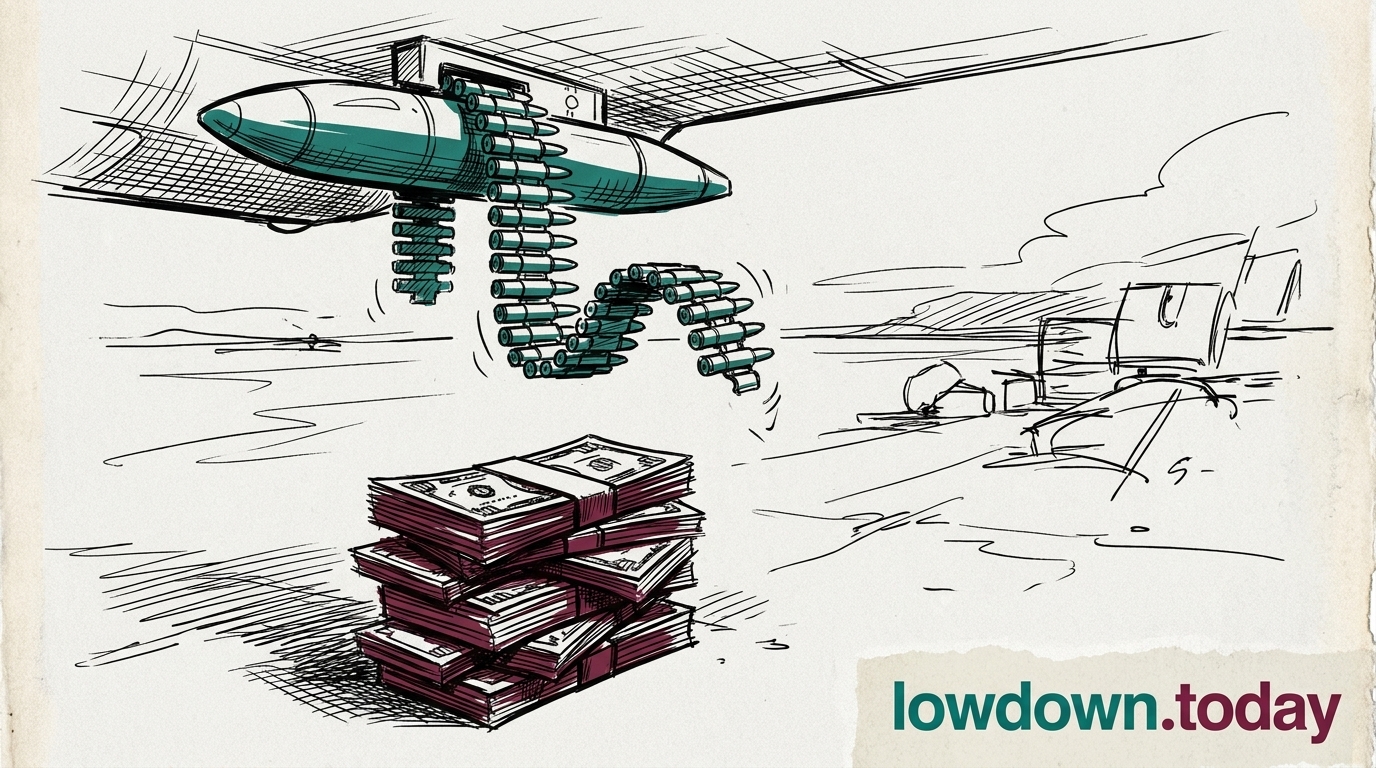
Iran's tactical shift exploits a fundamental cost asymmetry — Iranian drones and cruise missiles cost a fraction of the interceptors required to defeat them — making sustained attrition economically corrosive as well as politically wearing.

Iran has shifted its military posture from the concentrated missile salvos of the campaign's opening days to constant-rate strikes across dispersed targets — a pattern harder for air defences to intercept and harder for host nations to absorb politically.

The shift follows a clear operational logic. Iran's second retaliatory wave on 28 February relied on large salvos aimed at overwhelming Israel's layered missile defence. Some penetrated — six civilians died in Beit Shemesh , three in the UAE — but the bulk were intercepted. Massed salvos play to the defender's strength: missile defence systems are optimised for concentrated incoming fire within defined corridors. Constant-rate dispersed strikes invert that equation. Rather than one saturating wave, the new pattern distributes smaller attacks across time and geography — Ras Laffan in Qatar , Ras Tanura in Saudi Arabia , Duqm in Oman, the US embassy in Riyadh , RAF Akrotiri in Cyprus . Each individual strike is smaller. The aggregate effect is that every potential target across the region must maintain maximum defensive readiness indefinitely. Air defence crews fatigue. Interceptor stocks — finite and expensive — deplete. Host nations face a political question that grows louder with each impact: absorb continuous strikes on their territory for a war they did not start, or demand the US and Israel change course.

This is Hezbollah's doctrine, scaled to a state military. From the mid-1990s through 2006, Hezbollah maintained constant-rate rocket fire into northern Israel — never enough to be militarily decisive, always enough to be politically unsustainable. The doctrine drove Israel's withdrawal from southern Lebanon in 2000 after 18 years. Iran has studied its own proxy's most successful strategy and is applying the same logic across a theatre stretching from the eastern Mediterranean to the Arabian Sea, with ballistic missiles, cruise missiles, drones, and maritime attacks replacing Katyusha rockets.

The question the new posture poses is whether Washington's tolerance for sustained cost — measured in oil prices now well above $85 a barrel , six US service members dead in 72 hours , Strait of Hormuz traffic down 80% , and Gulf allies absorbing daily fire on infrastructure they depend on — outlasts Iran's capacity to absorb the campaign destroying its military and civilian infrastructure alike. Iran is betting that democracies break before states that have already lost their Supreme Leader and half their senior command. It is a bet with precedent in its favour and 787 civilian bodies as the price of testing it.


Deep Analysis

In plain English

Until recently, Iran's approach was to fire large numbers of missiles at once in a concentrated volley — like throwing a single heavy punch. Modern air defences are specifically built to handle that kind of massed attack. Iran has switched to something structurally harder to defeat: a constant trickle of strikes against many different targets across several countries simultaneously. No air defence network can be everywhere at once, and the financial cost of shooting down cheap drones with expensive interceptor missiles keeps mounting every day, draining both inventories and budgets.

Deep Analysis
Root Causes

The shift likely reflects inventory constraints alongside doctrinal preference: Israeli strikes in October 2024 (Operation Days of Repentance) and the June 2025 campaign degraded Iran's stockpiles of precision long-range ballistic missiles, whilst the dispersed drone and cruise missile production network — far harder to target comprehensively from the air — remained substantially intact. Iran is partly fighting with the weapons that survived, not purely the weapons it would prefer.

Escalation

The constant-rate model creates a self-regulating escalation band: intense enough to sustain political pressure on Washington, distributed enough to avoid triggering the threshold US response that a single catastrophic attack might justify. This calibration — not too much, not too little — is a deliberate strategic choice, not an incidental outcome, and it is designed to be sustained indefinitely rather than building toward a decisive military confrontation.

What could happen next?
  • Risk

    Sustained constant-rate strike operations will deplete high-value interceptor inventories faster than allied industrial production can replace them, creating a compounding air defence gap within weeks to months that Iran can then exploit with higher-precision assets.

    Short term · Assessed
  • Consequence

    Gulf host nations face compounding political stress as each strike on their territory generates domestic pressure to renegotiate or revoke US basing rights — the political exhaustion of host governments, not the military damage inflicted, is Iran's primary intended strategic effect.

    Short term · Assessed
  • Precedent

    If this strategy produces US disengagement, the constant-rate dispersed strike model becomes the validated doctrine for state actors seeking to resist US military campaigns without nuclear deterrence, reshaping deterrence calculations for at least the next decade.

    Long term · Suggested
First Reported In

Update #15 · Iran rejects ceasefire; embassies close

NBC News· 3 Mar 2026
Read original
Causes and effects
This Event
Iran switches to constant dispersed hits
The shift from massed salvos to constant-rate dispersed strikes transforms the conflict from a missile defence problem into a political endurance contest, forcing every host nation across the region to choose how long it will absorb fire for a war it did not authorise.
Different Perspectives
Hormuz shipping and insurance market
Kpler, Lloyd's List and S&P Global each independently put Strait of Hormuz transits at a seventh to a sixth of pre-war levels, against CENTCOM's own position that the strait remains open for transit. War-risk premiums rose from 0.25% to 3-10% of hull value in mid-July and have held steady since.
Pakistan (with China)
Iran's interior minister met Pakistan's army chief in Islamabad on 25 July, his second visit in ten days, with China separately pushing the same track; Islamabad's stated precondition, a halt to Gulf attacks, broke within hours when the Houthis struck Yanbu and Jazan. The channel inherits Baghdad's opening without yet fixing what broke it.
Saudi Arabia
Saudi Arabia
Saudi Arabia absorbed Houthi strikes on Aramco-linked sites at Jazan and Yanbu on 25 July without confirming them, while holding a 30-year civil nuclear agreement Trump made conditional on joining the Abraham Accords two days after signing it. Riyadh is fighting on one front while being asked to concede on another.
Iran (state security leadership)
Iran's security chief said strikes continue until the enemy's "total surrender", and no IRNA, Tasnim or Fars report carries any stand-down language to match Washington's pause. Tehran reads the halt as "strategic decision-making fatigue", not a restraint it needs to reciprocate.
Washington (Pentagon and White House)
A Defense Department source called the bombing halt "on a hold", Pentagon spokesman Sean Parnell insisted the US "retains a deep arsenal of capabilities", and the White House credited "successful sanctions" and thirteen days of strikes for the same pause. Three explanations from one government suggest none of them is the whole one.
Oil traders
Oil traders
Sent Brent down 2.29 per cent to $98.38 a barrel on reports that mediation was reviving, moving the price on CENTCOM's quiet night rather than on Trump's same-day promise of a bigger operation with no deadline attached.



