Britain refused to fight, yet its base got hit: what is Akrotiri actually used for?
Timeline for RAF Akrotiri
RAF Typhoons fire APKWS in Gulf combat
Drones: Industry & DefenceMentioned in: UK attorney general: war unlawful
Iran Conflict 2026Opened to US Iran strikes alongside Diego Garcia under Starmer's order
Iran Conflict 2026: UK opens RAF Fairford to US Iran strikesMentioned in: Third Iran missile over Turkish skies
Iran Conflict 2026Mentioned in: British troops yards from Iran strike
Iran Conflict 2026Background
The base sits within the Akrotiri Sovereign Base Area (SBA), one of two patches of British territory retained under the 1960 Treaty of Establishment when Cyprus gained independence. Its position roughly 200 km from the Lebanese coast puts it within range of Iranian-supplied loitering munitions.
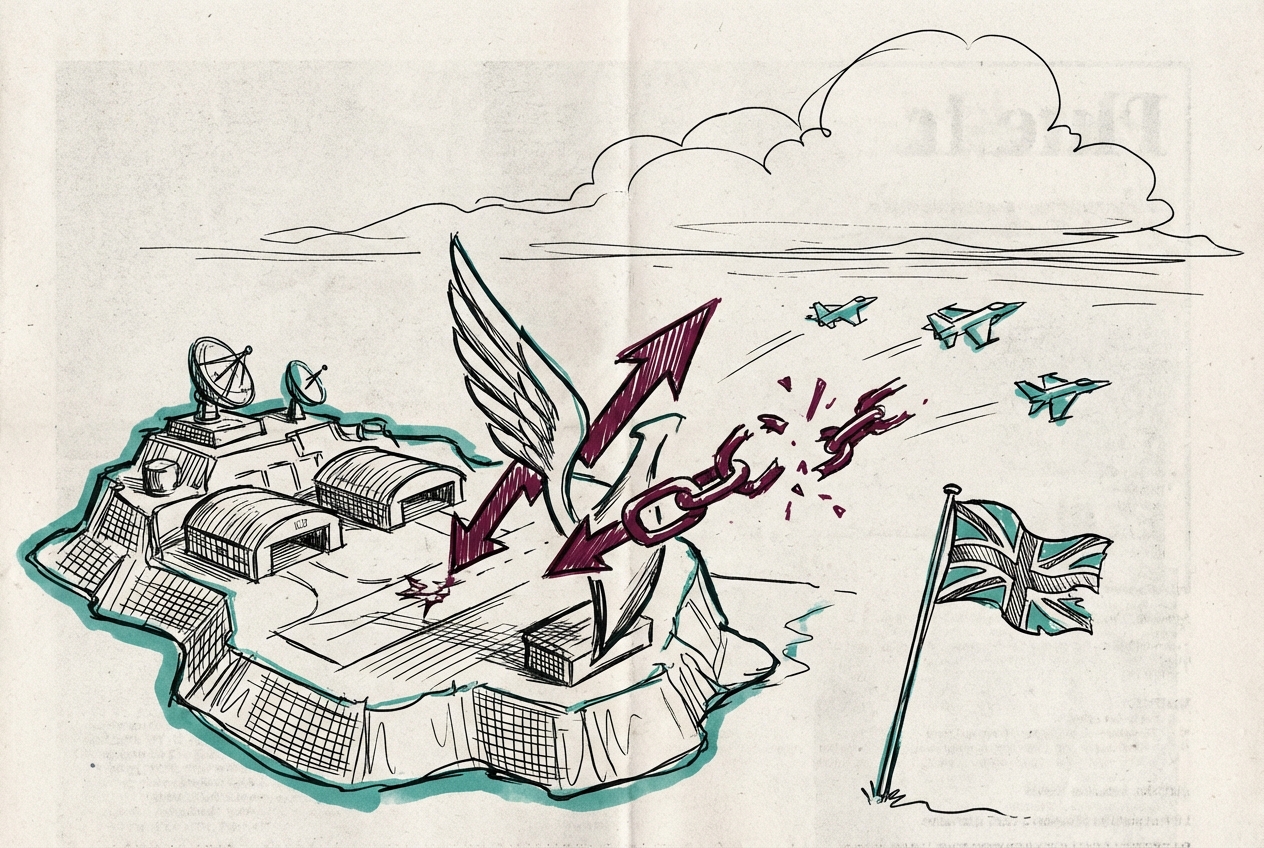
RAF Akrotiri is the British Royal Air Force's principal Eastern Mediterranean base, used continuously for combat operations since the 1991 Gulf War. A Shahed-136 drone struck the base on 1 March 2026, within an hour of Prime Minister Keir Starmer authorising US use of British bases for strikes on Iran. A second pair of drones was intercepted 48 hours later. The March 2026 strikes exposed the tension at the core of UK policy: Starmer had explicitly refused offensive operations, yet Akrotiri became a target the moment London allowed any US access.
From approximately 17 May 2026, RAF Typhoons of 9 Squadron deployed operationally at Akrotiri conducting counter-drone combat missions, firing APKWS laser-guided rockets against Shahed-class drones in the Middle East theatre. The deployment confirms Akrotiri's evolution from a logistics and maritime patrol base to an active counter-drone operations hub. APKWS at approximately £20,000 per shot is an interim measure; the UK's EHEL programme and directed-energy investments are the intended longer-term cost solution. The use of Akrotiri as a Typhoon counter-drone base has both operational and political implications: every sortie reaffirms the UK's frontline role in the Middle East conflict while raising the base's own targeting profile.
What is RAF Akrotiri?
Was RAF Akrotiri attacked in 2026?
Why did the UK refuse to use RAF Akrotiri for offensive operations?
How far is RAF Akrotiri from Lebanon?
Is RAF Akrotiri British or Cypriot territory?

