Cyprus
EU island state; hosts RAF Akrotiri, venue for April 2026 informal European Council.
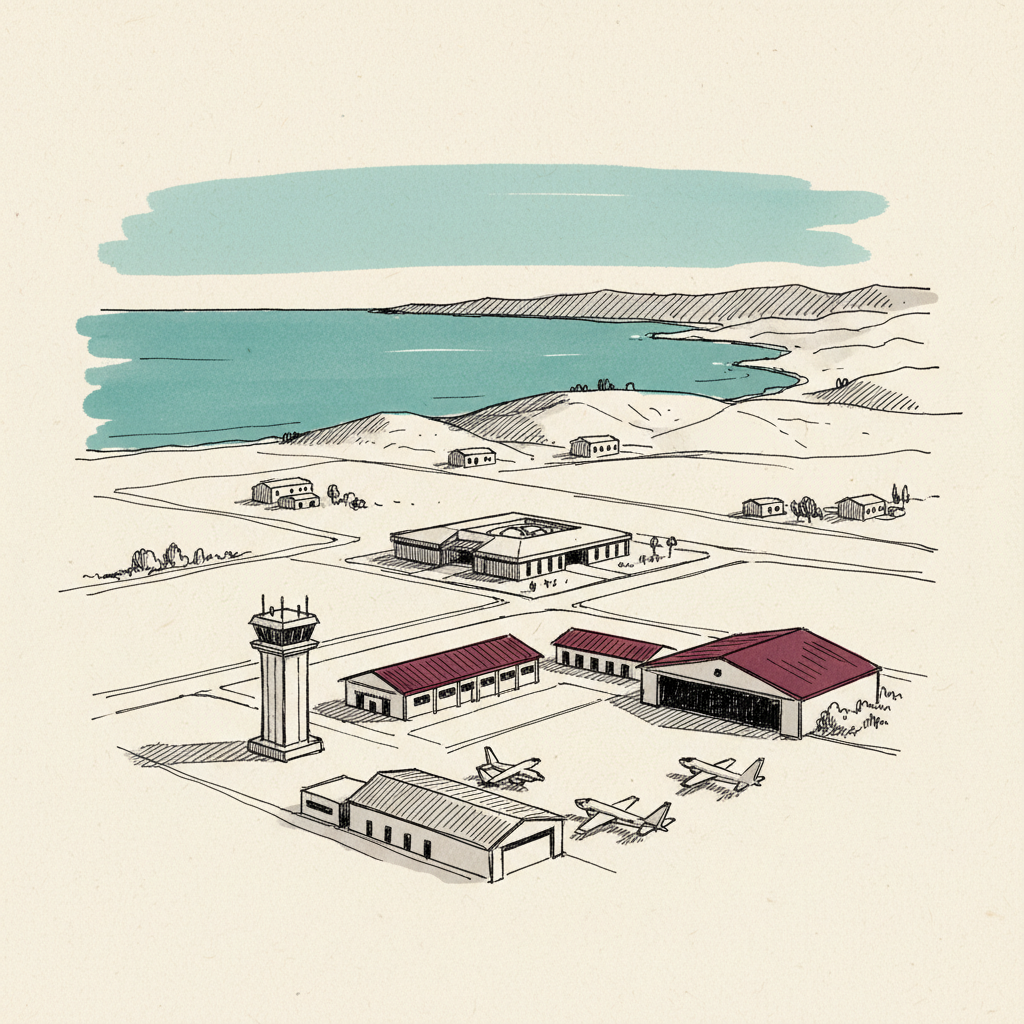
Drones struck RAF Akrotiri, one of Britain's two Sovereign Base Areas on Cyprus, on 1-2 March 2026, days after the UK opened its Middle East bases to US operations, putting the island on the front line of the Iran war.
Last refreshed: 3 October 2026 · Appears in 5 active topics
How does Cyprus balance EU membership, UK military bases, and Mediterranean conflict exposure?
Timeline for Cyprus
Mentioned in: Wales opens register for every paid stay
Nomads & CommunitiesMentioned in: EU Act ties short-let caps to registers
Nomads & CommunitiesMentioned in: AI Act fines land on a stale register
European Tech SovereigntyCyprus hotel lobby seeks cap as short-lets slump
Nomads & CommunitiesMentioned in: Thailand puts all 27 EU states on par
Nomads & CommunitiesBackground
Cyprus is the easternmost EU member state, a divided island about 100 km south of Turkey in the north-eastern Mediterranean. The internationally recognised Republic of Cyprus joined the EU in 2004; the north has been occupied since 1974 and its Turkish Cypriot administration is recognised only by Turkey. The United Kingdom retains two Sovereign Base Areas, Akrotiri and Dhekelia, under the 1960 Treaty of Establishment.
Cyprus runs one of the EU's larger ship-registry and ship-management bases, an interest that regularly puts it alongside Greece and Malta in resisting tighter or longer sanctions terms on Russian oil shipping.
Its undeveloped Aphrodite gas field gives Cyprus a further stake in the region's contested energy geography. The island also hosts EU summitry on neutral ground away from Brussels: EU leaders met there informally on 23-24 April 2026.
Its British base drew drone strikes
Iranian-linked drones struck RAF Akrotiri on 1-2 March 2026, within days of the UK opening its Middle East bases to US operations. Cypriot authorities said the same day that two further drones heading for the base had been intercepted.
A further hit on the base was confirmed on 8 March. Hosting Akrotiri and Dhekelia under the 1960 Treaty of Establishment gives the Republic no say over how Britain uses them, yet the island absorbs the retaliation. Britain had refused Akrotiri for offensive strikes, but the distinction offered no protection once Iran treated European bases as targets.
Its hotels want short lets capped
On 15 July the island's licensed hotel sector called for a yearly limit on short lets, backed by inspections, fines and a nightly levy. Three days later Konstantinos Karakontis, president of the self-catering association, told Alpha TV that short lets had lost 10 to 15% in both occupancy and prices compared with a year earlier, which undercut the hoteliers' case that short lets were squeezing them.
The dispute rests on a registration gap. Only 8,500 properties hold licences, while 12,000 to 15,000 are advertised, so a third or more of the island's listings sit outside its licensing system. Cypriot newspapers use the acronym STEK for both trade bodies, blurring which of them speaks.
It resists a long cap freeze
In July 2026 Cyprus sided with Greece and Malta in wanting the EU's $44.10 ceiling on Russian crude frozen for just three months, while the Commission sought to hold it until January 2027. On 15 July EU ambassadors froze the CAP for one week, to 23 July, halting an automatic update that would have lifted it towards roughly $58 a barrel.
The position follows from Cyprus's shipping interests. The island runs one of the EU's larger ship-registry and ship-management bases, so the length of any CAP freeze bears directly on business its fleet managers handle.
Its RAF base was struck by drones
Is RAF Akrotiri in Cyprus safe from Iranian drone attacks?
Reference
Is northern Cyprus part of the European Union?
What is the Aphrodite gas field and why hasn't it been developed?
What is RAF Akrotiri and where is it?
Why does Cyprus want a shorter freeze on the Russian oil price cap?
Why is the EU energy summit being held in Cyprus in April 2026?
Did Cyprus's push for a shorter Russia oil price cap freeze succeed on 13 July 2026?


