Skip to content
Briefings are running a touch slower this week while we rebuild the foundations.See roadmap
Iran Conflict 2026
4JUN

Netanyahu refuses Lebanon withdrawal on Day 4

3 min read
11:25UTC

Day four of the Lebanon truce saw a dispute over a 10km buffer the IDF is holding inside Lebanese territory. Benjamin Netanyahu told his cabinet Israeli troops would not withdraw.

ConflictDeveloping
Key takeaway

Netanyahu's refusal to withdraw from a 10km IDF buffer leaves Lebanon's truce without an agreed line.

Day four of the Lebanon truce saw a "yellow line" dispute over a 10km buffer the Israel Defense Forces (IDF) is maintaining inside Lebanese territory, per Al Jazeera 1. Benjamin Netanyahu told his cabinet Israeli troops would not withdraw from the buffer.

The Lebanon truce was announced on Truth Social without prior cabinet consultation, and the Yellow Line dispute is the first operational stress test of a ceasefire that has no agreed line of demarcation. The 10km depth is meaningful: it puts IDF positions inside villages on the Lebanese side of the Blue Line, the UN-demarcated border, with the force posture of an occupying buffer rather than a withdrawing one. Hezbollah has fired on Tel Aviv as recently as 10 April under truce cover; the buffer is operating as the tripwire between restraint and resumption.

For Lebanese civilians inside the buffer the immediate consequence is displacement under a truce notionally in force. The UN Interim Force in Lebanon (UNIFIL) has no mandate to remove IDF positions, and the Lebanese Armed Forces cannot move into the buffer without escalating the dispute. A counter-view from Israeli officials is that the buffer is a temporary operational necessity until Hezbollah disarms under the Lebanon ceasefire's Annex B; Lebanese officials argue the annex requires reciprocal withdrawal that the 10km posture pre-empts. Both readings can be true simultaneously, which is why the dispute is load-bearing rather than cosmetic.

Deep Analysis

In plain English

Pakistan's air force has deployed F-16 fighter jets to help protect Saudi Arabia's airspace from potential Iranian drone and missile threats, putting Islamabad in the Gulf Arab camp. At the same time, Pakistan's army chief, Field Marshal Asim Munir, is flying to Tehran to carry diplomatic messages between Iran and the United States. These two roles give Pakistan unusual influence: it is the only country simultaneously protecting Iran's neighbours and talking directly to Iran's military. Both roles depend on the ceasefire holding; if fighting resumes, Islamabad would face a forced choice between the Saudi security relationship and the Iran mediation channel.

Deep Analysis
Root Causes

Pakistan's F-16s in Saudi airspace serve two simultaneous functions: they reinforce Saudi air defences against IRGC drone and missile threats without formally committing Islamabad to the US-led coalition, and they signal to Riyadh that Pakistan's mediation of the Iran channel carries a security guarantee alongside it.

The structural dependency is Pakistan's $8 billion annual remittance income from Gulf workers, which requires Riyadh's goodwill regardless of which way the conflict resolves. That financial constraint is why the dual posture exists: Islamabad cannot afford to choose one side, so it is structurally required to serve both.

What could happen next?
  • Risk

    Pakistan's dual-posture leverage depends entirely on the ceasefire holding; a resumption of hostilities forces Islamabad to choose between the Saudi security relationship and the Iran mediation role.

First Reported In

Update #74 · Two unsigned rulebooks collide at Hormuz

Al Jazeera· 20 Apr 2026
Read original
Causes and effects
This Event
Netanyahu refuses Lebanon withdrawal on Day 4
A truce with a commander-in-chief publicly refusing withdrawal is not a truce with a mutually understood line. The Lebanon front remains the most plausible route back to wider regional escalation while the Iran blockade is in force.
Different Perspectives
China
China
Beijing's MOFCOM Blocking Rules constrain OFAC enforcement on the mainland; China has not corroborated Trump's verbal account of any bilateral summit, and the rial's failure to hold its Rubio bounce, combined with the IRGC's stablecoin rail closure, increases Chinese yuan-denominated oil-payment exposure through Hormuz.
Israel
Israel
IDF Chief Zamir said on 3 June there is no ceasefire for his forces even as Israel signed the Washington Lebanon framework requiring Hezbollah withdrawal south of the Litani; a UNIFIL peacekeeper was killed by mortar near Marjayoun on the same day, exposing the gap between the diplomatic framework and a ground advance that has not stopped.
Bahrain
Bahrain
The IRGC struck Bahrain on 3 June as its sirens sounded and its PAC-3 magazine neared exhaustion; excluded from Rubio's 2 May emergency resupply, Bahrain received a 50-round Federal Register notice on 1 June on an 18-month delivery timeline, meaning it is defending the US Fifth Fleet headquarters on the last rounds it has.
Qatar
Qatar
Qatar offered $6bn under OFAC Licence L-2 restrictions and sent Ghalibaf's delegation home empty-handed; the $6bn ceiling is a legal constraint, not a negotiating floor, and Rubio's no-sanctions-relief testimony means Qatar cannot revise it without White House action that has not been requested.
Kuwait
Kuwait
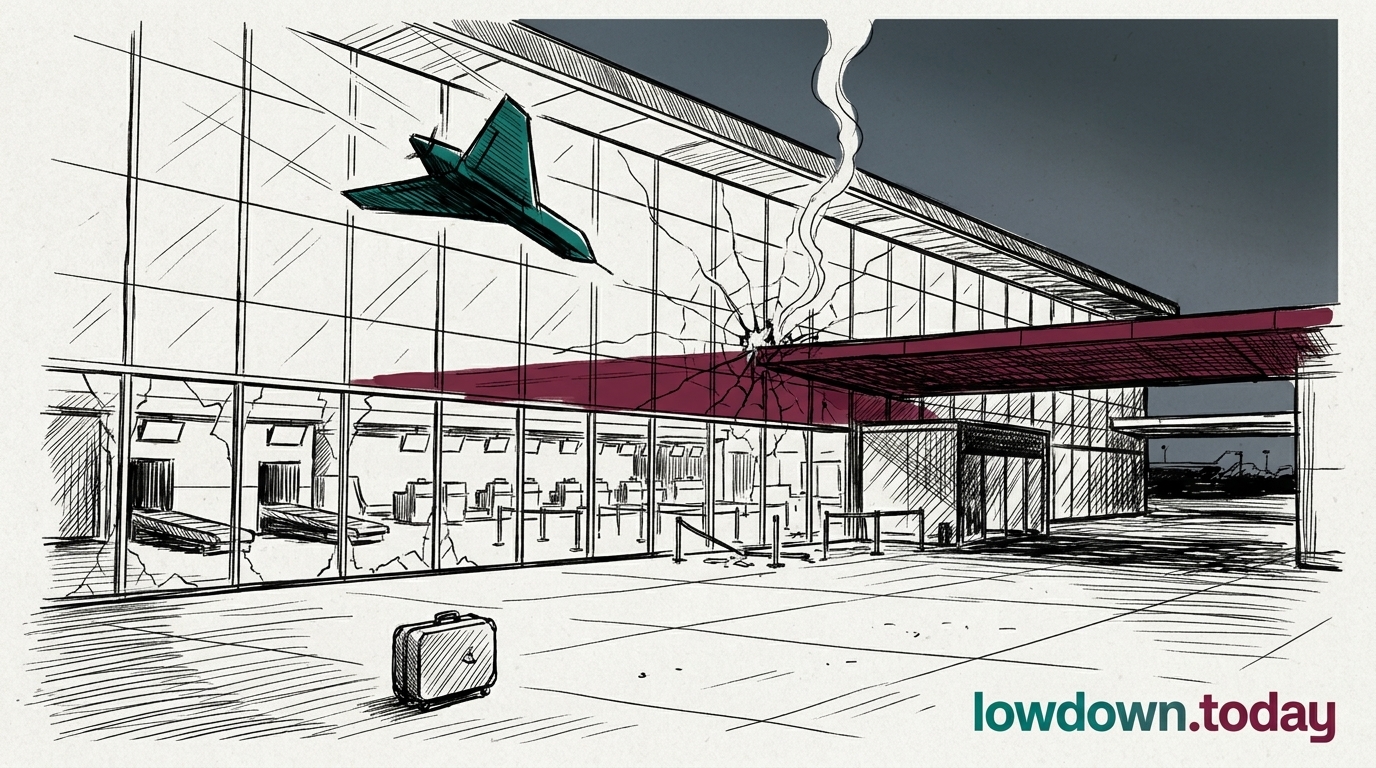
Kuwait expelled two Iranian diplomats within 24 hours of the airport strike, the strongest and fastest Kuwaiti diplomatic move of the conflict, while keeping the full mission in place to preserve a communication channel; it has now invoked Article 51 self-defence, filed a formal protest, and expelled diplomats, exhausting its formal toolkit short of full rupture.
United States
United States
Trump narrated a weekend deal while the channel Rubio described under oath, Khamenei's written-only couriers with a 3-to-5-day lag, cannot answer at that speed; CENTCOM called the airport strike deliberate, calculated and unjustified. The House 215-208 vote gave Congress its first on-record war-powers position against the deployment Trump has run without a signed instrument for 96 days.