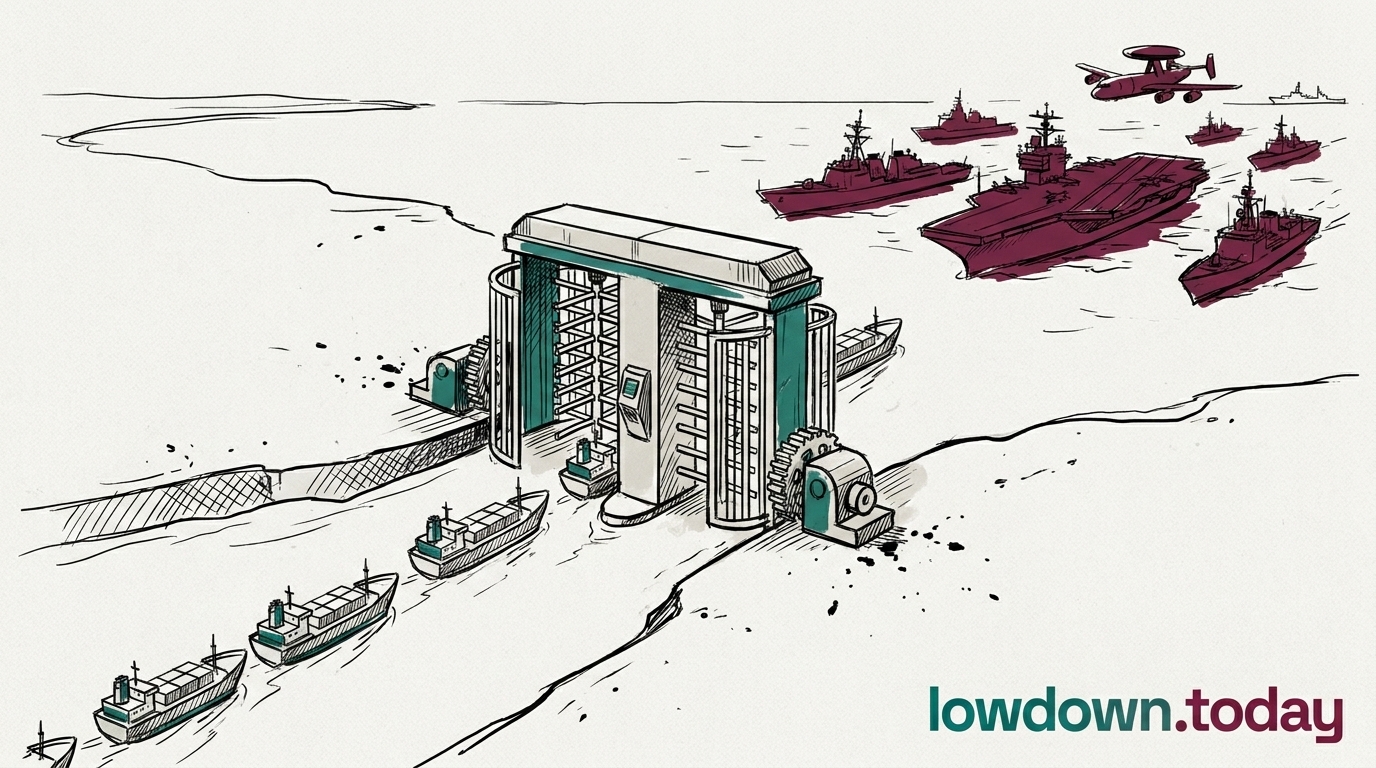
US Secretary of State Marco Rubio arrived in the United Arab Emirates on 23 June and declared Washington "will not accept tolls or fees" on the Strait of Hormuz1. The statement landed the same day Iran and Oman signed a joint committee in Muscat to determine exactly those fees, a body grounded in the sovereign-waters framing Iran's Persian Gulf Strait Authority first established.
Rubio is the senior US diplomat, and his Gulf tour is a reassurance mission: the Gulf Arab monarchies have watched the Islamabad MoU reorder the regional balance with no seat for them at its table. His itinerary runs from the UAE to Kuwait, then to a Gulf Cooperation Council (GCC) session in Bahrain on 25 June, the regional union of six Gulf states and the first formal multilateral response to the memorandum.
A verbal US objection to tolls now sits against a signed Iran-Oman instrument that asserts the right to charge them, and the GCC meeting follows the Qatar-Pakistan communique that set the 60-day roadmap. Rubio is touring capitals to hold a Coalition together; Iran spent the same day putting a head-of-state signature on paper.


