Skip to content
You can now search across every topic, entity and event.What's new
European Oil Markets
16JUL

Rubio lands in UAE: no Hormuz tolls

3 min read
09:39UTC

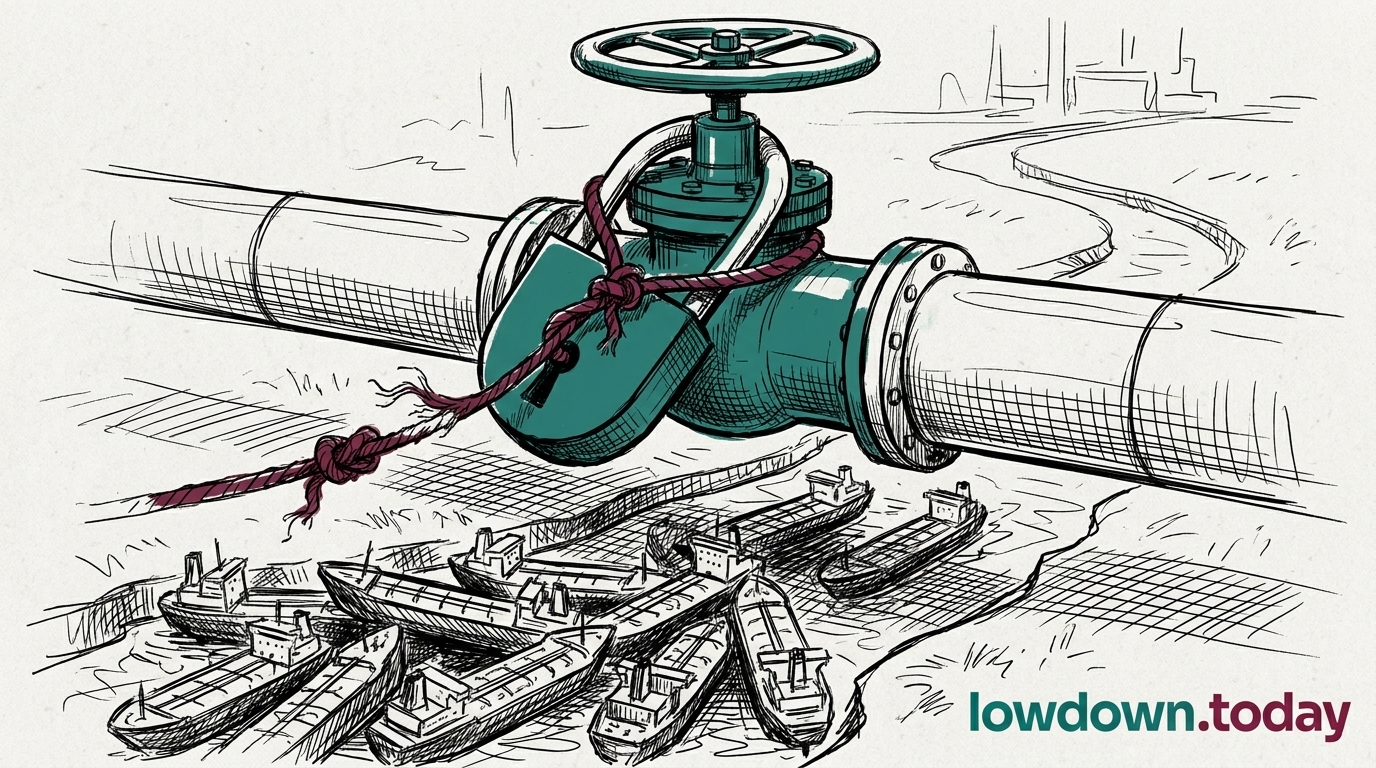
Marco Rubio arrived in the United Arab Emirates on 23 June declaring Washington will not accept tolls on the Strait of Hormuz, the same day Iran and Oman signed a committee to set them.

EconomicDeveloping
Key takeaway

Rubio toured the Gulf rejecting Hormuz tolls the day Iran and Oman signed a body to impose them.

US Secretary of State Marco Rubio arrived in the United Arab Emirates on 23 June and declared Washington "will not accept tolls or fees" on the Strait of Hormuz 1. The statement landed the same day Iran and Oman signed a joint committee in Muscat to determine exactly those fees, a body grounded in the sovereign-waters framing Iran's Persian Gulf Strait Authority first established .

Rubio is the senior US diplomat, and his Gulf tour is a reassurance mission: The Gulf Arab monarchies have watched the Islamabad MOU reorder the regional balance with no seat for them at its table. His itinerary runs from the UAE to Kuwait, then to a Gulf Cooperation Council (GCC) session in Bahrain on 25 June, the regional union of six Gulf states and the first formal multilateral response to the memorandum.

A verbal US objection to tolls now sits against a signed Iran-Oman instrument that asserts the right to charge them, and the GCC meeting follows the Qatar-Pakistan communique that set the 60-day roadmap . Rubio is touring capitals to hold a coalition together; Iran spent the same day putting a head-of-state signature on paper.


Deep Analysis

In plain English

US Secretary of State Marco Rubio flew to the United Arab Emirates on 23 June; the same day Iran and Oman signed their joint agreement to set fees on the Strait of Hormuz. His message was direct: America will not accept anyone charging for passage through the strait. He then planned to visit Kuwait and attend a meeting of the Gulf Cooperation Council; the club of six Gulf Arab monarchies; in Bahrain on 25 June. Oman's decision to co-sign the Muscat committee worries the other five Gulf monarchies, who depend on the strait for their own oil exports. The Islamabad ceasefire deal signed the previous week gave Iran some of what it wanted, and the Bahrain GCC session on 25 June is the first chance for those five countries to formally respond.

First Reported In

Update #137 · Iran and Oman claim the strait; US says no

US State Department· 24 Jun 2026
Read original
Different Perspectives
Indian refiners
Indian refiners
Indian refiners kept lifting discounted Urals as the India/Baltic price split widened past $9-10 a barrel, a gap that only grows as GL X1's Iranian wind-down cuts an alternative discounted grade off the market by 17 July. Cheaper Russian feedstock is being locked in while it lasts.
Chinese refiners
Chinese refiners
Chinese refiners gain leverage as the Urals-Brent discount widens, since Beijing's state buyers already source discounted Russian barrels near the fiscal floor unaffected by Western insurance costs. A wider discount, if it holds past 23 July, lets them lock in cheaper term contracts regardless of the cap's outcome.
US money managers (CFTC-tracked)
Managed money trimmed WTI net length into the rally, positioning that reflects doubt the Hormuz premium survives without freight or war-risk confirmation. The Brent-WTI spread widening almost entirely on the Brent leg supports that scepticism about a broad-based repricing.
OPEC+ (Saudi-led subgroup)
Saudi Arabia is defending market share through a fourth straight 188kbd August hike even as OPEC's own July MOMR cut 2026 demand growth for the fourth consecutive month. At a $108-111 fiscal breakeven, every added barrel costs Riyadh revenue it cannot recoup, so the hike reads as a positioning signal, not a demand bet.
Greek shipping registries
Greece, backed by Cyprus and Malta, is pushing a three-month cap-freeze compromise against the Commission's freeze to January 2027 ahead of the 23 July vote. Athens' and Valletta's combined tanker registrations mean a shorter review gives their insurers more frequent chances to reprice risk on Russian cargoes.
Russia (Deputy PM Alexander Novak)
Novak extended the diesel export restriction to producers on 8 July, the first producer-binding curb of the war, protecting the domestic pump price ahead of any refinery repair timeline. Urals still trades below Russia's $59 budget floor even as Brent gained, so the ban trades export revenue for fiscal stability at home.