Skip to content
Welcome, thoughtbot's Giant Robots listeners!Start here
European Oil Markets
6JUL

Iran and Oman claim the strait

3 min read
09:52UTC

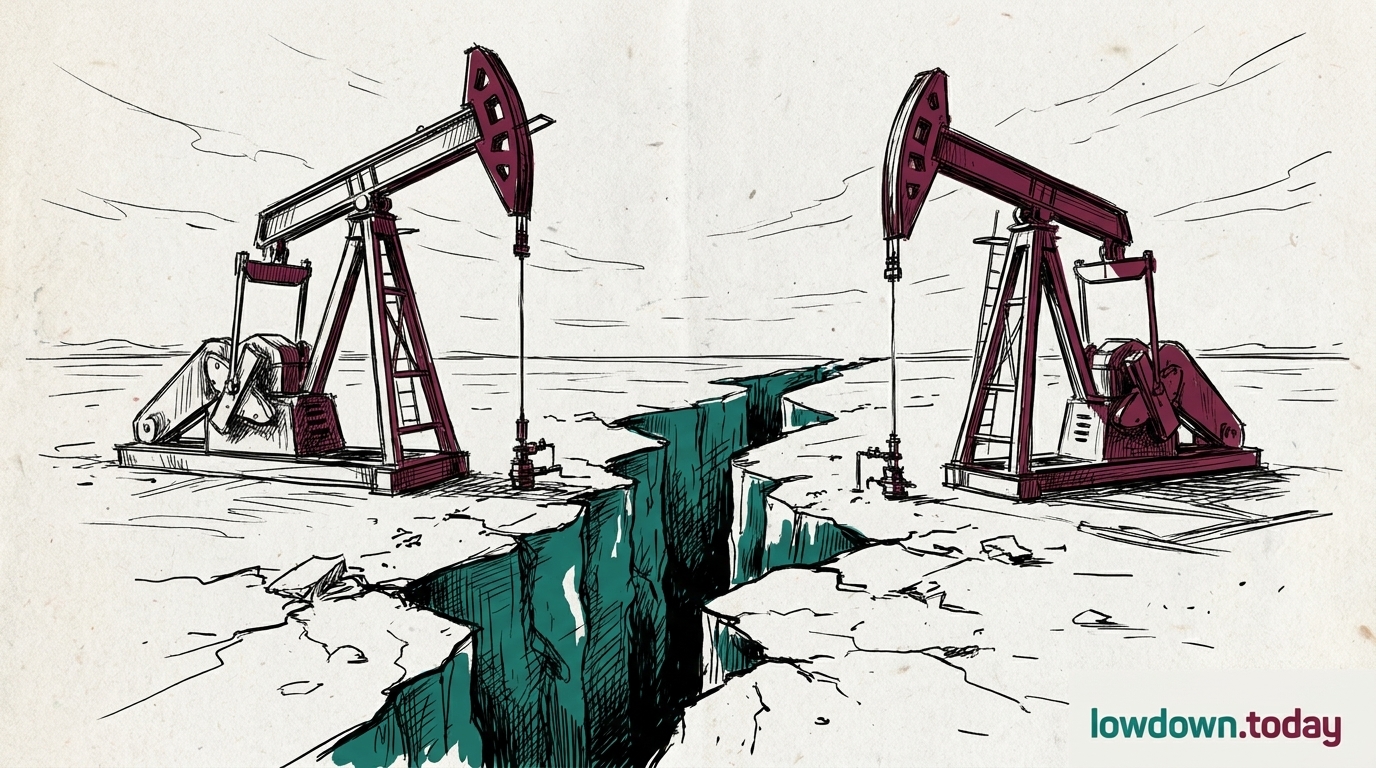
Sultan Haitham bin Tariq signed a joint statement with Iran's foreign minister in Muscat on 23 June, creating a standing committee to set fees on the Strait of Hormuz, hours after Rubio said Washington will not accept tolls.

EconomicDeveloping
Key takeaway

Iran and Oman signed a Hormuz fee committee the same day Washington said no state may charge.

Iran and Oman signed a joint statement in Muscat on 23 June creating a standing committee between their foreign ministries to administer Strait of Hormuz shipping and determine transit fees "in alignment with international standards"⁠1. Sultan Haitham bin Tariq, Omani Foreign Minister Badr Albusaidi, Iran's Foreign Minister Abbas Araghchi and parliament speaker Mohammad Bagher Ghalibaf put their names to it in person. the strait is the 33-kilometre chokepoint through which roughly a fifth of the world's seaborne oil passes, and the question of who may charge to use it has run unresolved since the war began.

The Sultan's personal signature, head-of-state level rather than ministerial, escalates the consultations Baghaei first announced on 18 May into a formal institution with named signatories and fee-determination authority. The founding language, "the sovereignty and sovereign rights of the two coastal nations"⁠2, positions the pair as co-governing authorities over a waterway Washington insists no state may charge to use.

That framing carries weight beyond the rhetoric. A coastal-state body that sets fees pre-empts both the US position and the European multilateral framework drafted at the UK's Northwood Headquarters. It also routes around Iran's own unilateral Persian Gulf Strait Authority (PGSA), the body that mandated transit insurance and reserved fees from 17 August, while Oman simultaneously reaffirmed its backing for the Islamabad MoU and gave Tehran the Arab cover The Gulf monarchies have withheld.

Deep Analysis

In plain English

the strait of Hormuz is a 33-kilometre shipping lane between Iran and Oman through which roughly one-fifth of the world's oil passes every day. Until now, every country agreed that no single nation owned it; ships could pass freely under international maritime rules. On 23 June, Iran and Oman signed a document creating a joint committee that can set fees for using the strait. They are two of the three countries whose coasts border the strait, so together they claim the right to govern it. This matters because the United States and most shipping nations argue no country can charge for passage through an international strait. If Iran and Oman enforce fees, every tanker carrying oil from The Gulf; including those supplying Europe and Asia; faces a new toll. The US Secretary of State arrived in the region the same day and said America will never pay those fees, leaving a direct standoff between the two positions.

Deep Analysis
Root Causes

The Iran-Oman committee reflects a specific structural gap in the 1982 UN Convention on the Law of the Sea (UNCLOS): transit passage rights through international straits bind the 169 states that ratified UNCLOS, but Iran never ratified it.

Tehran instead relies on its own 1934 and 1959 maritime boundary treaties with Oman, which pre-date the transit-passage doctrine. The 23 June committee grounds its fee authority in those bilateral treaties rather than UNCLOS, giving the arrangement domestic legal standing in both states even if it conflicts with international maritime law as the US and EU interpret it.

Oman's co-signature also reflects the failure of Bessent's 28 May threat to sanction Oman over toll facilitation. Muscat backed down verbally then, but the 23 June signing shows the retreat was tactical: Sultan Haitham waited until the Islamabad MoU gave the committee a treaty hook ('navigation services' charges permitted after 60 days) before committing his personal signature.

Escalation

The committee's signing escalates the Hormuz governance dispute from an IRGC unilateral toll claim to a bilateral state instrument backed by a head-of-state signature. The IRGC's own PGSA is now supplemented, not replaced, by a civilian-diplomatic vehicle. This makes it harder for Washington to dismiss the toll question as Iranian extremism and harder for moderate Gulf states to oppose it without directly challenging Oman.

What could happen next?
  • Precedent

    If no international body invalidates the committee before it begins operating, two coastal states will have established that joint governance of an international strait can override transit-passage norms, creating a template replicable in the Bab el-Mandeb (Djibouti-Eritrea-Yemen) and the Turkish Straits.

    Medium term · Reported
  • Risk

    The GCC session in Bahrain on 25 June faces a split between Oman (co-signatory) and the four Gulf monarchies that formally rejected the PGSA in May. Any GCC communique that fails to name the committee risks legitimising it by omission.

    Immediate · Assessed
  • Consequence

    Rubio's no-tolls declaration, issued hours after the signing, now requires a concrete enforcement mechanism; either sanctions on Omani toll-facilitation or naval interdiction; neither of which Washington has signalled it will use against a fellow US partner state.

    Short term · Reported
First Reported In

Update #137 · Iran and Oman claim the strait; US says no

WANA (West Asia News Agency)· 24 Jun 2026
Read original →
Different Perspectives
S&P Global
S&P Global
S&P Global said on 12 November that thin refining buffers leave jet fuel exposed to price spikes in 2027. Its view cuts against the pump-lag case, because tight middle distillates would keep jet and diesel dear even as crude falls.
European Union
European Union
The Commission proposed a 22nd package on 23 November that would list more than 70 more tankers and ban Russia-insured ones, after listing Balance Insurance on 16 November. It needs every member state's vote, so Russian tanker insurance becomes the EU's next test of unanimity.
UK households and hauliers
UK drivers paid 193.29p a litre for diesel in the week of 23 November, DESNZ data show, 31.33p more than petrol, and BoilerJuice quoted heating oil at 96.51p a litre before VAT. They pay the gap that crude's fall has not closed, with motor fuels up 33.2% in October's inflation figures.
Saudi Arabia and the OPEC+ Seven
The OPEC+ Seven held December output at September's level on 1 November, and Saudi Aramco priced December Arab Light to Europe below Brent, Attaqa reported. The full group decides on Sunday 29 November whether about 2m b/d of cuts outlast 2026, with Saudi diesel loadings already up 30% in early November.
Eni
Eni
Eni reported a third-quarter standard refining margin of $28.1 a barrel and raised its full-year assumption from $14 to $18. Its finance chief Francesco Gattei said on the 23 October call that the quarter to date was at $18, press coverage reported, so the refiner sees its windfall shrinking.
Gulf oil producer
Gulf oil producer
Secured OPEC's confirmed 188,000 b/d September increment with the next meeting set for 6 September, but the Secretariat's own 2 August release says nothing about the fourth quarter. Output guidance beyond September remains undisclosed even as delegate sourcing keeps filling that gap.

Written with AI from Lowdown's published reporting. Not individually reviewed by an editor. Editorial standards.
