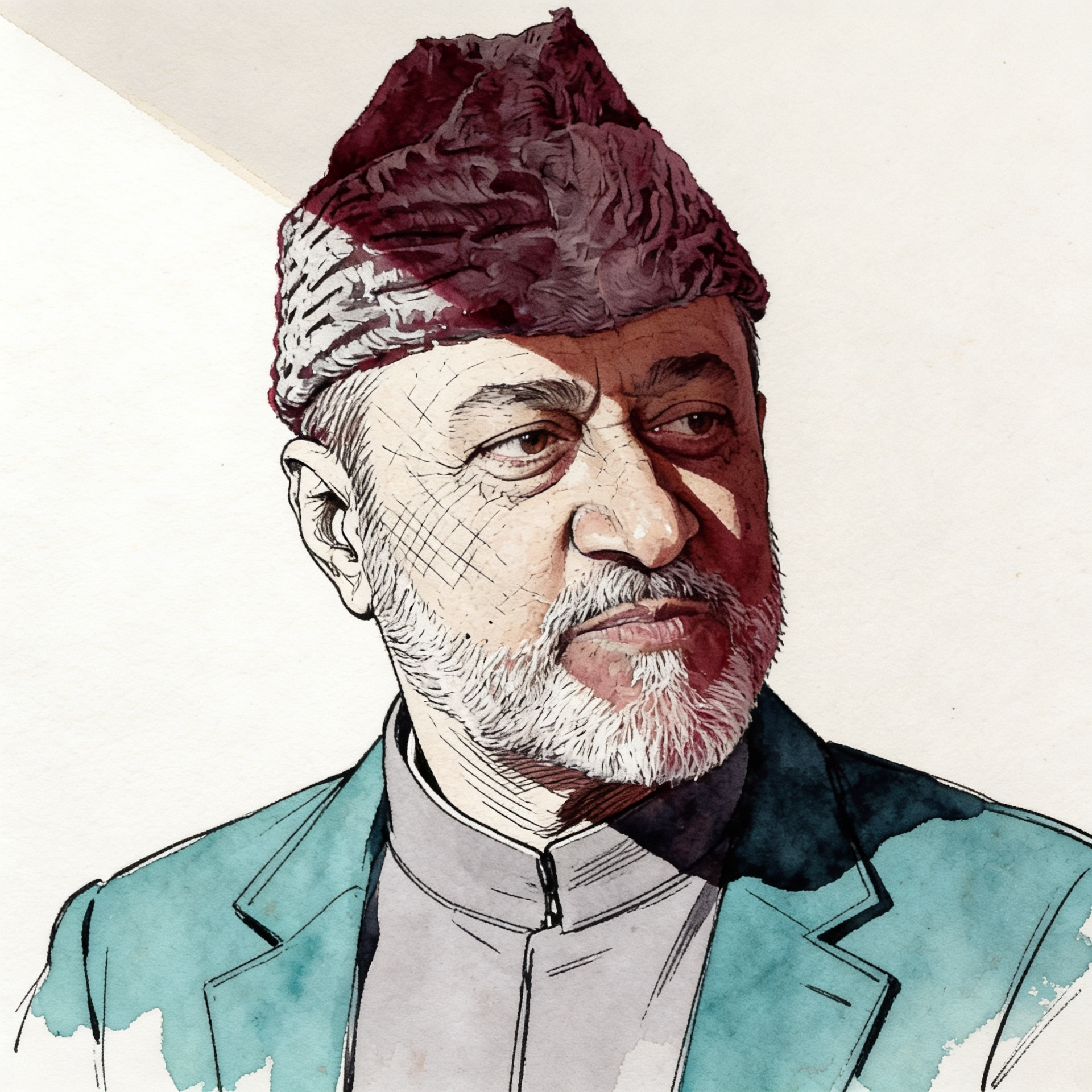
Has Sultan Haitham made Oman a co-governor of the Strait of Hormuz?
Timeline for Sultan Haitham bin Tariq
Signed the joint statement in person in Muscat
Iran Conflict 2026: Iran and Oman claim the straitOman warns of a mine in its own waters
Iran Conflict 2026Mentioned in: Hormuz transits climb to 13 on 28 April
Iran Conflict 2026Received Araghchi in Muscat and agreed to continue expert-level Hormuz transit consultations
Iran Conflict 2026: Iran-Oman draft toll outside US reachReceived Araghchi in Muscat on 26 April
Iran Conflict 2026: Iran offers Hormuz first; US rejectsBackground
Sultan Haitham bin Tariq Al Said has governed Oman since 11 January 2020, when he succeeded Sultan Qaboos following the latter's death after five decades in power. Haitham, a cousin of Qaboos and former Minister of Heritage and Culture, has maintained Oman's distinctive Foreign Policy posture: formal neutrality, pragmatic relationships with all regional actors, and a historic role as a discreet intermediary between Iran and Western states. Oman hosted the secret talks that preceded the 2013 Geneva interim nuclear agreement between Iran and the P5+1, a diplomatic legacy Haitham inherited alongside the sultanate.
Haitham's diplomatic calculus is constrained by economics: Oman has significant trade and energy ties with Iran and cannot afford the reputational damage of being seen as a full US proxy, but also needs US and Gulf security guarantees given its limited military capacity. That balance has become harder to hold as the 2026 Hormuz conflict raised the stakes for every actor using Oman as a conduit.
In April 2026, Haitham received Iranian Foreign Minister Abbas Araghchi in Muscat for talks described by Omani state media as covering regional stability and humanitarian concerns. The meeting came the day after a strike on the Omani port of Salalah and was diplomatically sensitive: Oman had to balance its role as a conduit with its own civilian casualty concerns.
By late April, Iranian state media reported Tehran and Muscat were discussing a bilateral transit protocol for the strait of Hormuz that included a toll-collection mechanism Iran could not impose unilaterally. That framing thrust Haitham into direct US pressure: on 28 May 2026 Treasury Secretary Scott Bessent warned Oman that Washington would 'aggressively target any actors involved, directly or indirectly, in facilitating tolls for the strait', while President Trump separately threatened to 'blow up' Oman. Muscat backed down within the day, with its ambassador assuring Washington no toll plan existed, effectively collapsing the arrangement publicly.
On 23 June 2026, Haitham received Araghchi and Iranian Parliament Speaker Mohammad Bagher Ghalibaf in Muscat. His personal signature on the resulting joint statement, at head-of-state rather than ministerial level, established a working group between the two foreign ministries to negotiate the future administration of Strait of Hormuz navigation, including associated costs, while affirming both states' sovereignty over their territorial waters in the strait. The document positioned Iran and Oman as co-governing authorities over the chokepoint in direct tension with Washington's stated position that no state may charge transit fees.
Who is the Sultan of Oman and why does he matter to the Iran negotiations?
Why did Iran's foreign minister visit Oman in April 2026?
How has Oman historically acted as an intermediary between Iran and the West?
Why did Washington threaten to sanction Oman in May 2026?
What happened to Oman's role as mediator between Iran and the West?
Who is Sultan Haitham bin Tariq and how did he become Sultan of Oman?
Why did Oman sign a Hormuz agreement with Iran despite US threats?
What secret Iran-US talks did Oman host before the 2015 nuclear deal?


