Skip to content
Welcome, thoughtbot's Giant Robots listeners!Start here
European Oil Markets
6JUL

Azizi names Hormuz toll regime on X

4 min read
09:52UTC

Ebrahim Azizi, who chairs Iran's parliamentary security committee, posted on Saturday that Iran has a 'professional mechanism' for Hormuz traffic with fees on cooperating vessels and Project Freedom barred from the route.

EconomicDeveloping
Key takeaway

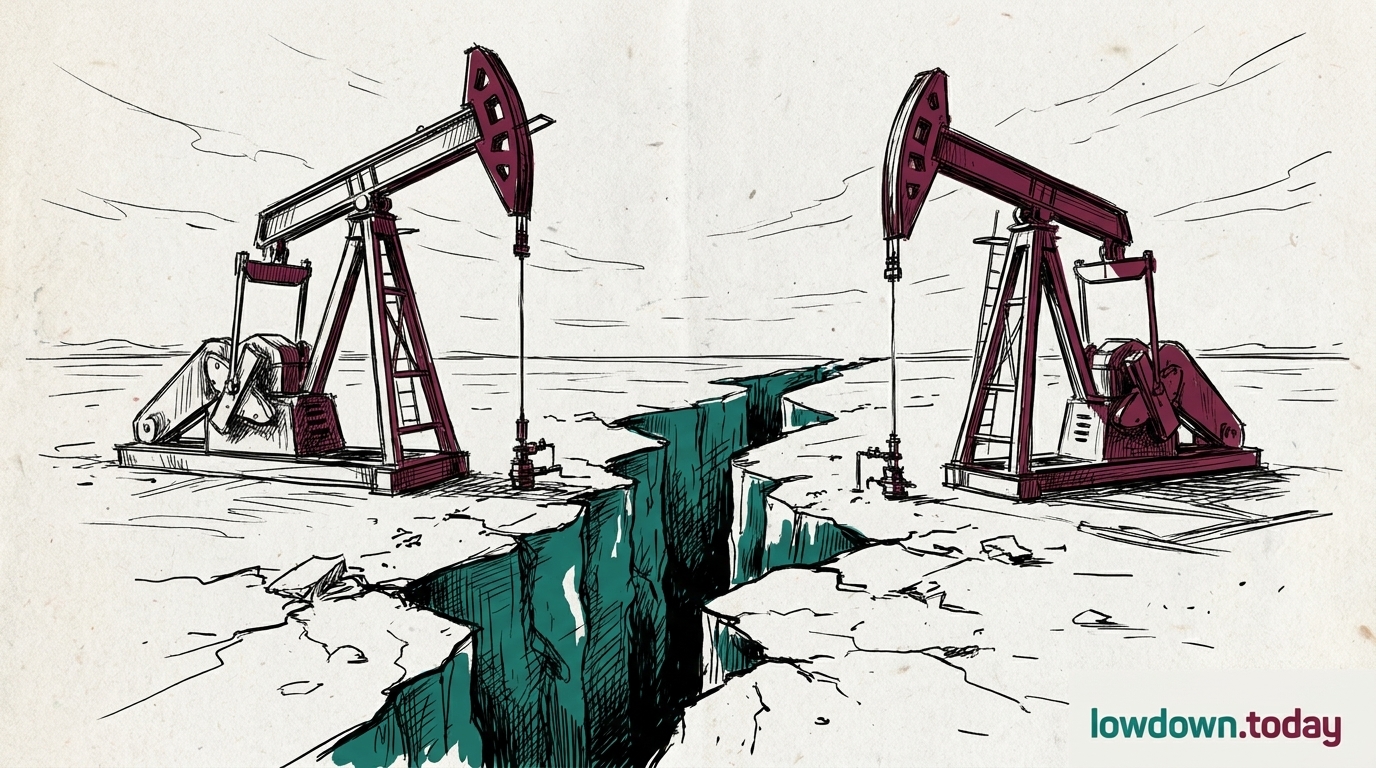
Iran's parliament endorsed a Hormuz toll mechanism contradicting the UNCLOS Article 38 transit-passage framework.

Ebrahim Azizi, chairman of Iran's Majlis National Security and Foreign Policy Committee, posted on X on Saturday 16 May that Tehran has "prepared a professional mechanism" to manage Strait of Hormuz traffic along a designated route, with "necessary fees" collected from cooperating vessels and operators of "the so-called freedom project" expressly barred. The chairman attached no fee schedule, no unveiling date and no parliamentary vote⁠1. The Majlis is Iran's 290-seat parliament; its National Security Committee is the legislative branch's apex voice on military and foreign policy, and Azizi has chaired it since 2024.

The political claim arrives on top of operational machinery that has been live since early May. The Persian Gulf Strait Authority (PGSA) opened registration at info@pgsa.ir on 6 May and Lloyd's List documented vessels paying up to $2 million per voyage in Chinese yuan. The Iranian Supreme National Security Council finalised the underlying Hormuz security plan and barred US weapons from transit on 13 May, so Azizi's post extends an already-running architecture into a published political claim with a named exclusion class.

That exclusion class is the legal flashpoint. Project Freedom, the US operational umbrella Donald Trump announced on Truth Social before pausing in early May, is precisely the kind of military mission Article 38 of the 1982 UN Convention on the Law of the Sea treats as guaranteed transit passage for all flags. By naming a sovereign exclusion list in writing, Azizi puts the Majlis directly across from the 26-nation Hormuz coalition signed in Bahrain and Qatar on 12 May, whose mandate is built on that same Article 38 guarantee. Four separate Iranian institutions, the SNSC, the IRGC, the PGSA and now the Majlis security committee, are converging on a single Hormuz posture: selective accommodation policed by guided coordination through declared minefields.

Deep Analysis

In plain English

Iran's parliament has a committee that oversees national security. Its chairman, Ebrahim Azizi, posted on social media on 16 May that Iran has set up a formal system to charge ships a fee to pass through the strait of Hormuz, a narrow waterway where roughly 20% of the world's oil travels. Ships linked to a US military operation called Project Freedom are explicitly banned from using the route. This is the first time Iran's parliament has formally backed what the country's military has been doing operationally since early May: collecting fees from ships that want to pass. The legal problem is that a 1982 international treaty guarantees all ships the right to pass through straits like Hormuz without paying a toll. Iran never signed that treaty.

Deep Analysis
Root Causes

Iran never ratified the 1982 UN Convention on the Law of the Sea, which means UNCLOS Article 38's transit-passage guarantee has no binding force in Iranian domestic law. Tehran's 2024 update to its maritime jurisdiction statutes, carried through the Majlis security committee Azizi chairs, inserted the category 'hostile-linked vessels' into Iranian law, broad enough to cover any flag state that has sanctioned Iran or joined a named coalition against it.

The PGSA's creation on 5 May preceded the Azizi post by eleven days: the parliamentary statement follows operational fact, not the other way around. The Majlis is providing retroactive legislative authority for an architecture the IRGC deployed before parliament voted. This sequencing, operational first, legislative second, is a structural feature of how Iran's dual-track state functions under war conditions.

Escalation

The parliamentary endorsement closes the gap between operational and legislative legitimacy on the Iranian side, making the PGSA toll mechanism harder to walk back in any negotiated settlement without a specific Majlis vote to repeal it. Four Iranian institutions, SNSC, IRGC, PGSA, and now the Majlis security committee, are now all on record supporting the same Hormuz posture.

What could happen next?
  • Precedent

    Parliamentary endorsement of a named exclusion class for a sovereign transit mechanism sets a legal template other states could reference when asserting chokepoint jurisdiction.

    Medium term · Medium
  • Risk

    The Majlis record makes the toll mechanism a legislative commitment, requiring a floor vote to reverse, which adds institutional friction to any ceasefire deal that includes Hormuz normalisation.

    Short term · High
  • Consequence

    Vessels operating under insurance from Lloyd's P&I clubs face cover withdrawal if their operators are classified as 'Project Freedom'-adjacent under the Azizi exclusion language.

    Immediate · Medium
First Reported In

Update #100 · Tehran prints the toll book; Delhi joins the queue

Investing.com· 17 May 2026
Read original →
Different Perspectives
S&P Global
S&P Global
S&P Global said on 12 November that thin refining buffers leave jet fuel exposed to price spikes in 2027. Its view cuts against the pump-lag case, because tight middle distillates would keep jet and diesel dear even as crude falls.
European Union
European Union
The Commission proposed a 22nd package on 23 November that would list more than 70 more tankers and ban Russia-insured ones, after listing Balance Insurance on 16 November. It needs every member state's vote, so Russian tanker insurance becomes the EU's next test of unanimity.
UK households and hauliers
UK drivers paid 193.29p a litre for diesel in the week of 23 November, DESNZ data show, 31.33p more than petrol, and BoilerJuice quoted heating oil at 96.51p a litre before VAT. They pay the gap that crude's fall has not closed, with motor fuels up 33.2% in October's inflation figures.
Saudi Arabia and the OPEC+ Seven
The OPEC+ Seven held December output at September's level on 1 November, and Saudi Aramco priced December Arab Light to Europe below Brent, Attaqa reported. The full group decides on Sunday 29 November whether about 2m b/d of cuts outlast 2026, with Saudi diesel loadings already up 30% in early November.
Eni
Eni
Eni reported a third-quarter standard refining margin of $28.1 a barrel and raised its full-year assumption from $14 to $18. Its finance chief Francesco Gattei said on the 23 October call that the quarter to date was at $18, press coverage reported, so the refiner sees its windfall shrinking.
Gulf oil producer
Gulf oil producer
Secured OPEC's confirmed 188,000 b/d September increment with the next meeting set for 6 September, but the Secretariat's own 2 August release says nothing about the fourth quarter. Output guidance beyond September remains undisclosed even as delegate sourcing keeps filling that gap.

Written with AI from Lowdown's published reporting. Not individually reviewed by an editor. Editorial standards.
