Skip to content
You can now search across every topic, entity and event.What's new
European Oil Markets
18MAY

Iran's strait authority opens to silence

4 min read
17:30UTC

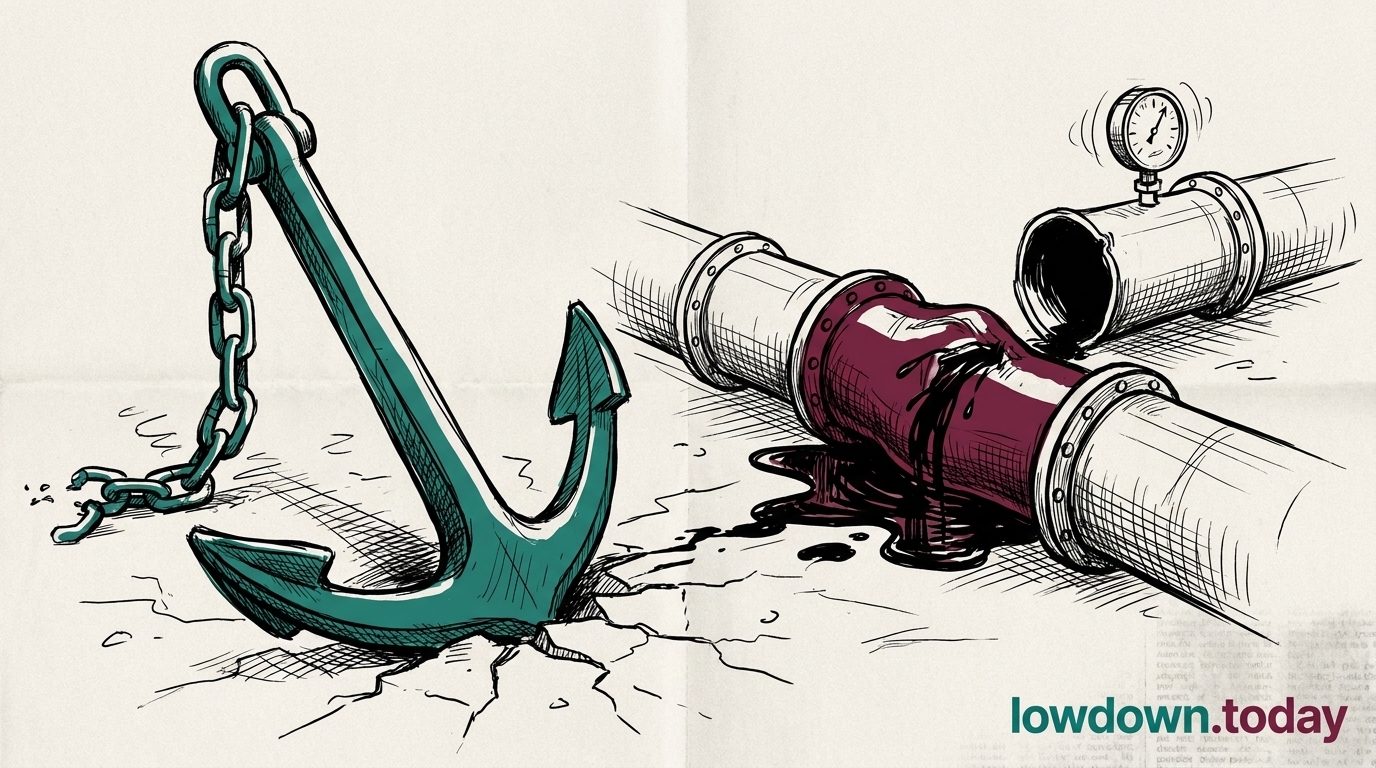
The Persian Gulf Strait Authority opened registration via info@pgsa.ir on 6 May, requiring vessels to email destination, flag history, cargo value and crew nationalities; not one of the 2,000-vessel stranded fleet has registered.

EconomicDeveloping
Key takeaway

Iran built a permitting body the US has prohibited paying for, and zero vessels have tested either side.

Iran's Persian Gulf Strait Authority (PGSA), the permitting body Tehran created on 5 May , opened registration through info@pgsa.ir on Wednesday 6 May 2026. Vessels must email ship destination, flag history, cargo value and crew nationalities to enter the queue 1. The PGSA has recorded interest from 0.0 per cent of the 2,000-vessel stranded fleet, despite the Islamic Revolutionary Guard Corps Navy (IRGC Navy) posting a same-day X statement promising "safe, stable passage through SOH" 2.

Fearnleys Shipbrokers told the trade press that owners need observable evidence of actual transits before they will file a registration email, citing previous false starts. BIMCO, the global shipping association whose safety guidance underwrites most commercial routing decisions, has not updated its Hormuz advisory and will not until rules of transit are officially confirmed 3. Protection and Indemnity (P&I) cover, the war-risk insurance layer that determines whether tankers can lawfully enter The Gulf, remains unchanged.

The PGSA collides head-on with the Office of Foreign Assets Control (OFAC) General Licence W, the 1 May instrument that prohibits toll payments to Iranian authorities . Any vessel that pays the PGSA registration fee crosses an OFAC enforcement line; any vessel that transits without paying establishes the converse precedent that the Iranian permitting body is theatre. The MOU now in Tehran proposes a phased reopening over 30 days but does not name the PGSA, which leaves the document caught between two unenforceable readings: it either ignores Iran's domestic-law mechanism, or it implicitly accepts it and breaches GL-W.

Maritime permitting bodies live or die on insurance. Without a P&I club willing to write war-risk cover for vessels carrying a PGSA certificate, the Authority has no commercial existence regardless of how many emails it can send. Marco Rubio's 4 May Fox News rejection of any Iranian transit fee set the US enforcement floor; Treasury Secretary Scott Bessent has pressed Beijing publicly on Hormuz cooperation but has named no mechanism that would let Chinese refiners pay the PGSA without triggering OFAC action. The first vessel to file with info@pgsa.ir would set the market precedent, and at zero registrations, the file is empty.


Deep Analysis

In plain English

Iran set up a new office called the Persian Gulf Strait Authority and opened an email address on 6 May, inviting ships to register before using the Strait of Hormuz. The idea is that ships would email in their details, get permission, and then transit safely. The Iranian navy also posted on social media saying it would ensure safe passage. By 7 May, zero vessels from the 2,000-strong stranded fleet had registered. Ship owners need two things before they will move their vessels: insurance that covers them if something goes wrong, and certainty that paying Iran's registration fee will not get them sanctioned by the US government. The US Treasury specifically banned paying fees to Iranian maritime authorities under a 1 May order, and the major shipping insurance bodies have not changed their guidance. BIMCO, the global shipping association, said it will wait for official confirmation of new transit rules before advising any vessels to proceed.

Deep Analysis
Root Causes

The PGSA's zero-registration result on its first operational day reflects two overlapping structural constraints. First, OFAC General Licence W, issued on 1 May, explicitly prohibits toll payments to Iranian authorities, and any Western-insured vessel whose owner pays a PGSA fee becomes an OFAC enforcement target.

The fee-payment prohibition is not an advisory; it is a designated violation under Executive Orders 13902 and 13846. The PGSA registration form, as seen by Bloomberg, does not disclose a toll or fee structure, which may be deliberate: the authority may intend to collect the fee at a separate stage, maintaining the registration-only appearance to avoid triggering immediate OFAC scrutiny.

Second, Fearnleys Shipbrokers cited 'previous false starts' as the reason owners need observable evidence of actual transits before registering. Iran declared the strait 'completely open' on 17 April, with IRGC gunboats firing on an Indian-flagged tanker the next day. That episode established a trust deficit that a single-day IRGC Navy X posting cannot overcome, regardless of its content.

What could happen next?
  • Consequence

    The first vessel to pay the PGSA fee and transit successfully will set the precedent that breaks the deadlock, but that vessel's owner faces simultaneous OFAC enforcement exposure and reputational risk from Western counterparties.

    Short term · 0.75
  • Risk

    The MOU delivered to Tehran on 7 May does not name the PGSA, leaving Iran's domestic-law permitting framework in place regardless of what the ceasefire agreement says about Hormuz reopening.

    Short term · 0.8
  • Precedent

    If the PGSA accumulates even a single successful registered transit, Iran establishes the precedent that domestic strait-state permitting bodies can operate in international waters without UNCLOS authorisation, regardless of what a subsequent peace agreement says.

    Medium term · 0.6
First Reported In

Update #90 · Pakistan carries paper; Brent below $100

Insurance Journal· 7 May 2026
Read original
Different Perspectives
Indian refiners
Indian refiners
Indian refiners kept lifting discounted Urals as the India/Baltic price split widened past $9-10 a barrel, a gap that only grows as GL X1's Iranian wind-down cuts an alternative discounted grade off the market by 17 July. Cheaper Russian feedstock is being locked in while it lasts.
Chinese refiners
Chinese refiners
Chinese refiners gain leverage as the Urals-Brent discount widens, since Beijing's state buyers already source discounted Russian barrels near the fiscal floor unaffected by Western insurance costs. A wider discount, if it holds past 23 July, lets them lock in cheaper term contracts regardless of the cap's outcome.
US money managers (CFTC-tracked)
Managed money trimmed WTI net length into the rally, positioning that reflects doubt the Hormuz premium survives without freight or war-risk confirmation. The Brent-WTI spread widening almost entirely on the Brent leg supports that scepticism about a broad-based repricing.
OPEC+ (Saudi-led subgroup)
Saudi Arabia is defending market share through a fourth straight 188kbd August hike even as OPEC's own July MOMR cut 2026 demand growth for the fourth consecutive month. At a $108-111 fiscal breakeven, every added barrel costs Riyadh revenue it cannot recoup, so the hike reads as a positioning signal, not a demand bet.
Greek shipping registries
Greece, backed by Cyprus and Malta, is pushing a three-month cap-freeze compromise against the Commission's freeze to January 2027 ahead of the 23 July vote. Athens' and Valletta's combined tanker registrations mean a shorter review gives their insurers more frequent chances to reprice risk on Russian cargoes.
Russia (Deputy PM Alexander Novak)
Novak extended the diesel export restriction to producers on 8 July, the first producer-binding curb of the war, protecting the domestic pump price ahead of any refinery repair timeline. Urals still trades below Russia's $59 budget floor even as Brent gained, so the ban trades export revenue for fiscal stability at home.