Skip to content
You can now search across every topic, entity and event.What's new
European Oil Markets
18MAY

OFAC issues GL-W on same Friday

3 min read
17:30UTC

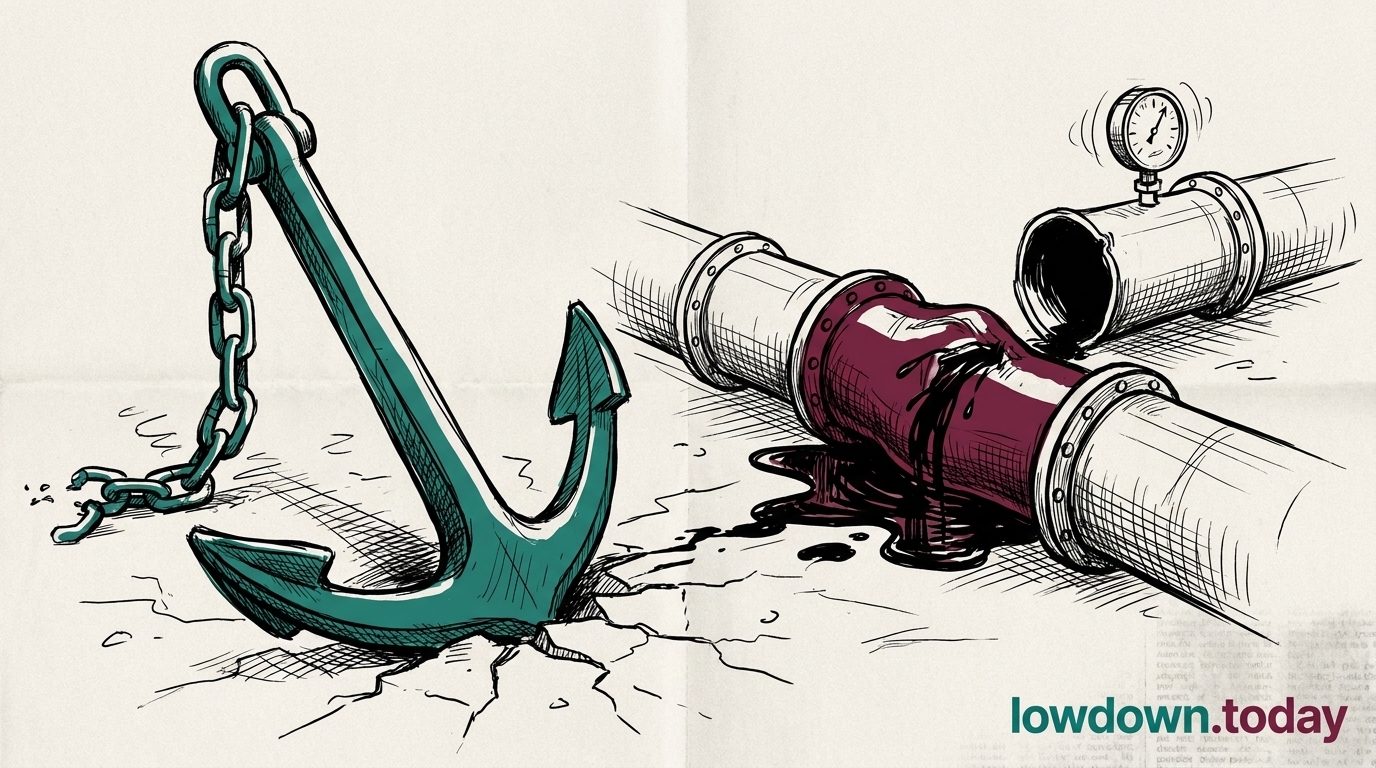
Hours after Trump's letter declared hostilities ended, OFAC dispatched General Licence W, three new SDN designations, and a Hormuz toll alert enforcing the war the letter says is over.

EconomicDeveloping
Key takeaway

OFAC's same-day GL-W enforces against the war Trump's letter says has already ended.

OFAC, the Office of Foreign Assets Control inside the US Treasury, issued General Licence W on Friday 1 May, designated three Iranian foreign exchange houses and the Panama-flagged tanker NEW FUSION to the SDN (Specially Designated Nationals) list, and published a sanctions alert naming the Iranian Red Crescent Society, Bonyad Mostazafan and Iranian embassy accounts as prohibited Hormuz toll payment channels 1. Treasury Secretary Scott Bessent's name is on the alert: OFAC will 'relentlessly target the regime's ability to generate, move, and repatriate funds' 2.

GL-W is the sixth Iran General Licence of the war and the first dispatched after the briefing's first Russia-only OFAC day on 29 April . It draws its authority from Executive Orders 13902 (Iran additional sectors) and 13224 (counterterrorism), routed through Treasury bureau action rather than presidential signature. The package is the enforcement counter-text to Mojtaba Khamenei's 30 April reassertion of Iranian sovereignty over the Strait .

The contradiction with the WPR letter Trump signed earlier the same Friday is not rhetorical. Each instrument is a real US government document dated 1 May 2026. One declares hostilities terminated; the other enforces against the regime's wartime conduct. A correspondent bank running Iran-exposed compliance now has two signatures of equal legal weight pointing in opposite directions, and the sanctions alert lists charity rails as toll routes for the first time, which means a transfer to the Iranian Red Crescent Society is now a designated payment channel rather than a humanitarian exception.

The alert's choice of channels matters at the operational level. Naming charity, embassy and FX-house routes simultaneously closes the workarounds bank compliance teams had been quietly using to keep humanitarian-tagged flows moving. The ladder from this alert to a second tier of designations, against named recipients of toll payments rather than the categories, is the next visible step on the enforcement track.


Deep Analysis

In plain English

OFAC is the US Treasury office that enforces economic sanctions: essentially a list of people, companies, and ships that Americans and most international businesses cannot deal with. On 1 May, OFAC added three Iranian money-exchange companies and one oil tanker called NEW FUSION to its blacklist. It also published a warning naming specific Iranian organisations, including the Red Crescent charity, as channels that cannot be used to pay Iran's Hormuz shipping toll fees. The package landed on the same day as Trump's letter declaring the war over, leaving international banks with two contradictory US government instructions dated the same day.

Deep Analysis
Root Causes

OFAC's cadence reflects a structural decision made early in the war: use sanctions as the primary coercive instrument because executive orders authorising kinetic operations have not been signed.

Treasury can issue general licences and SDN designations under pre-existing executive orders (E.O. 13902 and E.O. 13224) without new presidential authority. The result is that sanctions have been the one continuously escalating track throughout the conflict, even on days when the diplomatic and military tracks stalled.

The inclusion of Bonyad Mostazafan (a foundation with a $95 billion asset base per its own reports, which has served as an IRGC financial vehicle since the 1979 revolution) reflects Treasury's assessment that the toll-enforcement architecture relies on foundation transfers to avoid direct government-to-government payment flows that would be instantly sanctionable.

What could happen next?
  • Consequence

    The same-day WPR termination letter and OFAC sanctions package leave compliance officers at international banks holding two contradictory US government signals dated 1 May, with no OLC guidance clarifying which takes precedence.

  • Risk

    Naming the Iranian Red Crescent Society as a prohibited channel (even for toll payments only) may reduce international NGO willingness to transfer funds through Iranian humanitarian organisations, damaging civilian relief capacity inside the country.

First Reported In

Update #86 · Trump signs paper. The paper ends the war.

Bangor Daily News· 2 May 2026
Read original
Different Perspectives
Indian refiners
Indian refiners
Indian refiners kept lifting discounted Urals as the India/Baltic price split widened past $9-10 a barrel, a gap that only grows as GL X1's Iranian wind-down cuts an alternative discounted grade off the market by 17 July. Cheaper Russian feedstock is being locked in while it lasts.
Chinese refiners
Chinese refiners
Chinese refiners gain leverage as the Urals-Brent discount widens, since Beijing's state buyers already source discounted Russian barrels near the fiscal floor unaffected by Western insurance costs. A wider discount, if it holds past 23 July, lets them lock in cheaper term contracts regardless of the cap's outcome.
US money managers (CFTC-tracked)
Managed money trimmed WTI net length into the rally, positioning that reflects doubt the Hormuz premium survives without freight or war-risk confirmation. The Brent-WTI spread widening almost entirely on the Brent leg supports that scepticism about a broad-based repricing.
OPEC+ (Saudi-led subgroup)
Saudi Arabia is defending market share through a fourth straight 188kbd August hike even as OPEC's own July MOMR cut 2026 demand growth for the fourth consecutive month. At a $108-111 fiscal breakeven, every added barrel costs Riyadh revenue it cannot recoup, so the hike reads as a positioning signal, not a demand bet.
Greek shipping registries
Greece, backed by Cyprus and Malta, is pushing a three-month cap-freeze compromise against the Commission's freeze to January 2027 ahead of the 23 July vote. Athens' and Valletta's combined tanker registrations mean a shorter review gives their insurers more frequent chances to reprice risk on Russian cargoes.
Russia (Deputy PM Alexander Novak)
Novak extended the diesel export restriction to producers on 8 July, the first producer-binding curb of the war, protecting the domestic pump price ahead of any refinery repair timeline. Urals still trades below Russia's $59 budget floor even as Brent gained, so the ban trades export revenue for fiscal stability at home.