Skip to content
Welcome, thoughtbot's Giant Robots listeners!Start here
Autonomous Systems: Land & Sea
29MAY

Oman clears mine mission, then a stall

2 min read
08:47UTC

Oman authorised Britain and France to clear mines on its Hormuz route, then a 7 July tanker strike stalled the most capable allied robot minehunting package before it could begin.

TechnologyDeveloping
Key takeaway

Political authorisation now paces uncrewed mine clearance in the Gulf, with the technology already proven.

Oman granted the United Kingdom and France permission to clear mines on its southern Strait of Hormuz route shortly before 7 July, and officials said clearance could begin as soon as that week⁠1. An early-morning attack on a Qatari-owned liquefied-natural-gas carrier in the strait on 7 July set the timeline back before clearance began.

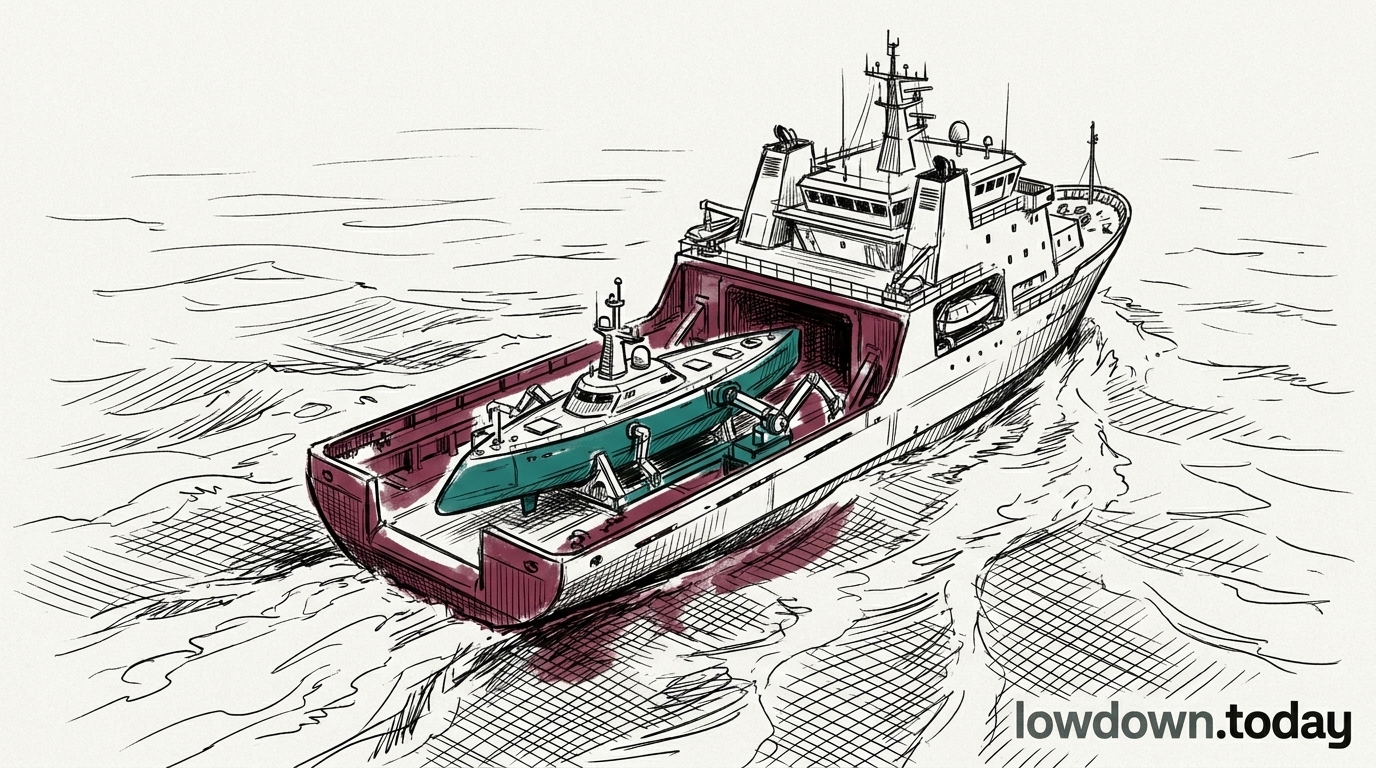
the strait of Hormuz is the narrow Gulf chokepoint through which much of the world's seaborne oil and gas passes. RFA Lyme Bay, the Royal Navy mother ship, sits in Omani waters with RNMB Ariadne and its autonomous mine-hunting systems aboard, HMS Dragon and French assets alongside, holding for a military order that has not come. RNMB Ariadne passed its trials off Portland and Gibraltar, and France's Sirius minehunting USV embarked at Toulon in June; the missing piece now is a national military order, gated by Oman's consent, Iran's objections and allied domestic timelines.

Iran's deputy foreign minister, Kazem Gharibabadi, insists mine clearance is Iran's sole responsibility and has warned Oman against outside interference⁠2. The conflict itself belongs to Lowdown's Iran-conflict file; the industry beat here is narrower, that permission for an autonomous clearance debut was granted and then overtaken by events. Around 80 Iranian sea mines are thought to remain, Italy's Joint Operations Command estimates two months to clear once work starts, and the International Maritime Organization (IMO) says roughly 500 stranded ships must be evacuated first⁠3.

Deep Analysis

In plain English

the strait of Hormuz is a narrow shipping lane between Iran and Oman that a fifth of the world's oil passes through. During the recent conflict, mines were laid in the water there, and around 80 are thought to remain. Oman, which controls the southern route through the strait, gave the UK and France permission to send ships and uncrewed mine-hunting robots to clear them. Before that clearance work could start, a tanker was attacked in the strait on 7 July, which pushed the timeline back again. RFA Lyme Bay, a British support ship, and its uncrewed minehunter RNMB Ariadne, are waiting nearby in Omani waters for the order to begin.

Deep Analysis
Root Causes

Iran never ratified the 1982 UN Convention on the Law of the Sea, the treaty that would otherwise settle transit-passage rights through Hormuz; Tehran's own mine-clearance claim rests on treating Omani-authorised outside clearance as a jurisdictional dispute rather than a technical favour.

Iran's mourning period for Supreme Leader Khamenei adds a second, time-limited constraint: gCaptain reports officials citing 'diplomatic sensitivities' and the need for 'more stable conditions' before allied vessels can visibly operate near Iranian-claimed waters.

Escalation

Escalatory risk is real but bounded: any allied minesweeping near Iranian-contested waters risks further tanker strikes like the one on 7 July, which has already reset the timeline once.

What could happen next?
  • Meaning

    Authorisation without a start date functions as a political signal to Tehran as much as a technical readiness milestone.

    Immediate · Assessed
  • Consequence

    The roughly 80 remaining mines and around 500 stranded ships stay in place until clearance actually starts, not merely authorised.

    Short term · Assessed
  • Risk

    Iran's deputy foreign minister has signalled that clearance by outside parties will be contested as a jurisdictional infringement, not just delayed by timing.

    Short term · Assessed
First Reported In

Update #6 · UK airdrops a robot boat; Gulf order stalls

Stars and Stripes· 11 Jul 2026
Read original →
Different Perspectives
Kongsberg
Kongsberg
Kongsberg offered Arctic Hunter, an uncrewed ship of commercial Arctic design, for Britain's Type 92 submarine-hunter requirement, Naval News reported. It puts a civil hull design forward for a Royal Navy submarine-hunting role.
Swedish Defence Materiel Administration (FMV)
FMV gave Teledyne Gavia a SEK 13.67m follow-on for portable mine-hunting robots on 19 November, with no prior call for competition. Sweden is adding to an earlier Gavia order rather than opening the buy to rivals.
Royal Netherlands Army (MatLogCo)
The Dutch tender of 23 November sets €160m aside for at least seven mine-breaching ground robots. Its stated aim is to add an uncrewed option to existing breaching kit and protect personnel, the engineers who would otherwise drive in first.
Tesla Gigafactory Berlin-Brandenburg (Andre Thierig)
The plant director announced a Cybercab building at Grünheide, with production from 2029 and a hoped-for ramp to up to 1 million a year. Tesla self-certified the car, which has no steering wheel or pedals; NHTSA has alleged no breach.
WeRide
WeRide
WeRide told US investors that more than 90% of its robotaxi revenue now comes from outside China, with about 600 cars in the Middle East. It claims "positive unit economics" in Guangzhou but discloses no cost basis for the claim.
HD Hyundai
HD Hyundai
HD Hyundai built ASV ALPHA with Anduril before any order, and Choi Tae-bok says it will enter the prototype if a US tender comes out next year. The group aims to lift its naval revenue five- to tenfold within a decade, iNews24 reports.

Written with AI from Lowdown's published reporting. Not individually reviewed by an editor. Editorial standards.