Skip to content
Briefings are running a touch slower this week while we rebuild the foundations.See roadmap
Russia-Ukraine War 2026
1APR

GL 134A lapses toward quiet extension

3 min read
16:30UTC

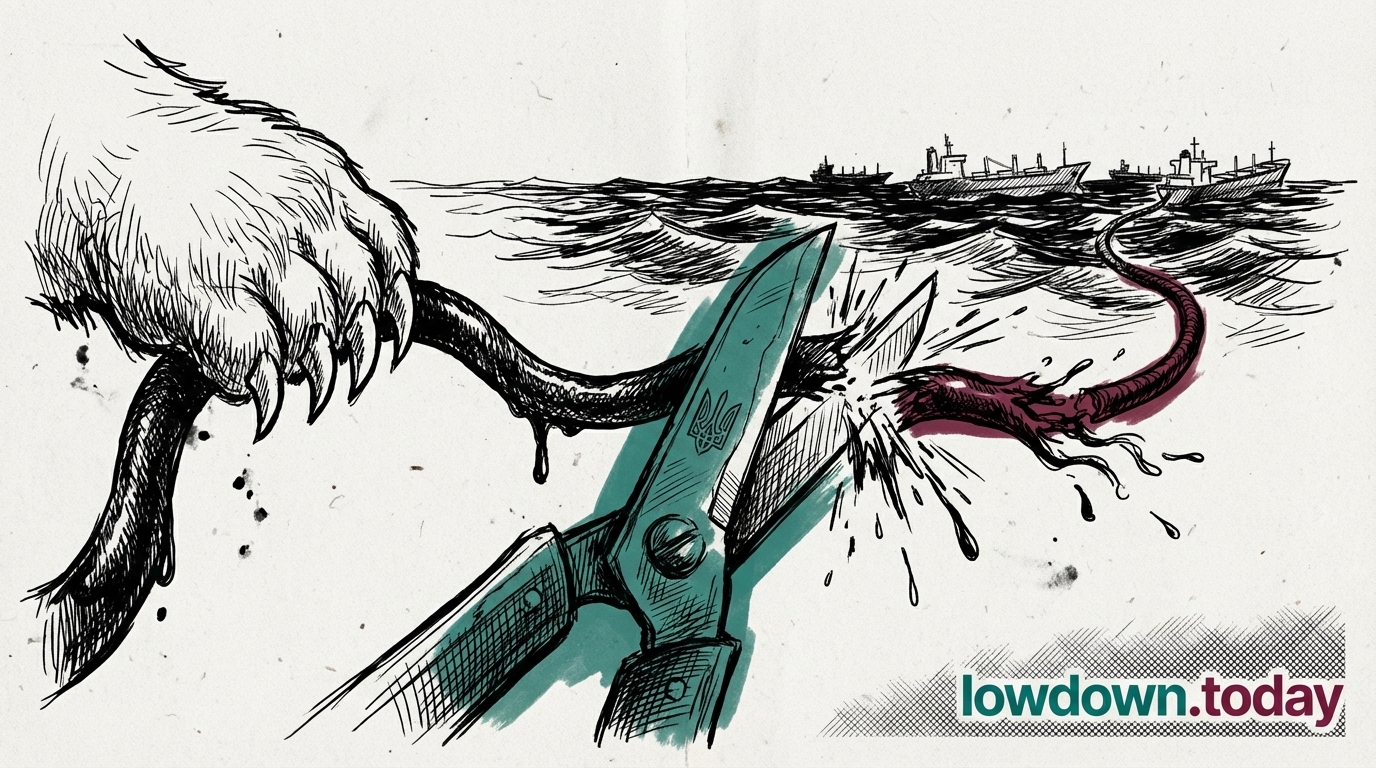
Treasury's Russian crude waiver expired on 11 April with wire reporting from Reuters, Semafor and Bloomberg pointing to renewal worth roughly $150 million a day to Moscow at current Urals prices.

ConflictDeveloping
Key takeaway

The Russian oil waiver is the same instrument doing the opposite job it was designed for.

General License 134A (GL 134A), the OFAC (Office of Foreign Assets Control) waiver that authorised transactions for Russian crude loaded before 12 March, expired on 11 April. Reuters, Semafor and Bloomberg report, citing people familiar with the discussions, that an extension is coming 1. A Treasury spokesperson offered only that the department "does not preview actions related to our sanctions."

Daniel Fried at the Atlantic Council called on Treasury Secretary Scott Bessent on 8 April to let the waiver lapse and fall back on the price cap. Asian governments led by India and the Philippines are pushing in the other direction. A week ago this was framed as a binary choice at $121 Urals . Bloomberg estimates the waiver is worth roughly $150 million a day in additional Russian budget revenue at $114 to $116 Urals.

One week of that uplift covers a fortnight of Kinzhal strikes. A full year covers a sum the EU has spent months trying to route to Kyiv against Hungarian opposition. The original GL 134 was defensible in March at $73 a barrel as market stabilisation after the Strait of Hormuz closed. At 64% above that price, and with the Iran ceasefire of 8 April partially reopening Hormuz, the same instrument now hands Moscow a surplus the sanctions architecture was designed to prevent. The Russia-Iran corridor that Israel struck at Bandar Anzali last month still runs.

Deep Analysis

In plain English

When the Iran conflict disrupted oil markets in March, the US Treasury issued a temporary waiver allowing banks and traders to continue processing payments for Russian crude already at sea. The idea was to prevent a sudden oil price spike. The waiver was set to expire on 11 April. The problem: when the waiver was issued, Russian oil was selling at $73 per barrel. By expiry it was trading at $114-116. That means every extra day of extension hands Russia roughly $150 million in war-funding revenue that sanctions were supposed to block.

Deep Analysis
Root Causes

GL 134A was issued on 12 March 2026 as a market-stabilisation measure when the Iran war disrupted Gulf crude flows. The structural problem is that the licence's dollar value is oil-price-sensitive: a barrel-price doubling since issuance means the waiver now hands Moscow a windfall the original policy never contemplated.

The secondary cause is bureaucratic path dependency. Once a sanctions waiver is issued to enable active market transactions, financial institutions and energy traders build positions around it. Lapse without a wind-down window triggers counterparty defaults that US regulators are reluctant to own.

What could happen next?
  • Consequence

    Each week of extension at current Urals prices transfers approximately $1.05 billion to Russia, partially offsetting the impact of the EU's phased gas import ban beginning 25 April.

  • Risk

    If the waiver is extended without a firm sunset date, it establishes precedent that sanctions can be indefinitely deferred when market conditions create lobby pressure, weakening the credibility of the entire OFAC architecture.

First Reported In

Update #12 · Three narrowings of US support for Kyiv

Reuters (via Kyiv Independent)· 11 Apr 2026
Read original
Different Perspectives
North Korea / DPRK
North Korea / DPRK
ISW confirmed the first mounting of DPRK Type-75 MLRS on Russian autonomous UGVs near Kharkiv on 7 June, the latest step in a supply axis that escalated from shells in 2023 to troops in 2024. Pyongyang gains live battlefield data on its ordnance and on Russia's uncrewed-systems programme.
IAEA / Rafael Grossi
Grossi confirmed Chornobyl structural damage with nuclear material metres away and could not attribute the ZNPP 15-hour blackout during the agreed repair window. Six ceasefires brokered and broken at ZNPP, compounded by Rosatom's May attack on IAEA neutrality, have eroded his ability to enforce the windows he negotiates.
Emmanuel Macron / France
Macron co-signed the E3 framework whose line-of-contact baseline marks Europe's first formal acceptance that 1991 borders are not the opening position. France's role carries weight because Macron had previously proposed a European force for Ukraine, and the framework's multinational force point is the vehicle for that.
Keir Starmer / E3
Keir Starmer / E3
Starmer, Macron and Merz met Zelenskyy on 7 June and backed a five-point framework taking the line of contact as the talks baseline, conceding roughly one fifth of Ukraine in exchange for a multinational force and frozen assets. With US mediation ended, the NATO Ankara summit on 7-8 July is the next test.
Vladimir Putin / Kremlin
Putin used SPIEF to reject Zelenskyy's summit letter, citing 'elements of rudeness', and repeated the pre-agreed treaty precondition that has frozen every diplomatic round since May. The SPIEF platform's message of investor confidence was punctured by naval fires visible from St Petersburg, which Moscow declined to dispute in scale.
Ukraine / Unmanned Systems Forces
Commander Brovdi confirmed USF units tracked and set fire to Boikyi at Kronstadt, while Code 9.2 struck the Chonhar Bridge the following day. Ukraine is sequencing strikes for rear-area interdiction and political timing rather than ground gains, trading the Baltic Fleet's home base for the logistics squeeze Russia cannot absorb without rationing its own occupied territory.
