Skip to content
You can now search across every topic, entity and event.What's new
Russia-Ukraine War 2026
13JUL

Two Hellfires into a merchant ship

4 min read
10:28UTC

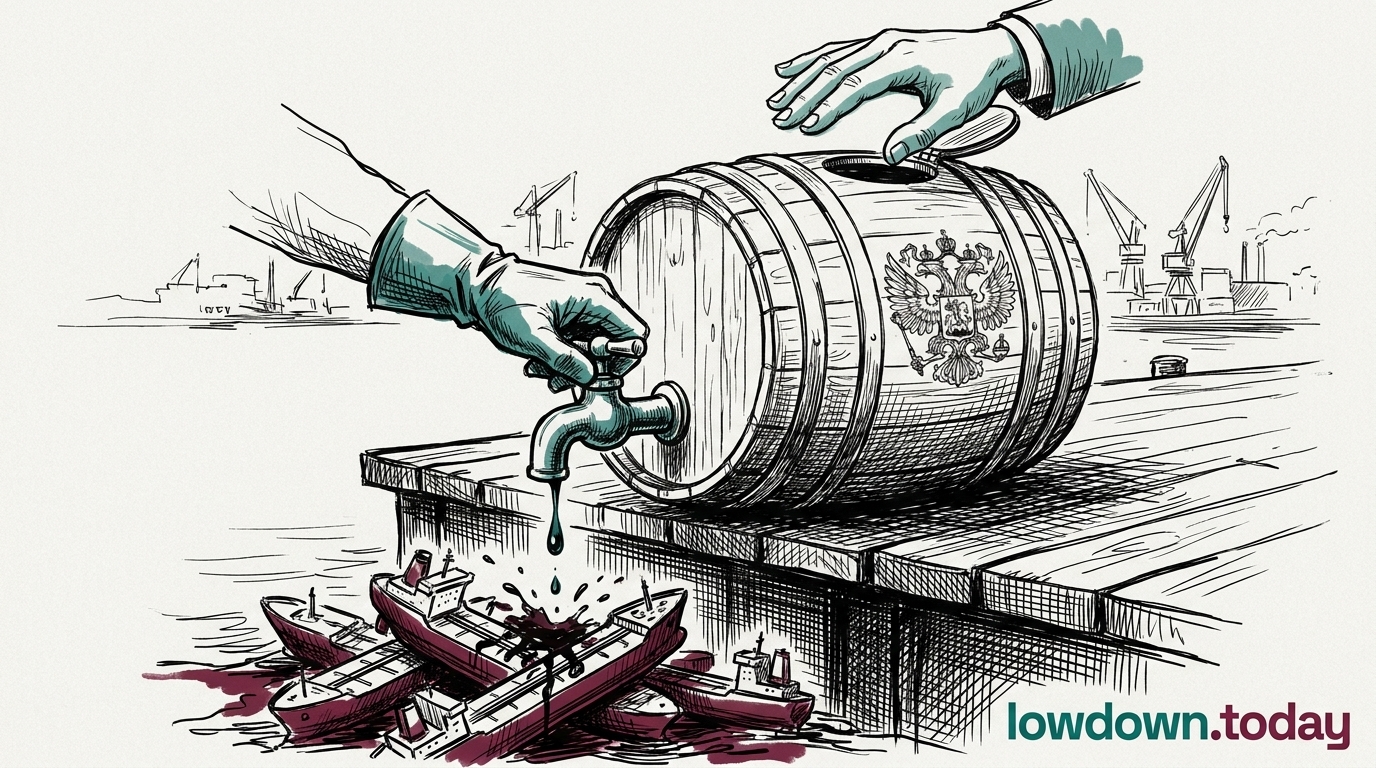
A US Navy MH-60 put two Hellfire missiles into the engine room of the Panamanian-flagged M/V Vela Nova on 11 August. Until Tuesday the blockade of Iranian ports ran on radio warnings, diversions and boarding parties.

ConflictDeveloping
Key takeaway

A US helicopter has now put missiles into a merchant hull to enforce the blockade of Iranian ports.

At 07:15 UTC on Tuesday 11 August the master of a container ship in the Gulf of Oman reported an incident involving military forces to United Kingdom Maritime Trade Operations (UKMTO), the Royal Navy cell that merchant captains signal when something happens to them at sea. Advisory 109-26 named no vessel, established no cause and recorded no casualties or damage 1. The crew reported first, and knew least.

Hours later US Central Command (CENTCOM), the American military command covering the Middle East, said what had happened to him. A US Navy MH-60, a helicopter flown from warships, had put two Hellfire missiles into the engine room of the Panamanian-flagged M/V Vela Nova, disabling her steering gear. On CENTCOM's account the vessel ignored warnings and tried to evade the blockade of Iranian ports. Its statement did not address crew casualties 2 3.

Those are two accounts of one incident, not two incidents. PortNews identified the container ship in Advisory 109-26 as the Vela Nova, about 71 nautical miles off the Pakistani coast near Gwadar, a distance that is PortNews's own and not in the advisory 4. The advisory first classified her as a tanker before correcting to container ship, which is the measure of what a first wartime report is worth. CENTCOM's running count since 14 July stands at 55 vessels redirected, three disabled and two boarded, against 49 redirected and two disabled a week earlier . The tally is climbing in the column that costs a charterer a delay, and it has now moved once in the column that costs an owner a ship.

A naval blockade of another state's ports is an act of war in customary law, and Washington has published no Security Council authority for this one. The administration's answer is that Iran closed an international strait first and set six political conditions for reopening it . Set the helicopter beside what Donald Trump said the same day: "We totally control the strait of Hormuz. We have control over it. Nobody else. Only us." 5 Mohebbi, a spokesman for the Islamic Revolutionary Guard Corps (IRGC), told Mehr that the United States has no warship left in the Persian Gulf 6; the Associated Press counts fifteen or more US warships and two aircraft carriers in the adjoining Arabian Sea 7.


Deep Analysis

In plain English

A US Navy helicopter fired two missiles into the engine room of a cargo ship called the Vela Nova in the Gulf of Oman, a sea next to the Strait of Hormuz (the narrow waterway that a fifth of the world's oil passes through). The US military says the ship ignored warnings to change course as part of a blockade on Iranian ports, so the helicopter disabled its engines rather than sinking it. CENTCOM's statement on the strike did not mention the crew. On the same day, President Trump said the US fully controls the strait, while an Iranian military spokesman said the opposite, that no US warships remain in the area at all. Independent counts back the US position: at least fifteen American warships, including two aircraft carriers, were in the wider region that day.

Deep Analysis
Root Causes

CENTCOM's blockade of Iranian ports, resumed on 14 July, gives its forces a standing rule: a vessel that ignores radioed diversion warnings becomes eligible for disabling fire. US Central Command's own tally put the blockade at 49 vessels redirected, two disabled and two boarded as of 6 August ; the Vela Nova is the pattern's latest application, not a new decision.

The contradiction between Trump's claim of total control over Hormuz and Mohebbi's claim of zero US warships has a separate structural driver: both governments are speaking days before the Iran-Oman transit track is due to advance, and each has an incentive to describe the balance of naval power on its own terms rather than concede the other side's leverage.

What could happen next?
  • Precedent

    CENTCOM's decision to strike a second commercial vessel using the same disable-the-engine-room tactic as the Lian Star (ID:3770) confirms this is now a standing blockade-enforcement procedure rather than a one-off response.

  • Risk

    Widespread AIS dark-passage behaviour, reported by Lloyd's List on 12 August, raises the chance that CENTCOM or Iranian forces misidentify a vessel before firing, since neither side can rely on transponder data to distinguish blockade-runners from ordinary traffic.

First Reported In

Update #169 · The war moved from the air to the water

Al Jazeera English· 12 Aug 2026
Read original
Different Perspectives
Belarus
Belarus
Minsk announced completion of its own 37th Separate Airborne Assault Brigade near Gomel, under plans dating to August 2025 rather than a response to any single frontline event this window, keeping its hedge of hosting the war without formally joining Russia's mobilisation drive.
European Union / Operation IRINI states
Italy, Greece and Poland boarded the sanctioned tanker Toa Payoh off Pantelleria under a standing EU mandate rather than a national decision, extending enforcement from the Channel and Baltic and the Black Sea and Azov into the Mediterranean. Italian Defence Minister Guido Crosetto praised the crew; the captain's refusal to produce documentation left detention unconfirmed.
Poland and the NATO eastern flank
Warsaw's Coordination Team said explicitly its forces tracked the 30 July missile incursion and were ready to shoot it down, then flew air cover for an EU tanker interdiction three days later. Poland is simultaneously the war's nearest spillover victim and a contributor to enforcing sanctions against the state causing that spillover.
Ukraine (government, defence establishment and civilians)
Kyiv runs its manpower crisis through acting Defence Minister Yevhen Khmara, whose formal appointment waits for parliament's 18 August return, and a fortnight-old Commander-in-Chief, Mykhailo Drapatyi. Reported attacks on enlistment officers rose from 5 cases in 2022 to 341 in 2025, reaching Odesa's Territorial Recruitment Centre staff directly on 2 August.
Kremlin and Russian domestic economic voices
Moscow has not addressed July's advance-rate collapse or Sberbank's OFZ warning; Novak's diary ran to OPEC+ quota diplomacy with no diesel item logged since 15 July. Economist Nikolai Korzhenevsky calls the Central Bank's RUB 2.3tn in bank lending effectively deficit monetisation, a framing Sberbank's Skvortsov, with his own institutional interest, has not disputed.
IAEA (Rafael Grossi)
IAEA inspectors logged Zaporizhzhia's 22nd loss of off-site power, ten of them in the last three months, after a thunderstorm knocked out the plant's sole surviving backup line. Grossi reads the accelerating frequency, not any single outage, as the safety signal now that the plant's redundancy is exhausted.



