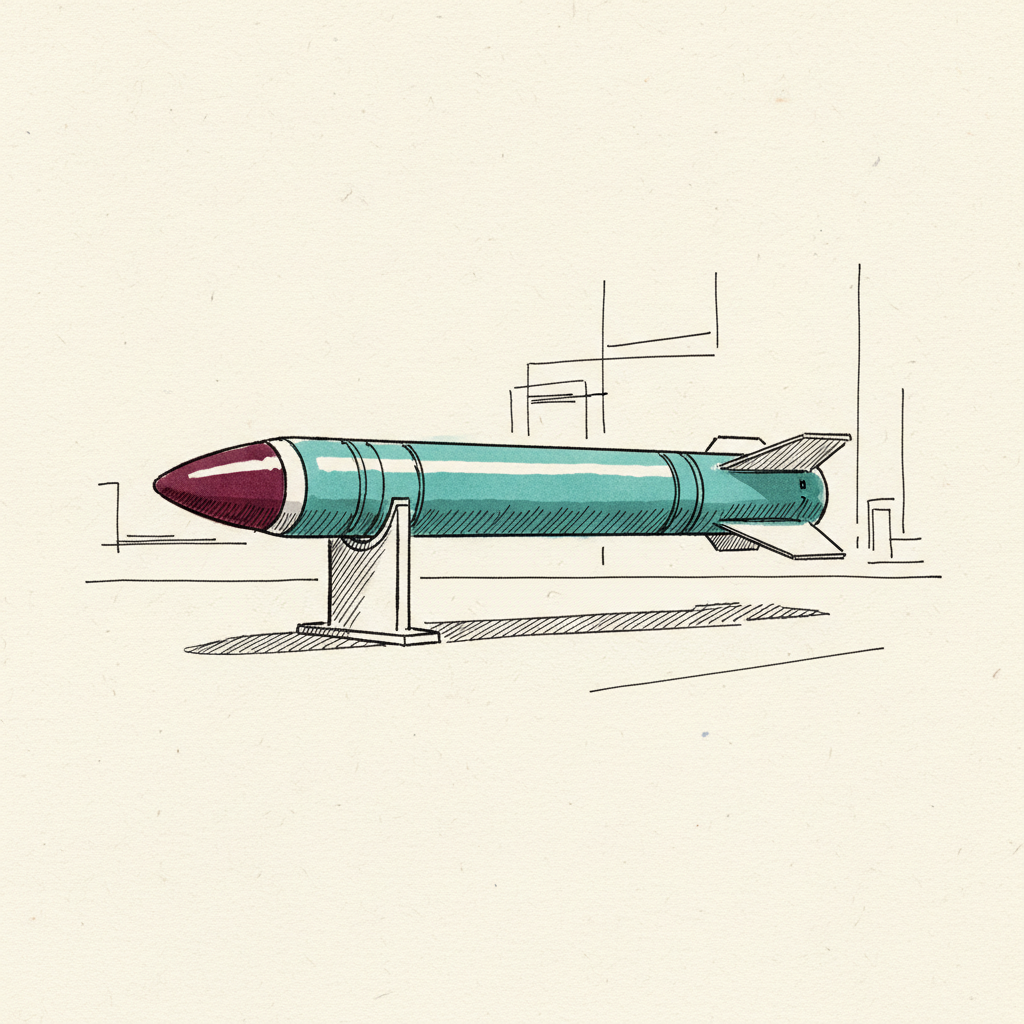
Hellfire
US precision missile used to disable Gulf shipping in May, June and August 2026 strikes.
On 11 August 2026, CENTCOM fired two Hellfire missiles into a merchant vessel in The Gulf, the latest of at least three uses of the missile to disable civilian shipping in the Hormuz blockade since 29 May.
Last refreshed: 19 August 2026 · Appears in 1 active topic
How did a US Hellfire missile disable a cargo ship without sinking it?
Timeline for Hellfire
Mentioned in: USS George Washington relieves Abraham Lincoln
Iran Conflict 2026Mentioned in: Unclaimed Hormuz strike kills one crew member
Iran Conflict 2026Mentioned in: Two Hellfires into a merchant ship
Iran Conflict 2026Mentioned in: CENTCOM Gulf blockade tally reaches 127
Iran Conflict 2026Mentioned in: IRGC hits Sirik base, vows sharper reply
Iran Conflict 2026Background
The AGM-114 Hellfire is a laser-guided, semi-active missile made by Lockheed Martin and Boeing, originally developed in the 1970s for anti-armour use from helicopters. It has since been adapted for fixed-wing aircraft, drones including the MQ-9 Reaper, and naval platforms, and weighs roughly 49 kg.
CENTCOM has fired it repeatedly to disable, rather than sink, non-compliant merchant vessels in the Hormuz blockade. It first entered the conflict record on 29-30 May 2026, hitting the engine room of the Gambian-flagged M/V Lian Star in The Gulf of Oman, disabling propulsion without sinking the vessel or hurting its crew. On 2 June it disabled the tanker M/T Lexie bound for Iran's Kharg Island terminal, the sixth hull CENTCOM had disabled with the missile since the blockade began in March.
Each strike targets an engine room rather than a hull, consistent with the missile's low-collateral-damage design, but using it against unarmed Commercial shipping was itself an escalation: the first time munitions rather than boarding parties enforced the blockade. Every disabled vessel pushes war-risk insurance premiums higher across The Gulf, regardless of a ship's cargo or destination.