Skip to content
You can now search across every topic, entity and event.What's new
Russia-Ukraine War 2026
13JUL

Day 1601: Moscow rations diesel as US cover lapses

2 min read
10:28UTC

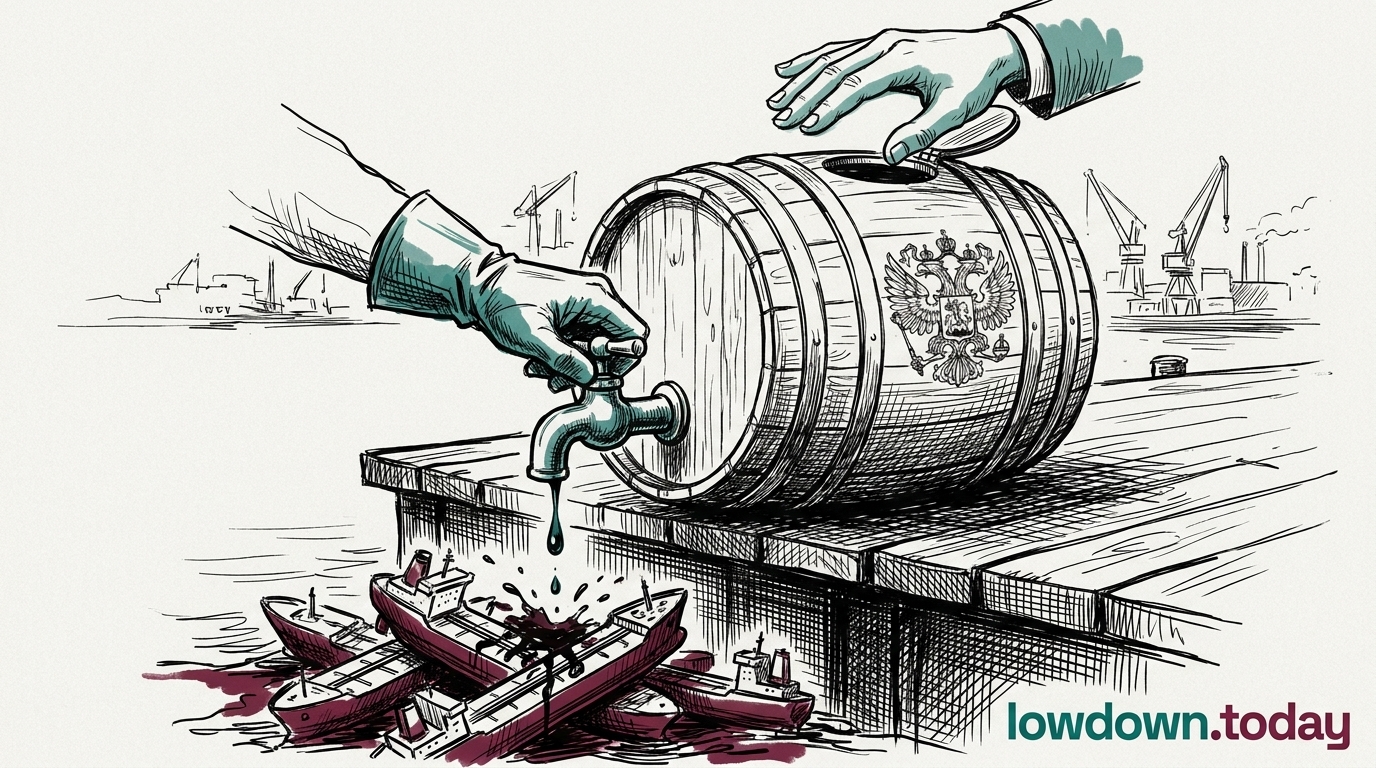
On 8 July, Deputy PM Alexander Novak announced Russia's first formal diesel export ban of the war, running to 31 July and now covering producers, days after Ukraine shifted its strike campaign to fuel tankers in the Sea of Azov. In the same fortnight the US crude waiver that cushioned Moscow's revenue crossed 26 days with no successor licence, the longest gap yet, and NATO pledged EUR 70bn for 2026 at Ankara. The squeeze is real; the bleeding is not yet decisive.

Key takeaway

Ukraine's tanker strikes and an idle US waiver pushed Russia into its most restrictive fuel export ban of the war.

This briefing mapped
Loading map…
Economic
Military
Diplomatic
Infrastructure

Alexander Novak announced on 8 July that Russia would halt all diesel exports until 31 July, the first such decree of the war to bind producers as well as traders.

Sources profile:This story draws on neutral-leaning sources

Russia banned all diesel exports on 8 July, a decree running to 31 July that for the first time covers producers as well as traders. Deputy PM Alexander Novak announced it in a meeting chaired by Vladimir Putin.

June seaborne diesel exports had already fallen 39% month on month. Global prices jumped 13% on the news, and Turkey and Brazil, Russia's top two buyers, lose their cargoes. 

Ukraine's drones shifted from Russian refineries to fuel tankers in the Sea of Azov, cutting vessel traffic there by a possible 55% between 30 June and 11 July.

Sources profile:This story draws on neutral-leaning sources

Ukraine has widened its long-range strike campaign from Russian refineries to the tankers that carry fuel across the Sea of Azov. Starboard Maritime Intelligence's ship-tracking data recorded a possible 55% drop in vessels crossing the Azov between 30 June and 11 July.

The shift follows refinery strikes at Kapotnya and Tyumen and closes off another route for exporting whatever fuel those refineries still manage to produce. 

CREA reported Urals crude averaged $63.18 a barrel in June, down 26%, yet Russian oil-product revenue rose 14% as tight global supply lifted prices.

Sources profile:This story draws on neutral-leaning sources

A Finnish energy-research group reported that Russia's Urals crude averaged $63.18 a barrel in June, a 26% fall after May's own 12% drop. Seaborne fuel shipments hit a record low even as revenue rose 14% on pricier global fuel.

The price still sits above the G7's $44.10 cap, so refinery strikes explain the fall. China took 41% of top-five buyer purchases; India's imports rose 34% to a record. 

The US General License 134C crude waiver expired on 17 June with no successor issued, and the gap has now run 26 days, the longest of the war.

Sources profile:This story draws on neutral-leaning sources

The US Treasury's crude-oil waiver for Russian oil, General License 134C, expired on 17 June with no replacement issued. As of 13 July that gap has reached 26 days, the longest since the licence series began, according to S&P Global.

Every earlier renewal in this series landed within a day or two of the last one expiring. Compliance trackers that caught every prior renewal have found nothing this time. 

Sources:S&P Global

NATO leaders pledged EUR 70bn in 2026 military support for Ukraine at Ankara, with European Allies and Canada now financing the vast majority of it.

Sources profile:This story draws on neutral-leaning sources from Belgium
Belgium

NATO leaders meeting in Ankara on 7 and 8 July pledged €70bn in military aid for Ukraine in 2026. They committed to a similar level in 2027 and launched a $40bn, five-year Drone Edge counter-drone initiative.

The declaration states European Allies and Canada now finance most of Ukraine's support. That formalises a funding shift from Washington already under way. 

Sources:NATO

An IAEA team confirmed a 30 June drone strike damaged the fire station serving the Zaporizhzhia Nuclear Power Plant, cutting its firefighting capacity.

Sources profile:This story draws on neutral-leaning sources from Austria
Austria

A UN nuclear watchdog team visited Enerhodar on 1 July. It confirmed a 30 June drone strike had damaged the fire station backing up the Zaporizhzhia Nuclear Power Plant's emergency response, significantly reducing its firefighting capacity.

Director General Rafael Grossi called it a reminder of the plant's extreme fragility. Unlike the plant's recurring power-line blackouts, this strike removes response capacity rather than external power. 

Sources:IAEA

Russia fired 121 drones and twelve missiles at Ukraine overnight on 10 to 11 July, while ISW logged small tactical moves on both sides that shifted no line.

Sources profile:This story draws on neutral-leaning sources

Overnight on 10 to 11 July, Russia fired six Iskander-M and S-400 ballistic missiles, four cruise missiles, two anti-radar missiles and 121 drones at Ukraine. The Institute for the Study of War recorded Russian advances near Kostyantynivka-Druzhkivka and Ukrainian advances near Novopavlivka the same night.

The anti-radar missiles point to an effort to suppress Ukrainian air defences, alongside sheer volume. Neither side's ground gains changed the front line's broader shape. 

Closing comments

Economically the trend points up: Urals' 26% monthly fall, the unrenewed crude waiver and the new diesel ban compound rather than offset each other. On the ground the front line is sideways, ISW recording Russian gains near Kostyantynivka-Druzhkivka matched by Ukrainian gains toward Novopavlivka overnight on 10-11 July. The clearest trigger to watch is Treasury's next move on a General License 134D: a formal non-renewal would remove the last legal cover for Russian crude buyers still active, tightening the economic squeeze independent of anything happening at the front.

AI-assisted, human-edited under the editorial responsibility of Bannermedia Ltd. Reviewed by Ed Woodcock on 13 July 2026. Editorial standards.

Different Perspectives
Russia
Russia
Deputy PM Alexander Novak announced Russia's first producer-binding diesel export ban on 8 July, running to 31 July, in a meeting chaired by Vladimir Putin. The move follows a failed 2023 attempt and comes as Urals crude fell 26% month-on-month in June, leaving Moscow fewer alternatives to protect domestic fuel supply.
Ukraine
Ukraine
Ukraine's long-range strike campaign shifted from refineries to seaborne fuel tankers crossing the Sea of Azov, cutting tracked vessel traffic 55% between 30 June and 11 July, per Starboard Maritime Intelligence. The shift targets Russia's export revenue directly rather than just domestic supply, adding pressure alongside the collapsing Urals price.
United States
United States
No successor licence has been issued since General License 134C lapsed on 17 June, leaving a 26-day gap, the longest of the war, in the Russian crude waiver. Washington's silence is tightening the channel without any stated decision, as Treasury weighs whether to let it die.
China
China
China's independent refiners kept importing discounted Urals crude through June as the price fell to $63.18 a barrel, down 26% month-on-month per CREA. Beijing has said nothing on Moscow's new diesel ban, leaving Chinese refiners a likely beneficiary if Turkish and Brazilian buyers seek replacement cargoes.
India
India
India's state refiners continued buying discounted Urals crude as June's price fell to $63.18 a barrel, insulating New Delhi from the OFAC waiver gap still constraining Western buyers. Indian refiners could pick up diesel-export share as Russia's producer-binding ban shuts out its former customers.
NATO
NATO
NATO leaders meeting in Ankara on 7 and 8 July pledged EUR 70bn in equipment, assistance and training for Ukraine across 2026, with a 2027 sustainment commitment and a $40bn Drone Edge counter-drone initiative. European allies now fund the vast majority of that package, filling the gap left by Washington's idled crude waiver.

