Skip to content
Briefings are running a touch slower this week while we rebuild the foundations.See roadmap
Russia-Ukraine War 2026
22MAY

Israel claims 85% of Iran's chemicals

3 min read
10:57UTC

Israel struck the South Pars gas complex on 6 April; Defence Minister Israel Katz claimed the bombing has now knocked out the bulk of Iran's petrochemical exports.

ConflictDeveloping
Key takeaway

If Katz's figure holds, Israeli bombs have done in three weeks what twenty years of US sanctions could not.

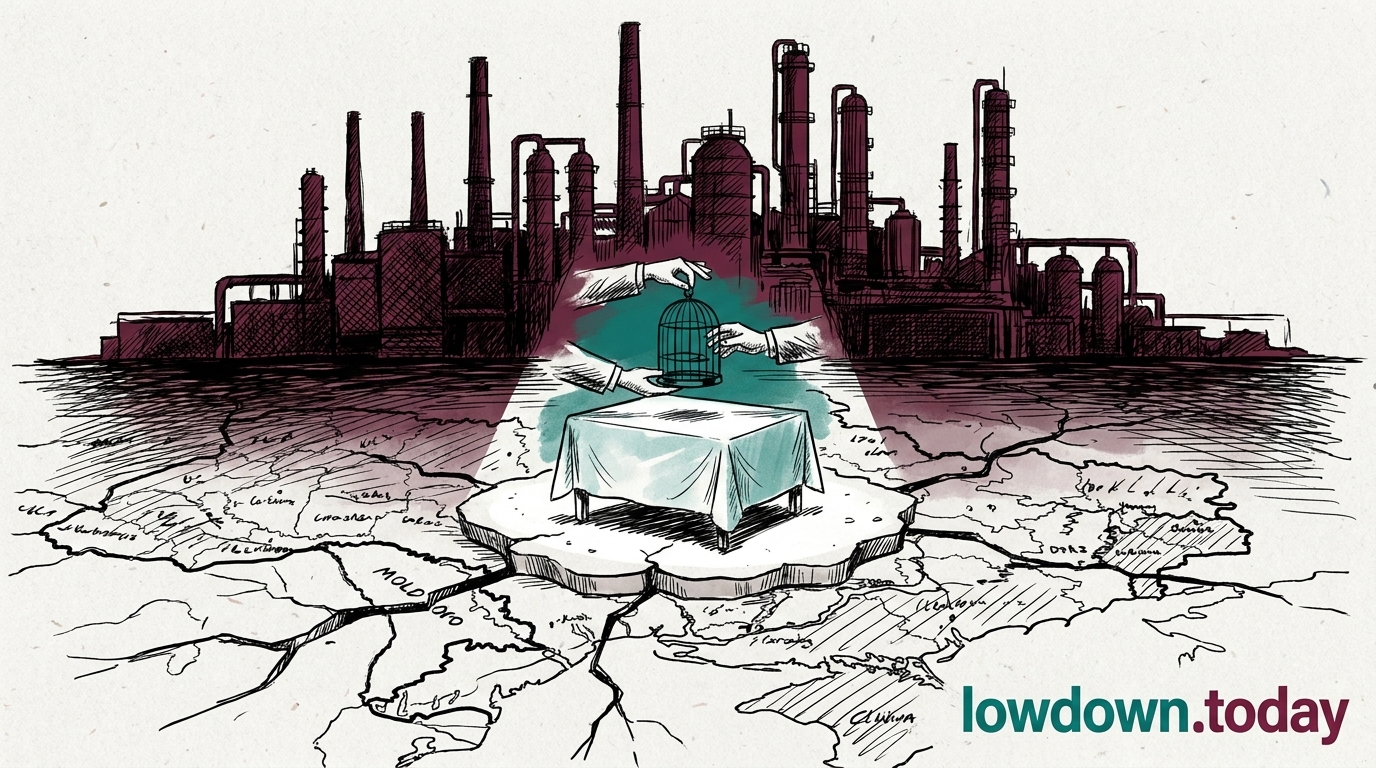
The Israel Defence Forces struck the South Pars / Asaluyeh gas complex on 6 April, Iran's largest petrochemical facility. Israeli Defence Minister Israel Katz confirmed the strike publicly and characterised it as "a severe economic blow costing Iran tens of billions of dollars" 1. Combining Asaluyeh with the Mahshahr complex hit on 5 April , Katz claimed that 85% of Iran's petrochemical export capacity is now offline. Iran has not confirmed the figure.

That figure is an Israeli government claim, not an established fact, and it should be read as such. Independent verification is constrained because Planet Labs commercial satellite imagery of Iran has been blacked out by undisclosed US government order since 9 March , removing the principal external check on damage assessments from either side. Iran's pre-war petrochemical exports earned roughly $14 billion a year in hard currency, and Tehran has not announced a replacement revenue stream as the strikes accumulate.

If Katz's number is accurate, the tools Washington spent two decades building are now being outperformed by the bombs of an ally Washington was supposed to be restraining. South Pars is jointly operated with Qatar, which calls its half North Dome. A strike that compounds pressure on Doha lands in the same week Doha refuses to mediate. The two facts may be unrelated. Neither side is treating them that way.

Deep Analysis

In plain English

South Pars is Iran's largest gas and petrochemical complex, and Iran's most valuable single economic site , roughly equivalent to attacking Britain's entire North Sea production in a single strike. Israel hit it on 6 April, a day after hitting the Mahshahr complex, and Israel's defence minister claimed the two strikes together have knocked out 85% of Iran's ability to export petrochemicals. That figure has not been independently verified: a US government order has blocked commercial satellite imagery of Iran since 9 March, so there is no external check. The strikes may be the most economically consequential of the war; we will not know the true damage figure until the blackout lifts.

Deep Analysis
Root Causes

South Pars is Iran's most important single economic asset: jointly operated with Qatar's North Dome field, it accounts for the majority of Iran's natural gas production and a disproportionate share of its petrochemical export earnings.

The IDF struck it because its symbolic and economic weight exceeds that of any comparable target, and because the Planet Labs blackout , an undisclosed US government order since 9 March , removed the principal check on independent damage assessment that would otherwise constrain Israeli strike claims.

Escalation

The South Pars strike raises the structural stakes of any Iranian retaliation: hitting Qatar's shared North Dome infrastructure would constitute an attack on a non-belligerent Gulf state hosting US forces, crossing a threshold that has deterred Iran throughout the conflict. Tehran's retaliation options are therefore constrained precisely because the most economically symmetrical response carries the highest escalation risk.

What could happen next?
  • Consequence

    If the 85% figure is directionally accurate, Iran's hard-currency earnings have been structurally compressed in a way that two decades of US sanctions failed to achieve, increasing pressure on Tehran's ability to fund a prolonged conflict.

  • Risk

    Iran's most economically symmetrical retaliation , striking Qatar's North Dome , would constitute an attack on a US-base-hosting Gulf state, meaning the strike has constrained rather than widened Tehran's options for a proportionate response.

First Reported In

Update #61 · Carriers retreat; Iran codifies Hormuz

IAEA· 7 Apr 2026
Read original
Different Perspectives
Rafael Grossi, IAEA Director General
Grossi's Update 349 of 7 May recorded a drone strike on ZNPP's radiation monitoring laboratory on 3 May. Rosatom's 17 May public attack on the Secretariat's neutrality degrades the diplomatic ground Grossi needs for the sixth repair ceasefire at day 60 on the single backup line.
Indian Government / Embassy Moscow
The Indian Embassy in Moscow confirmed on 18 May that an Indian national was killed and three hospitalised at a refinery construction site in the 17 May barrage. India is among the largest buyers of discounted Russian crude; the fatality forces a diplomatic protest without changing the purchasing posture.
Recep Tayyip Erdogan, Turkish President
Erdogan met Zelenskyy in Ankara for nearly three hours on 15 May before the Istanbul session, recovering Turkey's 2022 mediator role and reducing Trump's leverage by hosting bilateral talks without Washington in the room. Turkey hosts the NATO Ankara summit on 7-8 July; the Istanbul format gives Erdogan standing at both tables simultaneously.
Viktor Orban / Hungarian Government
Budapest's new cabinet, formed 12 May, holds the institutional veto point on the EU tranche disbursement ahead of the first-half June window. Hungary has previously leveraged EU loan tranches to extract bilateral concessions; the combination of a fresh cabinet and a tight disbursement timeline makes Budapest the single highest-leverage actor in the EU track this fortnight.
European Council / Commission
The Commission is preparing a three-document disbursement package for the 9.1-billion euro first tranche of the EU loan to Ukraine, targeting first-half June, but delivery depends on the Magyar cabinet, which formed on 12 May, not blocking the mechanism. The 20th sanctions package remains in force against Russia.
Donald Trump / US Treasury
Treasury issued GL 134C with a 48-hour gap after GL 134B expired, confirming the waiver series functions as permanent monthly management rather than a wind-down instrument. Washington was absent from the Istanbul room; Treasury Secretary Bessent framed the Cuba carve-out as protecting 'most vulnerable nations', maintaining the fiction that the 30-day bridge has a humanitarian rationale.
