Skip to content
Briefings are running a touch slower this week while we rebuild the foundations.See roadmap
Russia-Ukraine War 2026
22MAY

Israel Strikes Iran's Largest Domestic Fuel Facility

2 min read
10:57UTC

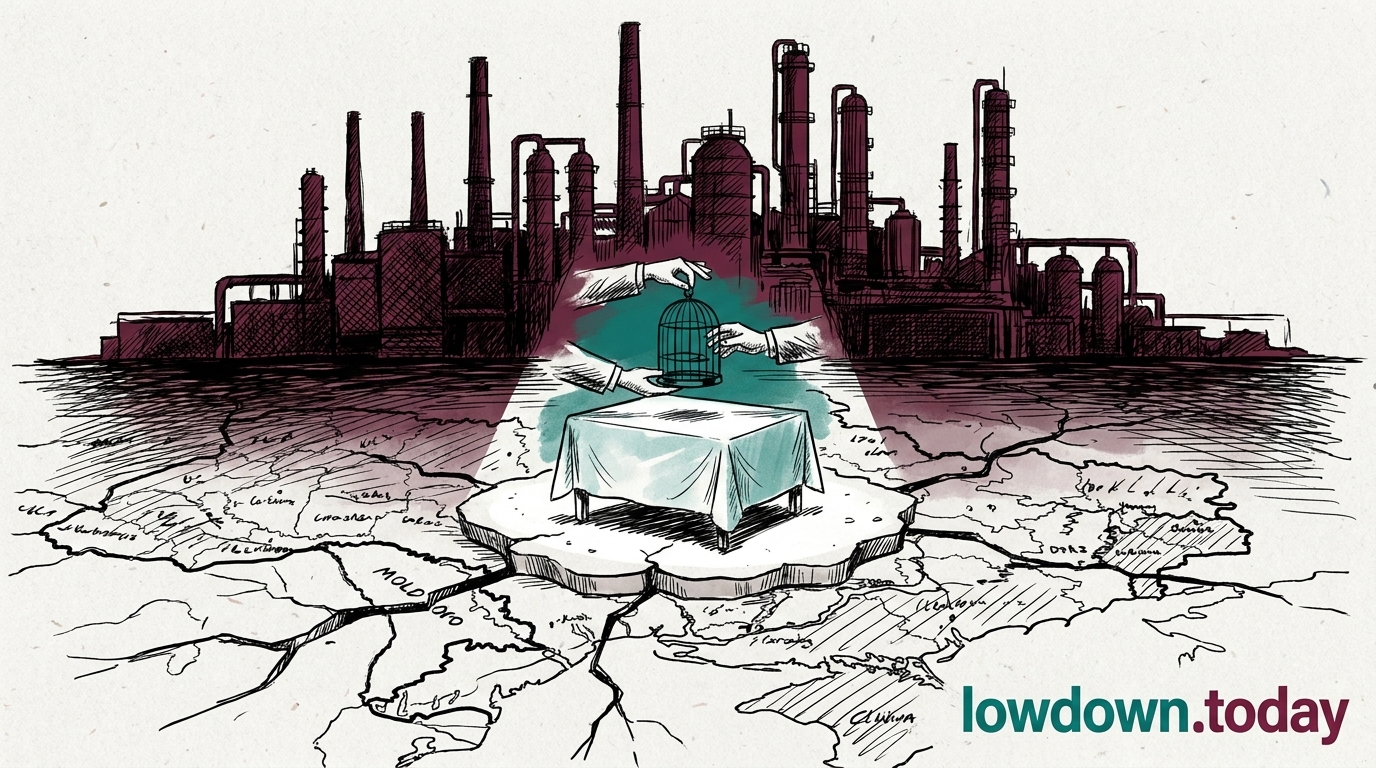
The Mahshahr strike marks a shift from targeting export infrastructure to civilian fuel supply, destroying an estimated 70% of Iran's gasoline production capacity.

ConflictDeveloping
Key takeaway

Israel's targeting shifted from export to civilian fuel supply.

The Israel Defence Forces struck the Mahshahr Petrochemical Complex on 5 April, Iran's largest, responsible for an estimated 70% of domestic gasoline production. The same day, IDF strikes hit air defence systems and ballistic missile arrays in Tehran and the al-Shalamcheh border crossing between Iraq and Iran.

The Mahshahr strike marks a shift in targeting logic. Previous Israeli operations focused on export infrastructure: refineries, terminals, pipeline nodes. Mahshahr supplies the domestic market. Destroying 70% of a country's gasoline production capacity is a material reduction in the civilian population's access to fuel and transportation. The distinction between strategic and civilian-impact targeting has narrowed considerably.

The 100-plus US legal experts who raised IHL concerns about university strikes will find sharper grounds here. Export infrastructure has a clearer dual-use military rationale. A petrochemical complex that supplies civilian petrol does not. The humanitarian consequences will be measured in fuel shortages affecting transportation, agriculture, and heating within days.

Reconstruction of a facility of this scale requires years under normal conditions and is effectively impossible under the current sanctions framework, which restricts the import of industrial equipment. Iran's domestic fuel crisis, already strained by wartime disruption, enters a new phase.

Deep Analysis

In plain English

Israel bombed the facility that makes most of Iran's petrol. This will cause fuel shortages for ordinary Iranians, not just reduce export revenue. It is a different kind of target from oil terminals and military sites, because it directly affects civilians' ability to drive, heat their homes, and transport food.

Deep Analysis
Root Causes

The escalation in targeting follows from the attritional logic of the air campaign. With export infrastructure already degraded over six weeks, the target set necessarily expands to domestic facilities. The distinction between strategic and civilian infrastructure erodes as the campaign matures.

Escalation

Escalatory. The shift from export to domestic fuel infrastructure represents a qualitative change in the campaign's humanitarian impact. It increases internal pressure on the Iranian government but also increases the IRGC's ability to rally domestic support against external aggression.

What could happen next?
  • Fuel shortages affecting civilian transportation and agriculture within days

    days · Assessed
  • International humanitarian law scrutiny intensifies over civilian infrastructure targeting

    weeks · Assessed
  • Internal pressure on Iranian government increases but may rally domestic support for IRGC

    weeks · Suggested
First Reported In

Update #60 · Pakistan's Ceasefire Plan Fills the Vacuum

Alma Center· 6 Apr 2026
Read original
Causes and effects
This Event
Israel Strikes Iran's Largest Domestic Fuel Facility
Previous Israeli operations focused on export infrastructure: refineries, terminals, pipeline nodes. Mahshahr supplies the domestic market. Destroying 70% of a country's gasoline production capacity is a material reduction in the civilian population's access to fuel and transportation. The distinction between strategic and civilian-impact targeting has narrowed to the point of disappearing.
Different Perspectives
Rafael Grossi, IAEA Director General
Grossi's Update 349 of 7 May recorded a drone strike on ZNPP's radiation monitoring laboratory on 3 May. Rosatom's 17 May public attack on the Secretariat's neutrality degrades the diplomatic ground Grossi needs for the sixth repair ceasefire at day 60 on the single backup line.
Indian Government / Embassy Moscow
The Indian Embassy in Moscow confirmed on 18 May that an Indian national was killed and three hospitalised at a refinery construction site in the 17 May barrage. India is among the largest buyers of discounted Russian crude; the fatality forces a diplomatic protest without changing the purchasing posture.
Recep Tayyip Erdogan, Turkish President
Erdogan met Zelenskyy in Ankara for nearly three hours on 15 May before the Istanbul session, recovering Turkey's 2022 mediator role and reducing Trump's leverage by hosting bilateral talks without Washington in the room. Turkey hosts the NATO Ankara summit on 7-8 July; the Istanbul format gives Erdogan standing at both tables simultaneously.
Viktor Orban / Hungarian Government
Budapest's new cabinet, formed 12 May, holds the institutional veto point on the EU tranche disbursement ahead of the first-half June window. Hungary has previously leveraged EU loan tranches to extract bilateral concessions; the combination of a fresh cabinet and a tight disbursement timeline makes Budapest the single highest-leverage actor in the EU track this fortnight.
European Council / Commission
The Commission is preparing a three-document disbursement package for the 9.1-billion euro first tranche of the EU loan to Ukraine, targeting first-half June, but delivery depends on the Magyar cabinet, which formed on 12 May, not blocking the mechanism. The 20th sanctions package remains in force against Russia.
Donald Trump / US Treasury
Treasury issued GL 134C with a 48-hour gap after GL 134B expired, confirming the waiver series functions as permanent monthly management rather than a wind-down instrument. Washington was absent from the Istanbul room; Treasury Secretary Bessent framed the Cuba carve-out as protecting 'most vulnerable nations', maintaining the fiction that the 30-day bridge has a humanitarian rationale.
