Skip to content
Briefings are running a touch slower this week while we rebuild the foundations.See roadmap
Iran Conflict 2026
5APR

Satellite Blackout Erases 27 Days of War Evidence

2 min read
12:52UTC

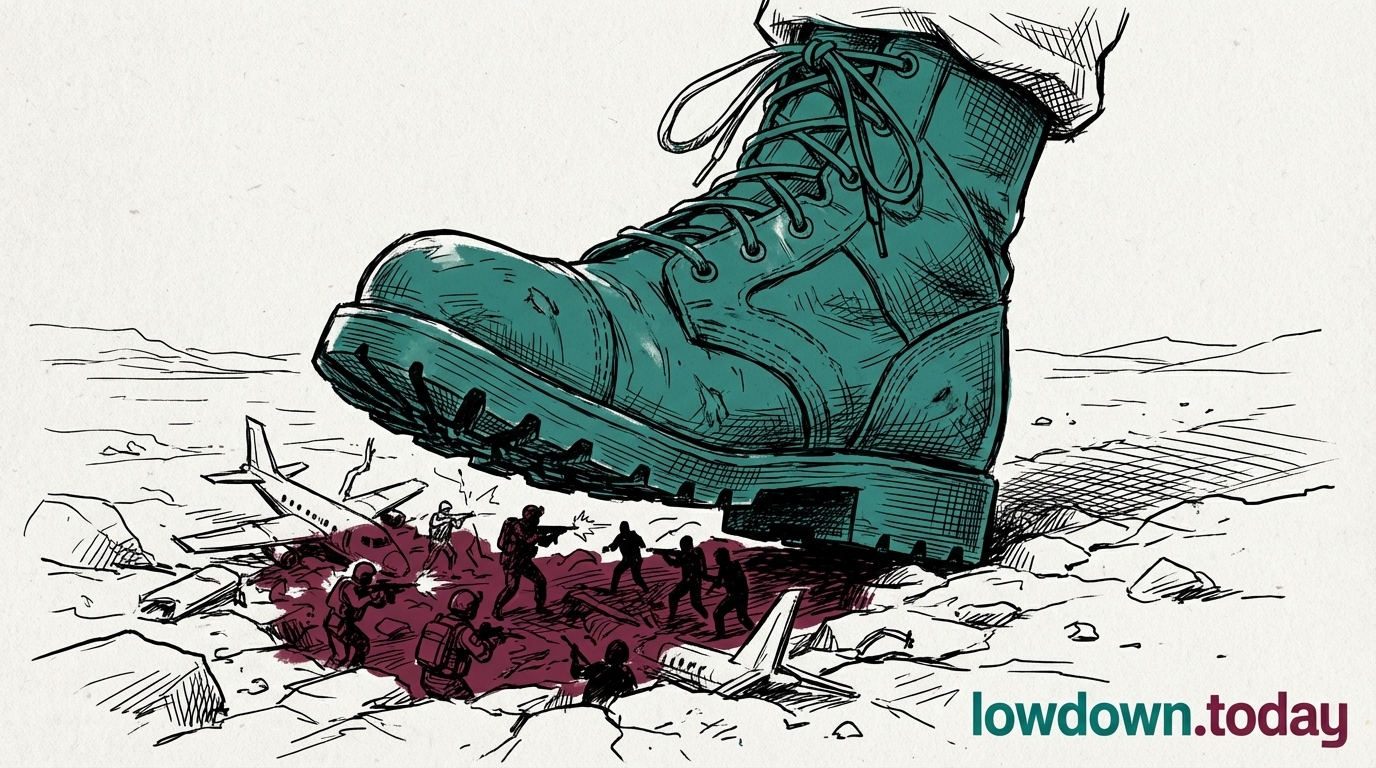
The largest commercial satellite firm stopped publishing images of the conflict at US request. The blackout is retroactive to 9 March.

ConflictAssessed
Key takeaway

Every independent tool for verifying this war has been shut down at once.

Planet Labs, the world's largest commercial satellite imagery provider, announced on 5 April it will withhold all imagery over Iran and the broader conflict zone indefinitely, at US government request. The blackout is retroactive to 9 March, covering 27 days of active conflict documentation that can no longer be independently verified. 1 The legal authority for the request was not disclosed. Planet Labs expects the restriction to last until the war ends.

The retroactive window covers the period in which at least 30 university strikes, the fourth Bushehr incident, and the B1 bridge killing occurred. Human rights investigators documenting civilian casualties now work from a three-week evidence gap they cannot fill. Three weeks of already-published satellite assessments can no longer be updated or checked against new data.

This arrives alongside two other closures. The IAEA has no access to Iran's nuclear programme following the Majlis 221-0 suspension vote . Hengaw, the most credible independent casualty monitor, has been silent for days ; its last figure was 7,300 killed. Every independent verification mechanism has been eliminated simultaneously: satellite imagery by US government request, nuclear inspections by Iranian legislation, and the primary casualty counter by silence that nobody has explained. No party to the conflict has objected to the others' contributions to the darkness.


Deep Analysis

In plain English

Satellite companies like Planet Labs take thousands of photos of Earth every day. Journalists, researchers, and human rights groups use these photos to check whether governments are telling the truth about wars. The US government has told Planet Labs to stop sharing its photos of Iran. The blackout goes back to the 9th of March, which means even older photos that were already published can no longer be verified or updated. At the same time, Iran kicked out the UN nuclear inspectors, and the main group counting how many Iranians have been killed has gone silent. Every independent check on what is happening in this war has been removed, by different people, for different reasons, all at the same time.

Deep Analysis
Root Causes

Commercial satellite imagery changed the accountability architecture of modern conflict by giving non-state actors, journalists, and human rights bodies the same observational capability previously available only to governments. The Planet Labs blackout is the US government's first attempt to reassert control over that architecture during an active conflict it is party to.

The retroactive element suggests the US identified specific imagery published in the 9 March to 5 April window that was or could be used in legal proceedings or public accountability processes it wishes to foreclose. The undisclosed legal authority suggests the request was made under an existing national security instrument, likely a national security letter or a Commercial Remote Sensing Regulatory Affairs directive, neither of which requires public disclosure.

What could happen next?
  • Risk

    Future war crimes investigations of actions within the 9 March to 5 April window face a deliberate gap in the satellite evidence record that was created by US government request.

  • Precedent

    Retroactive commercial satellite imagery suppression during an active conflict sets a precedent other governments will cite in future conflicts.

First Reported In

Update #59 · Day 37: A Ground War Inside Iran That Nobody Will Name

Al Jazeera· 5 Apr 2026
Read original
Different Perspectives
Islamabad (Pakistan Armed Forces and Foreign Ministry)
Munir's cancellation reflects Islamabad's assessment that no bridging formula survives the collision of Khamenei's uranium directive, Rubio's Hormuz red line, and the sequencing gap simultaneously; Naqvi's relay role signals continued Pakistani engagement without a mandate to close any of the three gaps.
Lloyd's of London war-risk market
Published PGSA coordinates give underwriters the cartographic input to model tanker route exposure inside the claimed zone; OFAC's Sunday GL V ruling determines whether Hengli-Singapore dollar-clearing routes carry secondary-sanctions risk from Monday, adding a compliance layer to the existing kinetic war-risk premium.
Hengaw Human Rights Organisation
Zaleh's trial lasted 'only a few minutes' before a conviction on PDKI membership charges at Naqadeh; the pattern of solitary detention, coerced confession, and minutes-long hearing is consistent with wartime political-charge architecture the organisation has documented across the Kurdish northwest.
Gulf Arab states (UAE, Bahrain, Kuwait)
The UAE has not published counter-coordinates to the PGSA's Hormuz zone map, leaving Emirati silence as the maritime-law response to Iran's charted boundary claim. Abu Dhabi's published position now defaults by omission toward implied acceptance of the zone's cartographic fact.
Beijing's Ministry of Commerce
MOFCOM's blocking order covers Hengli and four other designated refineries on the mainland but does not extend to the dollar-clearing layer in Singapore, making Sunday's GL V expiry the first live test of whether Beijing's sanctions-defiance architecture reaches the place where dollars settle.
The White House
The White House
Trump's verbal track on Iran has produced no signed Iran-specific presidential instrument across 84 days; both financial-sector EOs signed on 19 May are unrelated to Hormuz or the IRGC. Rubio's public naming of the Hormuz toll architecture as a deal-killer is the administration's most concrete new position this week.



