Skip to content
You can now search across every topic, entity and event.What's new
Iran Conflict 2026
6APR

Israel Strikes Iran's Largest Domestic Fuel Facility

2 min read
09:43UTC

The Mahshahr strike marks a shift from targeting export infrastructure to civilian fuel supply, destroying an estimated 70% of Iran's gasoline production capacity.

ConflictDeveloping
Key takeaway

Israel's targeting shifted from export to civilian fuel supply.

The Israel Defence Forces struck the Mahshahr Petrochemical Complex on 5 April, Iran's largest, responsible for an estimated 70% of domestic gasoline production. The same day, IDF strikes hit air defence systems and ballistic missile arrays in Tehran and the al-Shalamcheh border crossing between Iraq and Iran.

The Mahshahr strike marks a shift in targeting logic. Previous Israeli operations focused on export infrastructure: refineries, terminals, pipeline nodes. Mahshahr supplies the domestic market. Destroying 70% of a country's gasoline production capacity is a material reduction in the civilian population's access to fuel and transportation. The distinction between strategic and civilian-impact targeting has narrowed considerably.

The 100-plus US legal experts who raised IHL concerns about university strikes will find sharper grounds here. Export infrastructure has a clearer dual-use military rationale. A petrochemical complex that supplies civilian petrol does not. The humanitarian consequences will be measured in fuel shortages affecting transportation, agriculture, and heating within days.

Reconstruction of a facility of this scale requires years under normal conditions and is effectively impossible under the current sanctions framework, which restricts the import of industrial equipment. Iran's domestic fuel crisis, already strained by wartime disruption, enters a new phase.

Deep Analysis

In plain English

Israel bombed the facility that makes most of Iran's petrol. This will cause fuel shortages for ordinary Iranians, not just reduce export revenue. It is a different kind of target from oil terminals and military sites, because it directly affects civilians' ability to drive, heat their homes, and transport food.

Deep Analysis
Root Causes

The escalation in targeting follows from the attritional logic of the air campaign. With export infrastructure already degraded over six weeks, the target set necessarily expands to domestic facilities. The distinction between strategic and civilian infrastructure erodes as the campaign matures.

Escalation

Escalatory. The shift from export to domestic fuel infrastructure represents a qualitative change in the campaign's humanitarian impact. It increases internal pressure on the Iranian government but also increases the IRGC's ability to rally domestic support against external aggression.

What could happen next?
  • Fuel shortages affecting civilian transportation and agriculture within days

    days · Assessed
  • International humanitarian law scrutiny intensifies over civilian infrastructure targeting

    weeks · Assessed
  • Internal pressure on Iranian government increases but may rally domestic support for IRGC

    weeks · Suggested
First Reported In

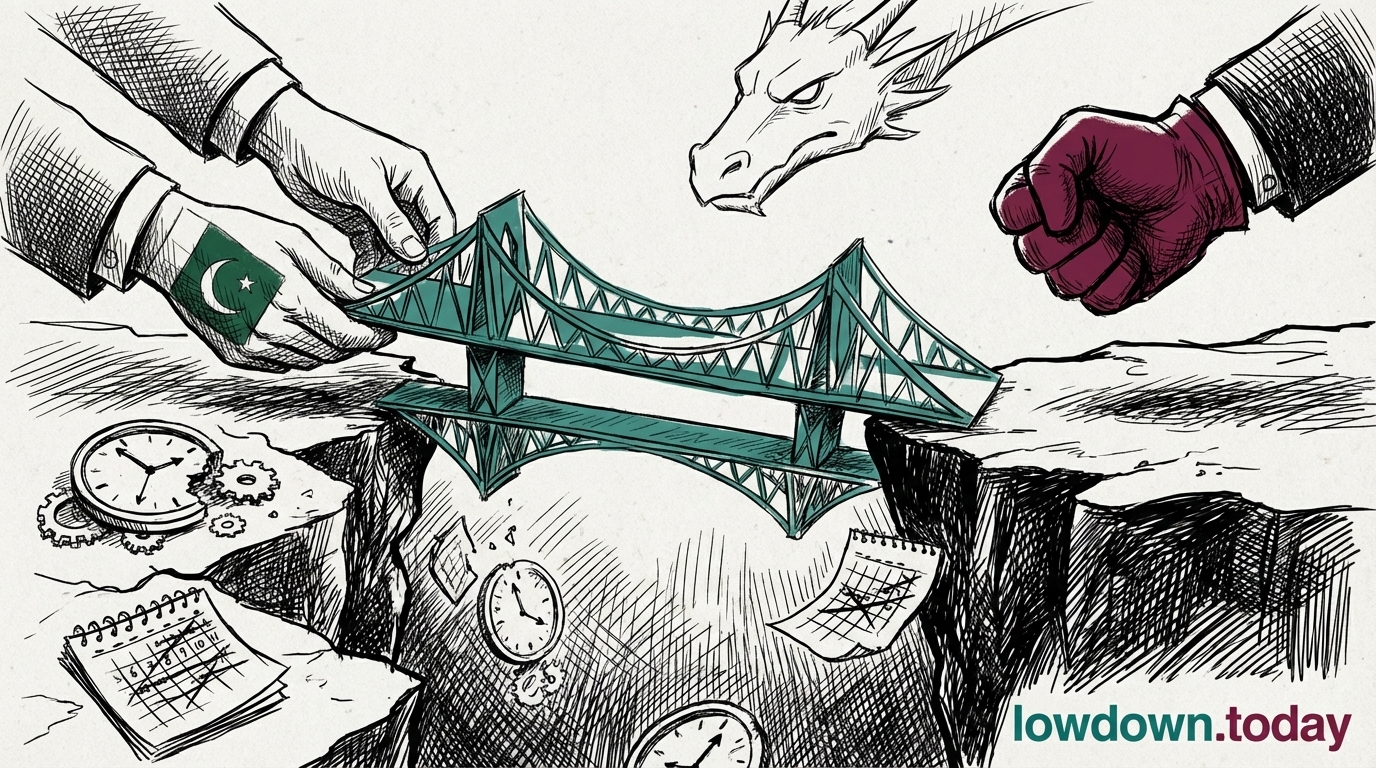
Update #60 · Pakistan's Ceasefire Plan Fills the Vacuum

Alma Center· 6 Apr 2026
Read original
Causes and effects
This Event
Israel Strikes Iran's Largest Domestic Fuel Facility
Previous Israeli operations focused on export infrastructure: refineries, terminals, pipeline nodes. Mahshahr supplies the domestic market. Destroying 70% of a country's gasoline production capacity is a material reduction in the civilian population's access to fuel and transportation. The distinction between strategic and civilian-impact targeting has narrowed to the point of disappearing.
Different Perspectives
Oil market and P&I insurers
Brent cleared $87 intraday only once CENTCOM's blockade became physical rather than declared, even though P&I Clubs had already excluded Hormuz war risk a week earlier on 7 July: capital hedged ahead of enforcement, but prices moved only after it.
UAE reporting
UAE reporting
UAE reporting placed the Omani tanker deaths at one seafarer against the International Maritime Agency's count of two, the first time in this war that a Gulf state's casualty figures have diverged from an international monitor's.
Jordan
Jordan
Iranian strikes reached Jordan again on 14 July as part of the Gulf-wide retaliation for the Hormuz blockade, extending the conflict's geographic footprint to a state with no direct stake in the strait itself.
Bahrain
Bahrain
Bahrain sounded air-raid sirens on 14 July during Iran's Gulf-wide retaliation, the same day CENTCOM's blockade order and fourth night of strikes pushed the conflict's physical reach into the wider Gulf littoral.
Kuwait
Kuwait
Kuwait intercepted Iranian missiles and drones on 14 July as Tehran's blockade retaliation reached Gulf states beyond Iran's immediate shoreline, confirming Kuwaiti airspace now sits inside Iran's retaliatory envelope.
Oman
Oman
Oman absorbed the war's first tanker casualties in its own waters on 14 July, with two supertankers disabled and seafarers killed, putting the sultanate's shipping lanes directly in the path of the blockade fight for the first time.