Skip to content
Briefings are running a touch slower this week while we rebuild the foundations.See roadmap
Iran Conflict 2026
11MAY

Hormuz opens then closes in 24 hours

4 min read
14:01UTC

Iran declared the strait open at 05:00 GMT on 17 April. Within a day IRGC gunboats were firing on an Indian-flagged super tanker.

ConflictDeveloping
Key takeaway

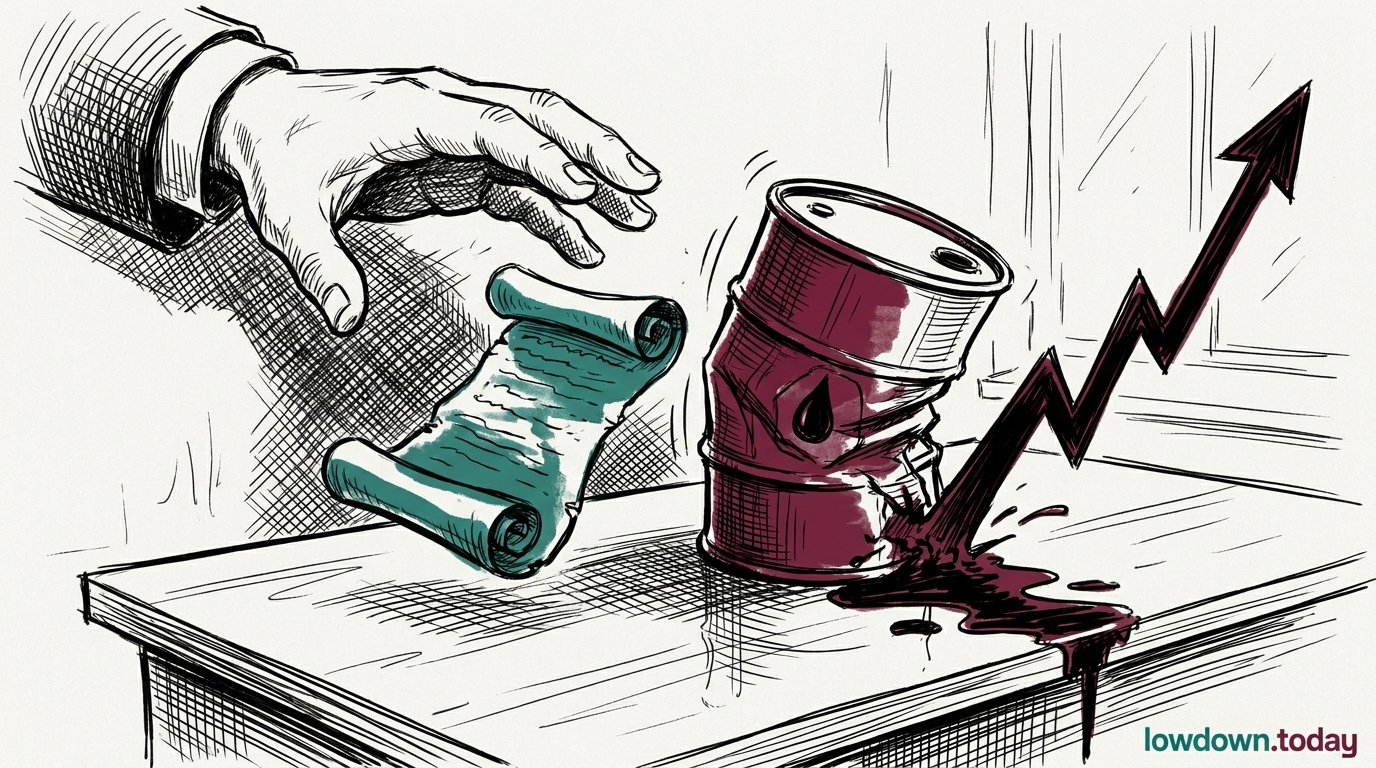
Iran reopened Hormuz on a press conference and closed it with gunboats before the trading session ended.

Abbas Araghchi announced at 05:00 GMT on 17 April that the Strait of Hormuz was "completely open for the remaining period of ceasefire, on the coordinated route as already announced by Ports and Maritime Organisation" 1. Hours later Donald Trump said the US naval blockade "will remain in full force" until a complete deal is reached. On 18 April Iran's joint military command stated that "control of the strait of Hormuz has returned to its previous state under strict management and control of the armed forces", citing US "breaches of trust" 2. That CENTCOM order narrowed to Iranian ports supplied the breach-of-trust language Tehran cited when it closed the window.

UK Maritime Trade Operations (UKMTO), the Royal Navy's maritime reporting body, confirmed that two Islamic Revolutionary Guard Corps (IRGC) gunboats opened fire on a tanker transiting the strait on 18 April; an Indian-flagged super tanker was among the vessels forced to turn around 3. The only ship recorded transiting during the open window was the empty cruise vessel Celestyal Discovery. Kpler and Windward logged transits falling from 15 on 15 April to 8 on 17 April, the opposite of what an opening announcement would predict.

Brent crude fell 9.07% to $90.38 on the announcement and reversed almost completely when the strait closed again. The Truth Social blockade post of Day 45 and the CENTCOM carve-out remain the only US instruments in play; neither has been signed. Brent has now priced two statements and one gunboat incident inside a single session, while Kpler transits fell. The insurance market is pricing the gap between press conferences and passage, and the IRGC gunboat strike has imported a flag-state, India, directly into the blockade diplomacy three days before the GL-U lapse window.

Deep Analysis

In plain English

Iran announced the Strait of Hormuz (the narrow waterway that most Middle Eastern oil passes through) was open on 17 April. Oil prices fell sharply on the news. But the US said its naval blockade was still in place, Iran's military fired on an Indian ship, and Iran declared the strait closed again the next day. Almost no cargo ships moved during the brief open window: a single empty cruise ship made it through.

Deep Analysis
Root Causes

Iran never ratified the 1982 UN Convention on the Law of the Sea (UNCLOS), which grants transit-passage rights through international straits. Tehran's domestic maritime law, updated in 2024, claims jurisdiction over 'hostile-linked vessels', a category Iran defines unilaterally. That legal gap means every IRGC enforcement action at Hormuz operates in a framework where international transit-passage doctrine applies to every other actor but the controller of the northern bank.

P&I clubs covering Hormuz transits are concentrated in the London and Scandinavian markets, which operate under Lloyd's Market Association (LMA) war-risk protocols. Once the LMA classifies a corridor as an active conflict zone, cover becomes discretionary per voyage rather than automatic under policy. IRGC gunboat fire is a direct input to that classification review, independent of whatever declaration Iran's Foreign Ministry makes about the strait's status.

What could happen next?
  • Meaning

    IRGC gunboat fire on an Indian-flagged tanker imports New Delhi into the blockade diplomacy as a directly aggrieved flag state, adding a non-Western incident track alongside the existing French and Japanese protests.

    Short term · Assessed
  • Meaning

    The 17 April price-swing-and-recovery pattern establishes that future Iranian opening statements will move markets for hours, not days, compressing their diplomatic leverage.

    Short term · Assessed
  • Meaning

    LMA war-risk classification for Hormuz will be reviewed following the gunboat incident; a formal upgrade to 'active hostilities' zone would raise premium floors and reduce the number of underwriters willing to quote cover at any price.

    Short term · Assessed
  • Meaning

    The Celestyal Discovery as the sole transit gives commercial operators a concrete precedent to cite in refusing Hormuz routing even during a notional open window.

    Short term · Assessed
First Reported In

Update #72 · Hormuz opens and closes in 24 hours

CBS News· 18 Apr 2026
Read original
Different Perspectives
Israel
Israel
Israeli strikes on Hezbollah positions in Lebanon continued through the weekend, maintaining the secondary front. The IDF has publicly named Mojtaba Khamenei as an assassination target; his courier-governance mode complicates targeting but does not remove him from the order.
Russia
Russia
Putin told a Moscow press conference that Washington, not Tehran or Moscow, killed the Russia-custody uranium arrangement by demanding US-territory-only storage. Neither Tehran nor Washington has corroborated the account, which appeared in second-tier outlets only, consistent with a trial balloon rather than a formal position.
United Kingdom
United Kingdom
HMS Dragon was redeployed from the Eastern Mediterranean to the Middle East on 9 May, the first physical European platform commitment to the Gulf. The Ministry of Defence called it "prudent planning" while publishing no rules of engagement, no tasking order, and no vessel name, committing a named asset to a conflict zone before the political instrument authorising it exists.
United Arab Emirates
UAE air defences intercepted two Iranian drones over its territory on 10 May, a kinetic escalation six days after the Fujairah oil terminal strike that drew no formal protest. The three-state simultaneous operation, not the severity of individual strikes, appears to have crossed the threshold at which the GCC states collectively began responding.
Saudi Arabia
Saudi Arabia
Riyadh issued the first formal Gulf-state protest of the conflict on 10 May, demanding an "immediate halt to blatant attacks on territories and territorial waters of Gulf states", ending 10 weeks of channelling displeasure through OPEC+ quota discussions. The protest forecloses Saudi Arabia's preferred quiet-channel role and reduces the functioning back-channel architecture to Pakistan alone.
Qatar
Qatar
Doha is simultaneously a strike target, the site of the Safesea Neha attack 23 nautical miles offshore, and an active MOU mediator: Qatar's prime minister met Rubio and Vance in Washington the same weekend. Whether Qatar issues its own formal protest or maintains its dual role is the critical escalation indicator for the week of 11 May.