Skip to content
You can now search across every topic, entity and event.What's new
Iran Conflict 2026
10MAY

PGSA opens vessel portal, withholds tariff schedule

4 min read
14:22UTC

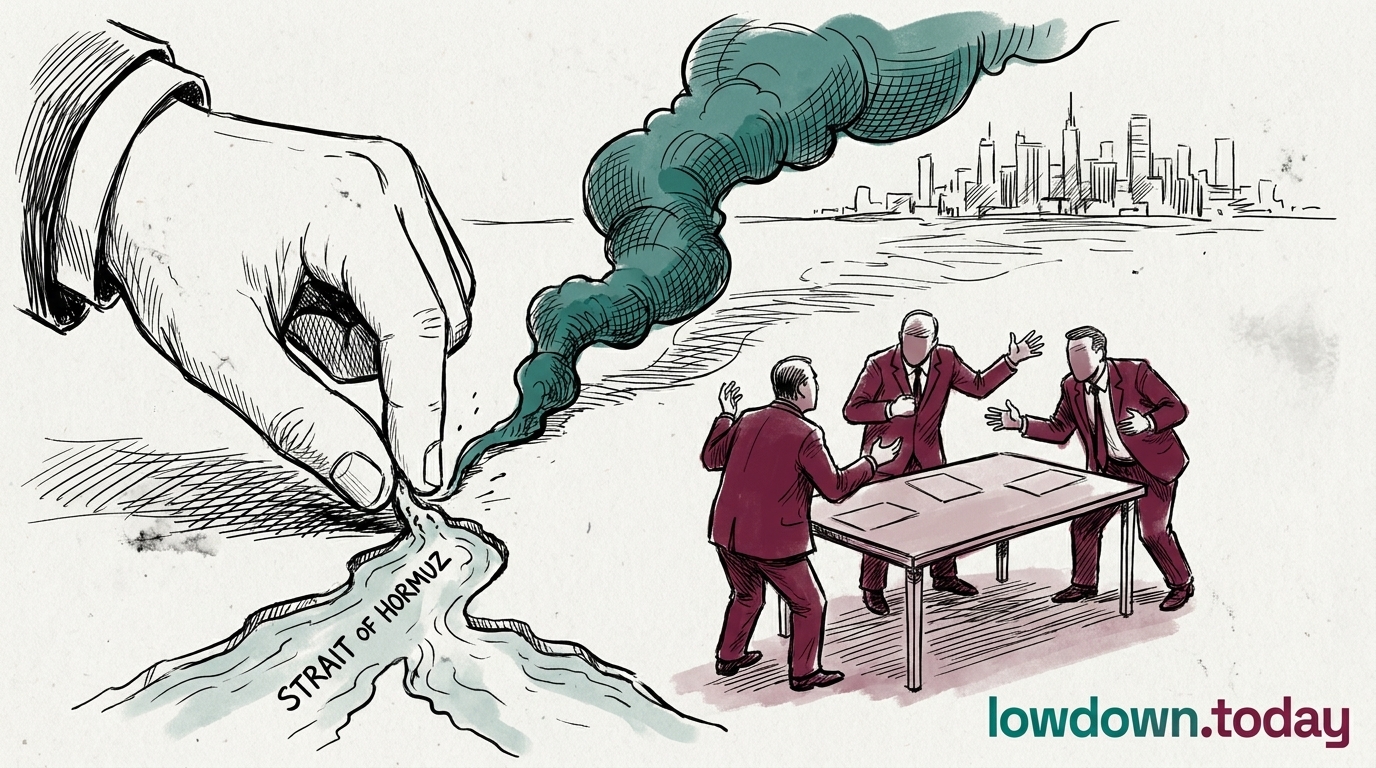
Iran's Persian Gulf Shipping Authority opened a vessel-submission portal on 18 May yet published no fee schedule by 20 May; Lloyd's of London entered no agreement.

ConflictDeveloping
Key takeaway

An unpublished tariff preserves case-by-case IRGC leverage and keeps Lloyd's war-risk cover closed across the Hormuz corridor.

Iran's PGSA (Persian Gulf Shipping Authority) opened a vessel-submission portal and an X account on 18 May 2026 , four days after the 16 May announcement that "full details" would follow "soon" . By 20 May no fee schedule had been published. The PGSA derives its authority from the Majlis-backed Hormuz toll bill enacted in early May and has positioned itself to Lloyd's of London as the sole lawful authority for Hormuz passage certification.

Windward Maritime Intelligence reports up to $2 million per transit paid in yuan, a $1 per barrel cargo toll, and Bitcoin payments to IRGC-linked wallets 1. No contract has surfaced. Lloyd's has not entered any agreement with PGSA; underwriters have informally signalled war-risk cover will not reopen until written rules of engagement exist somewhere, from either Iran or the 26-nation Hormuz coalition .

Iran also extended a bilateral guided-passage architecture with Iraq, Pakistan, Qatar, India and Oman, the latter confirmed by Baghaei on 18 May . Six India-flagged vessels conducted a coordinated cluster transit under Iranian operational assurances on 17 May, and Windward logged dark-AIS (Automatic Identification System) activity surging roughly 600 per cent between 19 April and 3 May. Vessels paying IRGC wallets in bitcoin or yuan go transponder-dark for the crossing, running outside the paper record PGSA is nominally building.


Deep Analysis

In plain English

Iran controls the Strait of Hormuz, the narrow channel through which roughly 20% of the world's oil passes. Since the war began, Iran has been charging ships to cross through. In May, Iran set up an official authority, the Persian Gulf Shipping Authority (PGSA), to handle the toll collection formally. They even launched a website. But as of 20 May they still have not published what the toll costs. Ships are paying up to $2 million per crossing, sometimes in Chinese currency, sometimes in cryptocurrency, with each deal individually negotiated. Shipping insurance companies, including Lloyd's of London, say they will not reopen their cover for ships crossing until someone publishes written rules. Without insurance, freight costs stay high, which means the goods those ships carry cost more everywhere.

Deep Analysis
Root Causes

The Majlis-enacted Hormuz toll bill gave the PGSA statutory authority but did not fix its fee schedule. This structure was deliberate: a legislative mandate for toll-collection combined with executive discretion over pricing preserves maximum leverage at the point of negotiation while giving Iran a legal argument that the tolls are sovereign maritime fees rather than extortion.

Lloyd's refusal to engage the PGSA reflects not hostility to the toll concept but the structural impossibility of pricing open-ended discretionary fees. War-risk underwriters model expected loss against premium income; without a known per-voyage rate there is no loss expectation to price against. The 600% dark-AIS surge compounds this: the fleet Lloyd's cannot see is the fleet Lloyd's cannot price.

What could happen next?
  • Consequence

    Lloyd's informally conditioning war-risk cover on written governance from any Hormuz party means the tariff vacuum directly prolongs the Brent premium and shipping-cost elevation for every European economy importing via Hormuz.

    Short term · 0.8
  • Risk

    Two parallel payment systems (PGSA formal permits and IRGC-linked Bitcoin wallets) running simultaneously create a compliance minefield for shipping companies: paying IRGC-linked wallets may violate OFAC sanctions while refusing to pay blocks transit.

    Immediate · 0.75
  • Opportunity

    Iran's bilateral guided-passage architecture with Iraq, Pakistan, Qatar, India and Oman creates a de facto regional maritime governance layer that could become a foundation for a published multilateral tariff regime if the broader conflict settles.

    Medium term · 0.5
First Reported In

Update #103 · Senate 50-47; UNSC at Barakah; no US paper

Windward Maritime Intelligence· 20 May 2026
Read original
Different Perspectives
Oil markets / Lloyd's of London
Brent fell to near $87.33 on 80 per cent deal-probability pricing, but Lloyd's has not de-listed Hormuz from its war-risk register and shipping diversions continue at 139 vessels. Insurance markets are lagging futures: physical risk remains while financial markets have spent the good news before the paper exists.
India
India
Modi is expected to raise the deaths of three Indian sailors in the 11 June CENTCOM strike on the MT Settebello with Trump at G7 sidelines, the first non-party leader to put the blockade's human cost into a formal bilateral. New Delhi is also a major Iranian oil buyer whose import volumes the sanctions-relief terms will govern.
Israel (Netanyahu)
Israel (Netanyahu)
Netanyahu stated Israel is not party to the deal on 12 June; Defence Minister Katz ruled out the Lebanon withdrawal Iran's draft demands, inserting a third blocker the US-Iran negotiating channel cannot resolve. Israel's position tethers Hormuz reopening to a Lebanon settlement Washington has not brokered.
Pakistan (mediator, Sharif/Naqvi)
Sharif declared a final agreed text on 12 June before either principal confirmed it, running two Tehran visits in under a week without securing a written IRGC or Khamenei response. Islamabad's incentive to claim a diplomatic win outpaces its standing to deliver either capital's signature.
Iran foreign ministry (Araghchi)
Araghchi declared digital signing within days while setting dilute-in-Iran as a non-negotiable red line on the 440.9 kg HEU stockpile, a standing Tehran position he cannot override without authorisation from Khamenei, reachable only by courier. The FM track is sprinting to close before the IRGC reasserts control.
Trump administration / CENTCOM
Vance called the deal still TBD on 12 June while CENTCOM downed Iranian drones over Hormuz for a second consecutive night and the White House register stayed blank. Washington holds the ship-out position on HEU and has not signed an Iran instrument in over 100 days of conflict.



