Skip to content
You can now search across every topic, entity and event.What's new
Iran Conflict 2026
10MAY

PGSA goes live on Hormuz transit

3 min read
14:22UTC

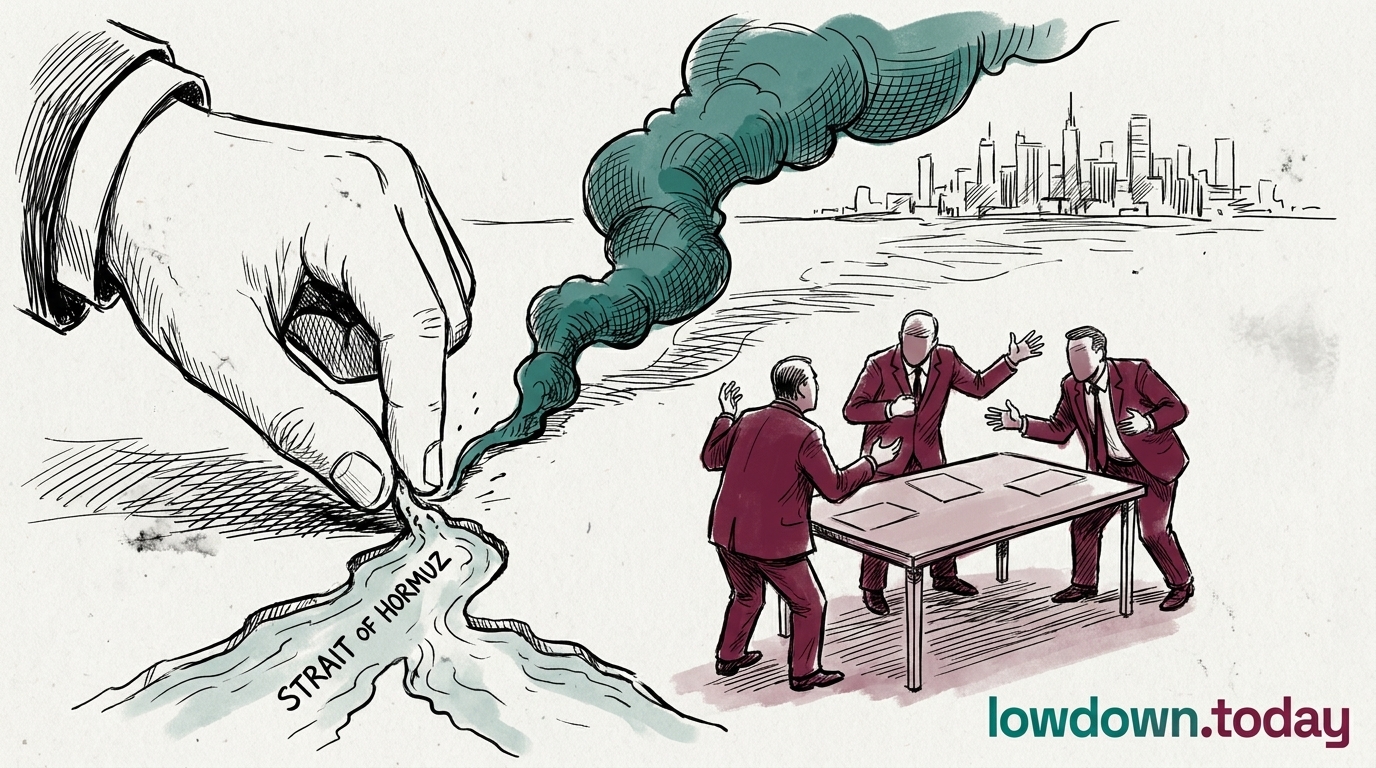
Iran's Persian Gulf Strait Authority launched an official X account and a vessel-submission portal on 18 May, converting the Majlis-backed Hormuz toll from political signalling into an administrative interface ships must engage with.

ConflictDeveloping
Key takeaway

Iran's Hormuz toll moved from a slogan to a working permit office on 18 May.

Iran's Persian Gulf Strait Authority launched an official X account and a live vessel-submission portal on 18 May 2026, demanding ownership details, insurance, crew manifests, cargo declarations and routing for a transit permit through the Strait of Hormuz. Euronews reported the launch the same day 1. The body is IRGC (Islamic Revolutionary Guard Corps)-backed and answers to the Majlis, Iran's parliament. PGSA replaces a parliamentary mechanism Azizi posted as legislative intent two days earlier with a working administrative interface that ships now have to engage with one way or another.

the strait of Hormuz is the 33-km chokepoint through which roughly a fifth of seaborne oil moves each day. Permit systems there are not a matter of fee schedules alone; they reset who counts as the gatekeeper. Euronews relayed a market-reported figure of up to $2 million per transit in yuan-denominated fees 2, though PGSA has not published an official tariff. The absence of a public price list means insurance underwriters and tanker owners are bidding into a system whose terms are still being written by the office collecting them.

For the 26-nation coalition that signed the Hormuz joint statement on 12 May , the PGSA portal is the first hard test of UNCLOS Article 38 transit-passage rights against a sovereign administrative system. UNCLOS (UN Convention on the Law of the Sea) Article 38 protects freedom of transit through international straits, but it presumes the strait state is not running a permit office. Once a vessel registers with PGSA, even under protest, the coalition's legal frame stops being an open-seas argument and becomes a treaty dispute over a working bureaucracy.


Deep Analysis

In plain English

Iran set up a new government body called the Persian Gulf Strait Authority (PGSA) to control who passes through the Strait of Hormuz, the narrow waterway through which about 20% of the world's oil moves. For weeks the PGSA existed on paper only. On 18 May, it went live online: shipping companies can now submit their vessel's details and pay a fee of up to $2 million per trip, in Chinese yuan, to get a transit permit. Ships that file the paperwork are implicitly accepting Iran's right to charge. Ships that refuse must decide whether to risk the consequences. Neither option removes the legal dilemma the PGSA has created.

Deep Analysis
Root Causes

The PGSA's X-account launch rests on three structural conditions that no ceasefire automatically removes.

First, Iran never ratified the 1982 UN Convention on the Law of the Sea (UNCLOS). The transit-passage right that coalition planners invoke under UNCLOS Article 38 simply has no standing in Iranian domestic law, which Tehran updated in 2024 to assert jurisdiction over 'hostile-linked vessels' in what it terms Persian Gulf rather than international waters.

Second, the yuan-denominated payment rail routes outside the US dollar correspondent-banking system, creating a financial infrastructure whose utility to China, Russia, and sanctioned states predates and survives any Iran-specific political settlement.

Third, the PGSA emerged from a Majlis legislative mandate rather than an executive decree, giving it institutional depth that a presidential ceasefire commitment cannot unilaterally revoke without a parliamentary counter-vote.

Escalation

The PGSA going operational marks a qualitative step beyond political posturing: Iran now has an administrative interface that generates compliance dilemmas for every vessel, rather than a legislative threat that ships could ignore. Escalation risk comes not from the fee itself but from the first enforcement action against a vessel that refuses to file.

What could happen next?
  • Consequence

    Shipping companies face an immediate compliance fork: file with PGSA and implicitly accept Iranian jurisdiction, or refuse and absorb unquantified transit risk.

    Immediate · 0.85
  • Risk

    If even a handful of carriers pay the yuan toll, the payment rail becomes self-reinforcing and difficult to wind back in a ceasefire negotiation.

    Short term · 0.72
  • Precedent

    A functioning yuan-denominated strait-toll mechanism would represent the first major energy-chokepoint fee collected outside the US dollar system, with implications for renminbi internationalisation well beyond the Iran conflict.

    Long term · 0.65
First Reported In

Update #102 · Iran signs Hormuz toll; Trump posts a cancelled strike

Euronews· 19 May 2026
Read original
Different Perspectives
Oil markets / Lloyd's of London
Brent fell to near $87.33 on 80 per cent deal-probability pricing, but Lloyd's has not de-listed Hormuz from its war-risk register and shipping diversions continue at 139 vessels. Insurance markets are lagging futures: physical risk remains while financial markets have spent the good news before the paper exists.
India
India
Modi is expected to raise the deaths of three Indian sailors in the 11 June CENTCOM strike on the MT Settebello with Trump at G7 sidelines, the first non-party leader to put the blockade's human cost into a formal bilateral. New Delhi is also a major Iranian oil buyer whose import volumes the sanctions-relief terms will govern.
Israel (Netanyahu)
Israel (Netanyahu)
Netanyahu stated Israel is not party to the deal on 12 June; Defence Minister Katz ruled out the Lebanon withdrawal Iran's draft demands, inserting a third blocker the US-Iran negotiating channel cannot resolve. Israel's position tethers Hormuz reopening to a Lebanon settlement Washington has not brokered.
Pakistan (mediator, Sharif/Naqvi)
Sharif declared a final agreed text on 12 June before either principal confirmed it, running two Tehran visits in under a week without securing a written IRGC or Khamenei response. Islamabad's incentive to claim a diplomatic win outpaces its standing to deliver either capital's signature.
Iran foreign ministry (Araghchi)
Araghchi declared digital signing within days while setting dilute-in-Iran as a non-negotiable red line on the 440.9 kg HEU stockpile, a standing Tehran position he cannot override without authorisation from Khamenei, reachable only by courier. The FM track is sprinting to close before the IRGC reasserts control.
Trump administration / CENTCOM
Vance called the deal still TBD on 12 June while CENTCOM downed Iranian drones over Hormuz for a second consecutive night and the White House register stayed blank. Washington holds the ship-out position on HEU and has not signed an Iran instrument in over 100 days of conflict.



