Skip to content
You can now search across every topic, entity and event.What's new
Iran Conflict 2026
10MAY

Iran charts Hormuz with formal PGSA coordinates

4 min read
14:22UTC

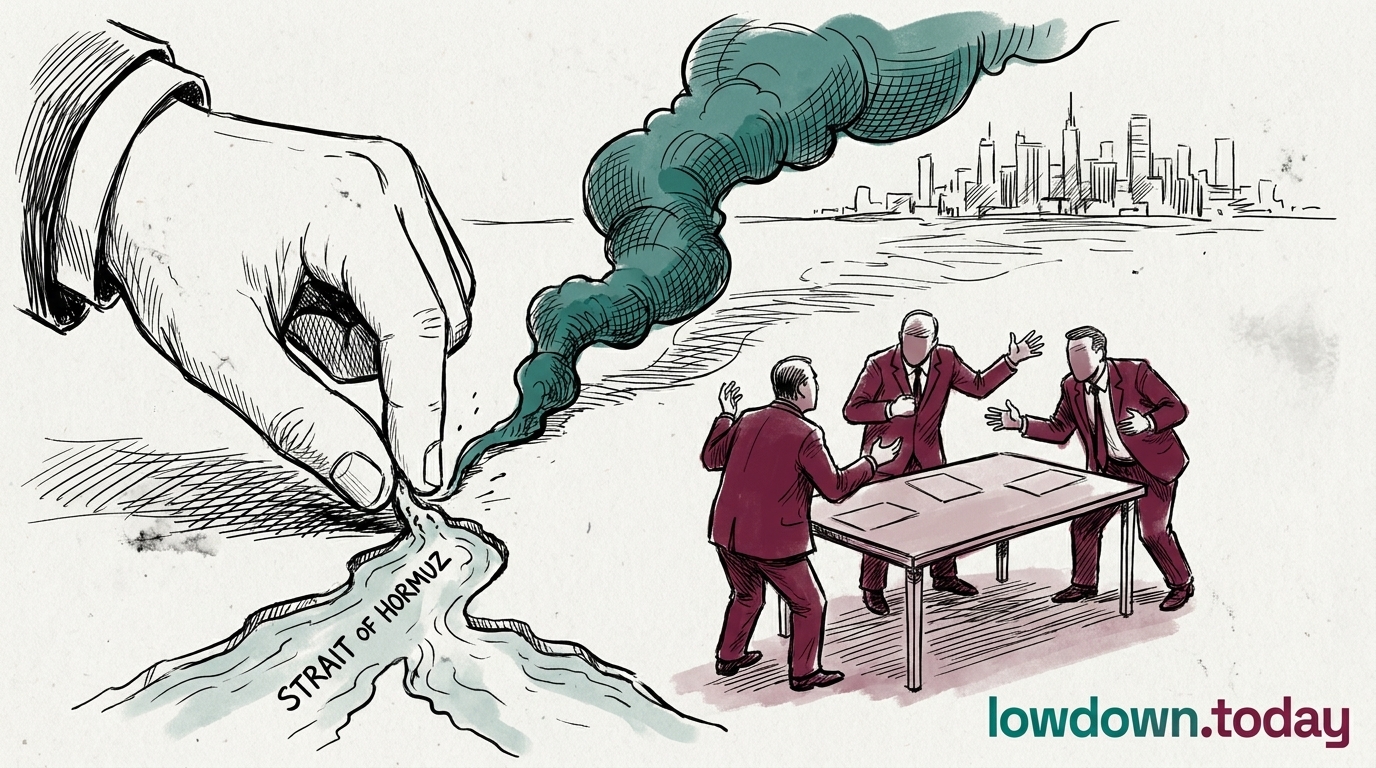
Iran's Persian Gulf Strait Authority published the formal coordinates of its Hormuz controlled zone on 20 May: eastern boundary from Kuh-e Mubarak to Fujairah, western boundary from Qeshm to Umm Al-Quwain, with all vessels inside required to obtain authorisation.

ConflictDeveloping
Key takeaway

Once coordinates are published, neighbours and underwriters must respond on paper or accept by silence. Tehran has forced that choice.

Iran's Persian Gulf Strait Authority (PGSA, the Iranian maritime body administering the toll architecture) published the formal coordinates of its "controlled maritime zone" on Wednesday 20 May 1. The eastern boundary runs from Kuh-e Mubarak on the Iranian coast to southern Fujairah in the UAE; the western boundary runs from the tip of Qeshm Island in Iran to Umm Al-Quwain in the UAE. All vessels inside the zone, per the Iran International notice, must coordinate with the authority and obtain authorisation. PGSA has opened its vessel-submission portal four days earlier and is still withholding the fee schedule it promised .

The coordinates convert what had been operational practice and the Majlis's earlier toll bill into a cartographic-legal claim. Verbal declarations of authority can be walked back; published coordinates cannot, because they trigger a written obligation on neighbours and flag states. The United Arab Emirates has not, as of writing, published a counter-coordinate set, which leaves Emirati silence as a maritime-law response.

The insurance consequence runs through Lloyd's of London. Until Wednesday, underwriters had a verbal toll claim and a portal whose fee schedule remained unwritten. With coordinates on a chart, the boundary can be modelled: tanker routes can be plotted against the zone, war-risk premium tiers can be drawn against entry and exit lines, and the structural insurance layer Goldman Sachs and Morgan Stanley flagged on 12 May now has the cartographic input it needs to price.

Tehran chose to publish coordinates while withholding the fee, and the asymmetry reads as deliberate. The chart converts the zone into a legal fact; the missing fee preserves Iranian discretion over what compliance actually costs. Flag states and underwriters now have to accept or reject the cartography on paper, while Tehran retains the room to set the price later.


Deep Analysis

In plain English

Iran's newly formed Persian Gulf Strait Authority published precise GPS-style boundary coordinates for the maritime zone it says it controls at the Strait of Hormuz. This is the narrow waterway through which roughly 20% of the world's oil passes. Before this, Iran had made verbal statements claiming it had authority over ships passing through. Publishing exact coordinates is a significant step up: it creates a written, mappable boundary that other countries and shipping companies now have to formally respond to or ignore on the record. Iran is saying: all ships inside this zone need to get our permission. It has not yet published what it will charge for that permission, which appears deliberate; Iran gets the legal claim on paper while keeping flexibility on the price. Shipping insurers and naval commanders now have a specific map they must account for, even if they do not accept its legal validity.

What could happen next?
  • Precedent

    Flag states that do not publish formal counter-coordinates within 90 days risk having their silence interpreted as acquiescence under customary international law. The UAE, as a state whose own coastline provides two of the PGSA zone's four boundary reference points, faces the most immediate pressure to respond on paper.

    Short term · Suggested
  • Consequence

    Lloyd's of London underwriters now have the cartographic input needed to model war-risk premiums against specific vessel entry and exit points in the declared zone. The coordinate publication enables tiered premium structures; vessels transiting the zone pay a higher premium than vessels skirting the boundary; which partially implements the insurance-layer effect of the PGSA architecture without Iranian enforcement.

    Immediate · Assessed
  • Risk

    The withheld fee schedule creates a second-stage legal moment: when PGSA publishes its tariff, flag states and Rubio's 'completely illegal' position will face a concrete enforcement test. The coordinate publication without a fee is a deliberate staging that preserves Iranian discretion on timing.

    Short term · Assessed
First Reported In

Update #105 · Khamenei keeps the uranium; House pulls the vote

Iran International· 22 May 2026
Read original
Different Perspectives
Oil markets / Lloyd's of London
Brent fell to near $87.33 on 80 per cent deal-probability pricing, but Lloyd's has not de-listed Hormuz from its war-risk register and shipping diversions continue at 139 vessels. Insurance markets are lagging futures: physical risk remains while financial markets have spent the good news before the paper exists.
India
India
Modi is expected to raise the deaths of three Indian sailors in the 11 June CENTCOM strike on the MT Settebello with Trump at G7 sidelines, the first non-party leader to put the blockade's human cost into a formal bilateral. New Delhi is also a major Iranian oil buyer whose import volumes the sanctions-relief terms will govern.
Israel (Netanyahu)
Israel (Netanyahu)
Netanyahu stated Israel is not party to the deal on 12 June; Defence Minister Katz ruled out the Lebanon withdrawal Iran's draft demands, inserting a third blocker the US-Iran negotiating channel cannot resolve. Israel's position tethers Hormuz reopening to a Lebanon settlement Washington has not brokered.
Pakistan (mediator, Sharif/Naqvi)
Sharif declared a final agreed text on 12 June before either principal confirmed it, running two Tehran visits in under a week without securing a written IRGC or Khamenei response. Islamabad's incentive to claim a diplomatic win outpaces its standing to deliver either capital's signature.
Iran foreign ministry (Araghchi)
Araghchi declared digital signing within days while setting dilute-in-Iran as a non-negotiable red line on the 440.9 kg HEU stockpile, a standing Tehran position he cannot override without authorisation from Khamenei, reachable only by courier. The FM track is sprinting to close before the IRGC reasserts control.
Trump administration / CENTCOM
Vance called the deal still TBD on 12 June while CENTCOM downed Iranian drones over Hormuz for a second consecutive night and the White House register stayed blank. Washington holds the ship-out position on HEU and has not signed an Iran instrument in over 100 days of conflict.



