Skip to content
You can now search across every topic, entity and event.What's new
Iran Conflict 2026
10MAY

Bahrain and Qatar sign Hormuz coalition pact

3 min read
14:22UTC

The UK and France co-convened 38 governments and 26 signed the Multinational Military Mission for the Strait of Hormuz on 12 May, putting Bahrain and Qatar on Western coalition paper for the first time since the war began.

ConflictAssessed
Key takeaway

Bahrain and Qatar signed a 26-nation Hormuz coalition; Washington did not sign and the mandate awaits a permissive environment.

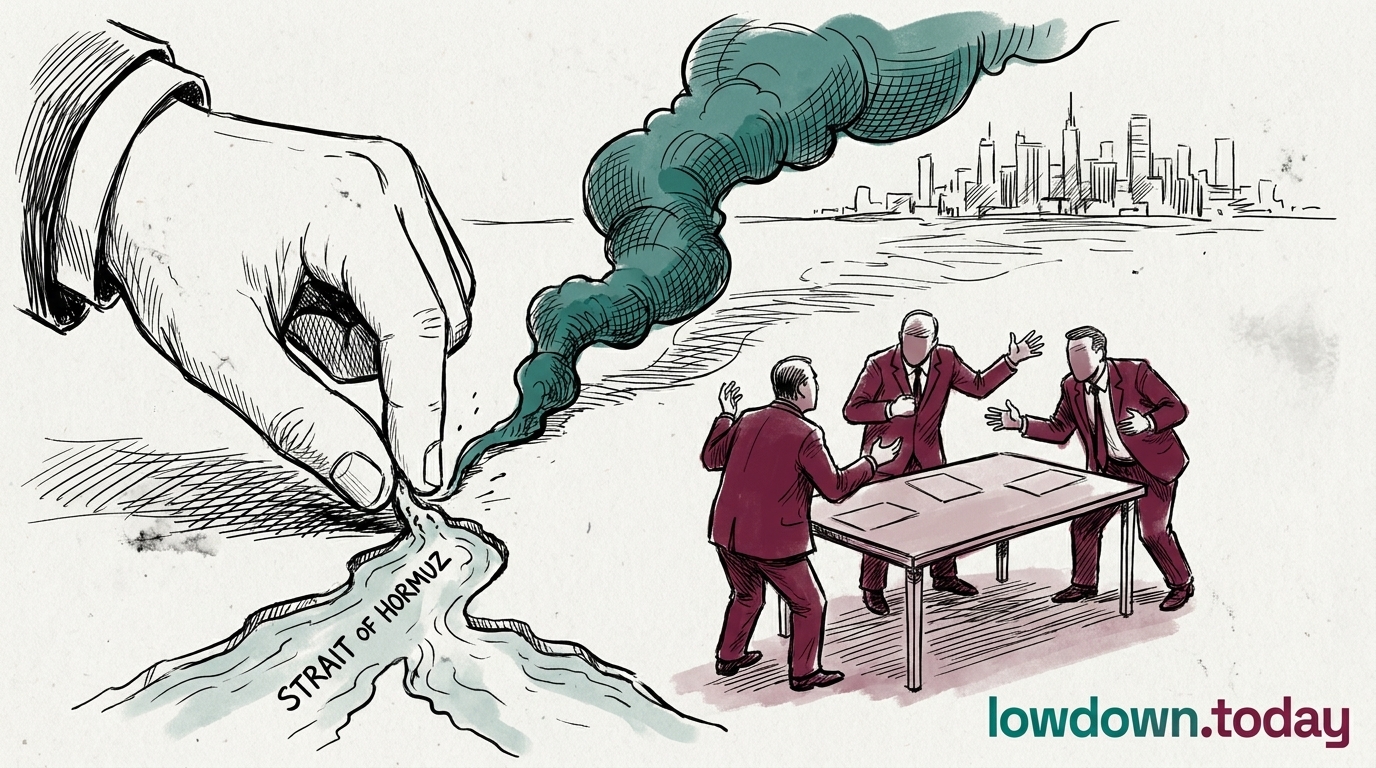
Twenty-six governments signed a joint statement on Tuesday 12 May formalising the Multinational Military Mission for the Strait of Hormuz, with Bahrain and Qatar appearing on Western Hormuz Coalition paper for the first time since the war began. The UK and France co-convened 38 nations at the Paris conference, and the statement was published on GOV.UK on Thursday 14 May 1. The mandate covers freedom of navigation, civilian shipping support, and naval mine clearance, all anchored in UNCLOS transit-passage rights.

The UK MoD had announced Typhoons two days before the signing and Royal Navy HMS Dragon had sailed for the Gulf the day before that ; the joint statement is the institutional output of the Northwood planning process that began after the Paris conference. Operations will begin only 'in a permissive environment' 2, a trigger that mirrors the Paris formula and binds deployment to whatever ceasefire architecture emerges. No rules of engagement were published, no commander was named, and no deployment date was set.

Counter-perspective: Bahrain and Qatar already host US Fifth Fleet and Al Udeid Air Base respectively, so a coalition signature is a low-cost confirmation of existing hosting realities rather than a fresh military commitment. The diplomatic weight sits in the symbolism of two Gulf states publicly aligning against Iran's bilateral passage doctrine while bilateral deals with Iraq and Pakistan run in parallel.

The United States, the only Western belligerent in active operations, signed neither this document nor any Iran executive instrument through Day 78 of the conflict ; the War Powers Act clock keeps running . Twenty-six European, Indo-Pacific and Gulf governments now stand behind a permissive-environment mandate that Washington has not endorsed, and that Tehran's parallel bilateral track is structured to make impossible.


Deep Analysis

In plain English

Twenty-six countries, including Bahrain and Qatar in the Gulf, formally agreed on 12 May to protect shipping through the Strait of Hormuz once the conflict ends. Think of it as forming a neighbourhood watch for the world's most important oil corridor. The group includes Britain, France, Germany, Japan, South Korea, Australia, and Canada. No ships will actually deploy until conditions are 'permissive', meaning the fighting must stop first. Britain and France convened 38 nations to produce the 12 May document, yet no military commander has been named, no deployment date set, and no rules of engagement published. The three missing pieces are also what P&I insurers say they need before they can reopen war-risk cover for the strait.

Deep Analysis
Root Causes

The US absence from the coalition instrument reflects a structural constraint: Washington cannot simultaneously lead the offensive strike campaign under a Truth Social-only authorisation basis and co-sign a multilateral defensive-passage document without forcing a congressional debate over the war's legal architecture. The coalition therefore fills the vacuum left by zero signed US Iran instruments across 78 days.

Bahrain and Qatar's appearance on the paper follows from a second structural driver: both governments face internal audiences who read coalition neutrality as strategic vulnerability. Bahrain hosts the US Fifth Fleet within range of Iranian strike systems; Qatar hosts CENTCOM's Al Udeid Air Base and depends on the strait for 100% of its LNG export revenue. Both states signed as the least-costly means of managing that exposure.

What could happen next?
  • Consequence

    The 'permissive environment' trigger means the coalition cannot deploy until a ceasefire exists, giving Iran leverage over the timing of any Western naval presence in the strait.

    Short term · 0.82
  • Precedent

    The US absence from the coalition paper establishes a template for post-conflict Hormuz governance led by Europeans and Gulf states, not Washington, which may persist beyond this conflict.

    Medium term · 0.71
  • Risk

    Without a named commander or rules of engagement, individual coalition members may re-evaluate their commitment as domestic conditions shift, eroding the coalition before it activates.

    Short term · 0.68
First Reported In

Update #99 · Two Hormuz papers; Washington on neither

GOV.UK· 16 May 2026
Read original
Different Perspectives
Oil markets / Lloyd's of London
Brent fell to near $87.33 on 80 per cent deal-probability pricing, but Lloyd's has not de-listed Hormuz from its war-risk register and shipping diversions continue at 139 vessels. Insurance markets are lagging futures: physical risk remains while financial markets have spent the good news before the paper exists.
India
India
Modi is expected to raise the deaths of three Indian sailors in the 11 June CENTCOM strike on the MT Settebello with Trump at G7 sidelines, the first non-party leader to put the blockade's human cost into a formal bilateral. New Delhi is also a major Iranian oil buyer whose import volumes the sanctions-relief terms will govern.
Israel (Netanyahu)
Israel (Netanyahu)
Netanyahu stated Israel is not party to the deal on 12 June; Defence Minister Katz ruled out the Lebanon withdrawal Iran's draft demands, inserting a third blocker the US-Iran negotiating channel cannot resolve. Israel's position tethers Hormuz reopening to a Lebanon settlement Washington has not brokered.
Pakistan (mediator, Sharif/Naqvi)
Sharif declared a final agreed text on 12 June before either principal confirmed it, running two Tehran visits in under a week without securing a written IRGC or Khamenei response. Islamabad's incentive to claim a diplomatic win outpaces its standing to deliver either capital's signature.
Iran foreign ministry (Araghchi)
Araghchi declared digital signing within days while setting dilute-in-Iran as a non-negotiable red line on the 440.9 kg HEU stockpile, a standing Tehran position he cannot override without authorisation from Khamenei, reachable only by courier. The FM track is sprinting to close before the IRGC reasserts control.
Trump administration / CENTCOM
Vance called the deal still TBD on 12 June while CENTCOM downed Iranian drones over Hormuz for a second consecutive night and the White House register stayed blank. Washington holds the ship-out position on HEU and has not signed an Iran instrument in over 100 days of conflict.



