Skip to content
Briefings are running a touch slower this week while we rebuild the foundations.See roadmap
Iran Conflict 2026
21APR

Hormuz transits climb to 13 on 28 April

4 min read
10:51UTC

Windward logged 13 crossings, up from 9 on 24 April; one outbound vessel ran AIS-dark and CENTCOM revised its blockade tally to 37 vessels.

ConflictDeveloping
Key takeaway

Hormuz transits climbed to 13 on 28 April; CENTCOM revised its blockade tally to 37 vessels.

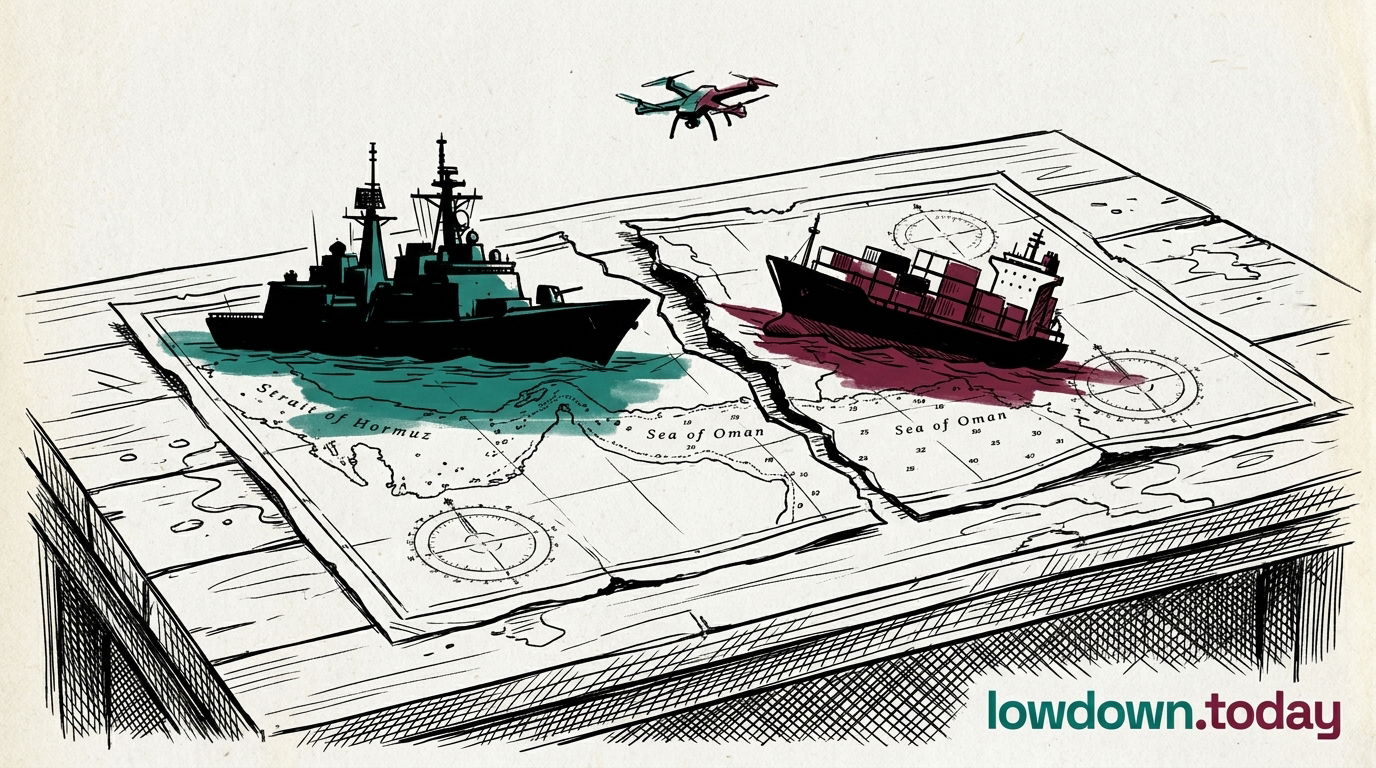
Maritime intelligence firm Windward logged 13 Strait of Hormuz crossings on 28 April 2026, up from 9 on 24 April , comprising 3 inbound and 10 outbound vessels. One outbound vessel ran AIS (Automatic Identification System) dark, with its transponder switched off in a pattern the maritime trade reads as deliberate concealment. The Windward daily, sourced from satellite AIS feeds and proprietary shipping intelligence, is the most granular public record of Hormuz tempo during the blockade.

CENTCOM (US Central Command) logged 37 vessels redirected per the 25 April US forces statement on the Windward read, a downward revision from the 38 vessels counted in the 27 April reporting . The discrepancy may be a US forces revision rather than a real decline; the figure is bracketed pending the next CENTCOM statement. The Windward-sourced clarification on LPG SEVAN corrects the seizure framing carried in : the OFAC-sourced record names the vessel as sanctioned on 25 April among 19 shadow-fleet tankers, not seized at sea. OFAC (Office of Foreign Assets Control) is the Treasury bureau that administers economic sanctions; the 25 April designation was a list-rather-than-takedown action.

Iran is drafting a bilateral transit protocol with Oman to oversee Strait of Hormuz passage , and Foreign Minister Abbas Araghchi told Sultan Haitham in Muscat on 26 April that any reopening must run through Tehran's terms . The 28 April rise to 13 transits sits inside that diplomatic envelope, not outside it. Three inbound versus ten outbound implies cargo running out faster than freight running in, with shadow-fleet operators clearing existing positions before any 1 May reset. The single AIS-dark outbound continues a baseline opacity rate Windward reported running at roughly 13 per cent on 24 April ; concealment tracks with the OFAC shadow-fleet designation and the wider sanctions architecture pressuring Iranian cargo carriers.

CENTCOM has logged 37 vessels redirected over the blockade and reframed the LPG SEVAN status from seizure to sanction inside three days, the tightest correction interval since the operation opened on 28 February. Brent at $111.16 sets the price record running alongside the operational tempo, and Windward's daily Hormuz transit count carries the only granular public ledger sitting between the two.

Deep Analysis

In plain English

The Strait of Hormuz is a narrow channel through which around a fifth of all the world's oil normally passes. Before the war started, about 135 ships transited each day. On 28 April, only 13 ships made the crossing, according to the tracking company Windward. That is roughly 10% of normal traffic. One of those ships turned off its tracking signal, which tanker operators do when they want to avoid being detected. The slow traffic is why oil prices are so high: the world's most important oil route is nearly completely blocked.

What could happen next?
  • Consequence

    CENTCOM's revised tally of 37 vessels redirected (down from 38) represents the first downward revision of the blockade figure since enforcement began, which may reflect a deliberate US forces communications correction rather than any actual change in enforcement intensity.

  • Risk

    AIS-dark transits, as documented on 28 April, reduce CENTCOM's situational awareness of actual vessel movements through the strait, creating potential for miscalculation if an untracked vessel crosses the US enforcement perimeter without prior identification.

First Reported In

Update #83 · UAE quits OPEC, war signs nothing

Windward· 29 Apr 2026
Read original
Causes and effects
This Event
Hormuz transits climb to 13 on 28 April
Hormuz transits at 13 sit at roughly a quarter of the pre-war daily baseline, but the move higher matters: it tracks Iran's revised ceasefire signalling and the Pakistan mediator track, not a CENTCOM relaxation. The CENTCOM tally of 37 vessels redirected, revised down from 38 logged on 27 April {{EVREF:/t/iran-conflict-2026/81/centcom-blockade-widens-past-hormuz-strait/}}, tightens the operational record alongside the LPG SEVAN seizure-versus-sanction correction.
Different Perspectives
Israel
Israel
IDF Chief Eyal Zamir declared on 3 June there was no ceasefire for his forces, and strikes killed at least 10 civilians and one Israeli soldier on 4 June. The IDF killed Hezbollah's chief engineer and warned three south Lebanon villages to evacuate on 5 June, advancing into ground the unsigned Washington framework has not caught.
Hezbollah / Lebanon
Hezbollah / Lebanon
Naim Qassem rejected the Washington Lebanon framework on 4 June as "absurd, humiliating and insulting", blocking a ceasefire instrument that required Hezbollah to withdraw north of the Litani before any Israeli withdrawal. Over one million Lebanese remain displaced; the framework's collapse prolongs that toll.
Iran
Iran
Foreign Minister Araghchi publicly coupled the Lebanon ceasefire to the Iran-US nuclear track on 4 June, carrying IRGC authority rather than his own civilian mandate. The IRGC delegation has sent no HEU counter-proposal since Araghchi confirmed no progress that same day; Mojtaba Khamenei's 21 May order to keep the 440.9 kg stockpile inside Iran remains operative.
United States
United States
Rubio placed the Iran-US deal at 95 per cent complete on 4 June while the administration signed no Iran instrument and OFAC designated only Cuban targets. Trump separately disclosed and rejected an airlift plan to collect Iran's HEU stockpile, claiming the material is "entombed", a claim the IAEA cannot verify.
China
China
Beijing's MOFCOM Blocking Rules constrain OFAC enforcement on the mainland; China has not corroborated Trump's verbal account of any bilateral summit, and the rial's failure to hold its Rubio bounce, combined with the IRGC's stablecoin rail closure, increases Chinese yuan-denominated oil-payment exposure through Hormuz.
Bahrain
Bahrain
The IRGC struck Bahrain on 3 June as its sirens sounded and its PAC-3 magazine neared exhaustion; excluded from Rubio's 2 May emergency resupply, Bahrain received a 50-round Federal Register notice on 1 June on an 18-month delivery timeline, meaning it is defending the US Fifth Fleet headquarters on the last rounds it has.