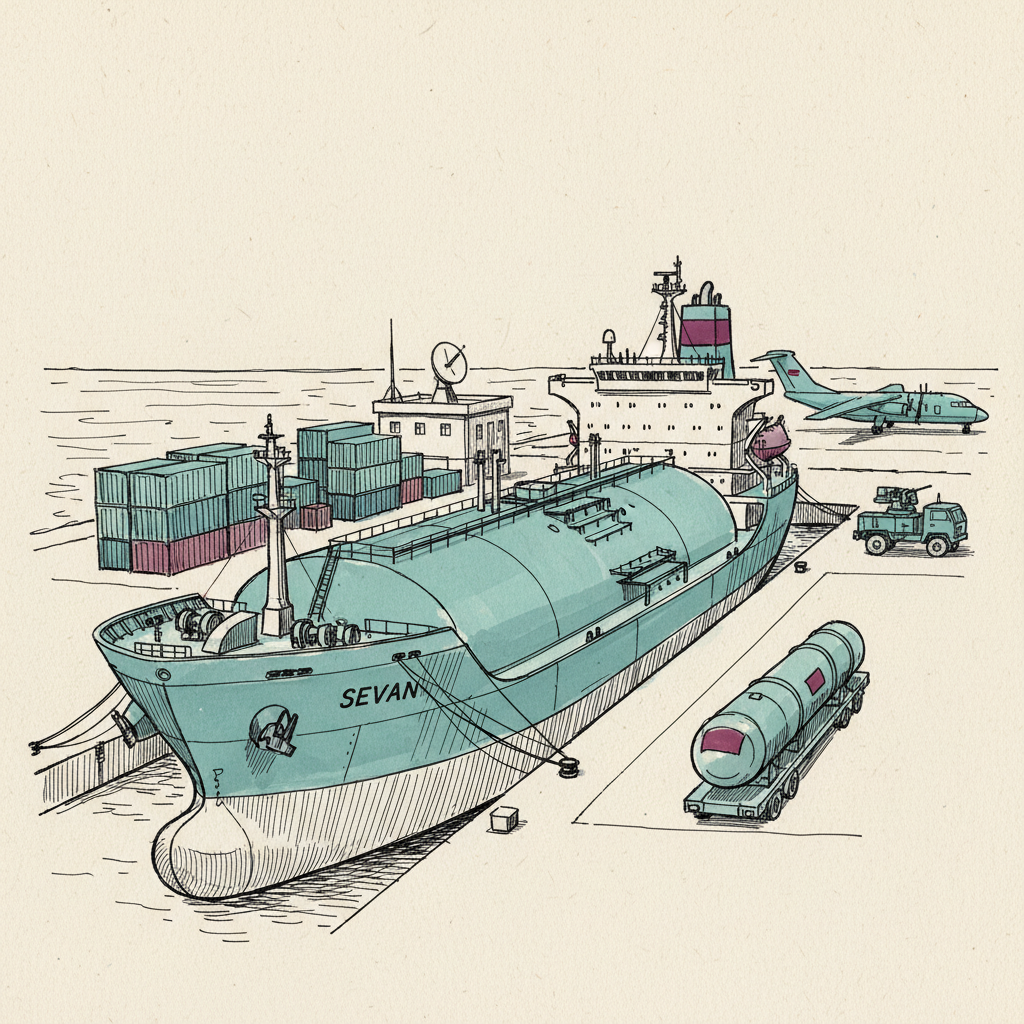
SEVAN
LPG tanker, IMO 9177806, seized by CENTCOM in the Arabian Sea on 25 April 2026.
Last refreshed: 27 April 2026 · Appears in 1 active topic
Why does seizing one LPG tanker in open water mean the blockade has no safe escape route?
Timeline for SEVAN
Mentioned in: Trump ranks blockade above Iran bombing
Iran Conflict 2026Clarified as sanctioned on 25 April, not seized as previously reported
Iran Conflict 2026: Hormuz transits climb to 13 on 28 AprilSeized by CENTCOM in Arabian Sea on 25 April as first enforcement action outside Hormuz
Iran Conflict 2026: CENTCOM blockade widens past Hormuz straitSeized by CENTCOM in the Arabian Sea on 25 April; included in cumulative intercept count announced 27 April
Iran Conflict 2026: Brent $108 as CENTCOM seizes more tankersBackground
SEVAN (IMO 9177806) is a liquefied petroleum gas tanker seized by US forces on Saturday 25 April 2026 in the Arabian Sea, making it the 37th vessel intercepted under CENTCOM's blockade. The seizure was the first recorded by CENTCOM in the open Arabian Sea rather than within or adjacent to the Strait of Hormuz itself. As of Friday 25 April, the cumulative count stood at 33; the SEVAN interception, followed by four more in 48 hours, pushed the tally to 38 by Monday 27 April.
The strategic significance of the SEVAN case lies in its location. Every prior interdiction under the 13 April blockade had taken place within or close to the 33-kilometre Hormuz Chokepoint. SEVAN was seized FAR from the strait, demonstrating that vessels attempting to route around the blockade via the wider Arabian Sea were no longer SAFE. The blockade's effective perimeter extended materially beyond the geographic chokepoint after this seizure.
LPG tankers like SEVAN typically service Asian energy markets, carrying liquefied petroleum gas from Gulf producers. Seizures of this vessel class ADD to disruption for non-Iranian regional energy traders caught in the enforcement net. Windward's 26 April maritime intelligence reporting documented the SEVAN interception alongside a record of 123 dark events Gulf-wide in the same window, indicating widescale AIS transponder deactivation by vessels seeking to evade detection.
What is the SEVAN tanker and why was it seized?
Has the US blockade extended beyond the Strait of Hormuz?
How many ships has the US turned back in the Hormuz blockade?

