Skip to content
Iran Conflict 2026
20APR

IMO invokes UNCLOS on Hormuz transit tolls

4 min read
10:10UTC

IMO Secretary-General Arsenio Dominguez rejected tolls and discriminatory transit measures on international straits, and surfaced a 58-year-old tripartite scheme the Northwood planners now have to work around.

ConflictDeveloping
Key takeaway

A 58-year-old Hormuz treaty between Iran, Oman and the IMO is the page Northwood now has to write over.

IMO Secretary-General Arsenio Dominguez published a formal statement on 17 April invoking the UN Convention on the Law of the Sea (UNCLOS) and explicitly rejecting "tolls, fees or discriminatory transit measures" on international straits 1. The statement disclosed 20,000 seafarers and 2,000 vessels trapped in the Persian Gulf; each idle hull is accruing hire-day costs that compound whether or not it moves. Crews run out of food and fuel before governments run out of patience.

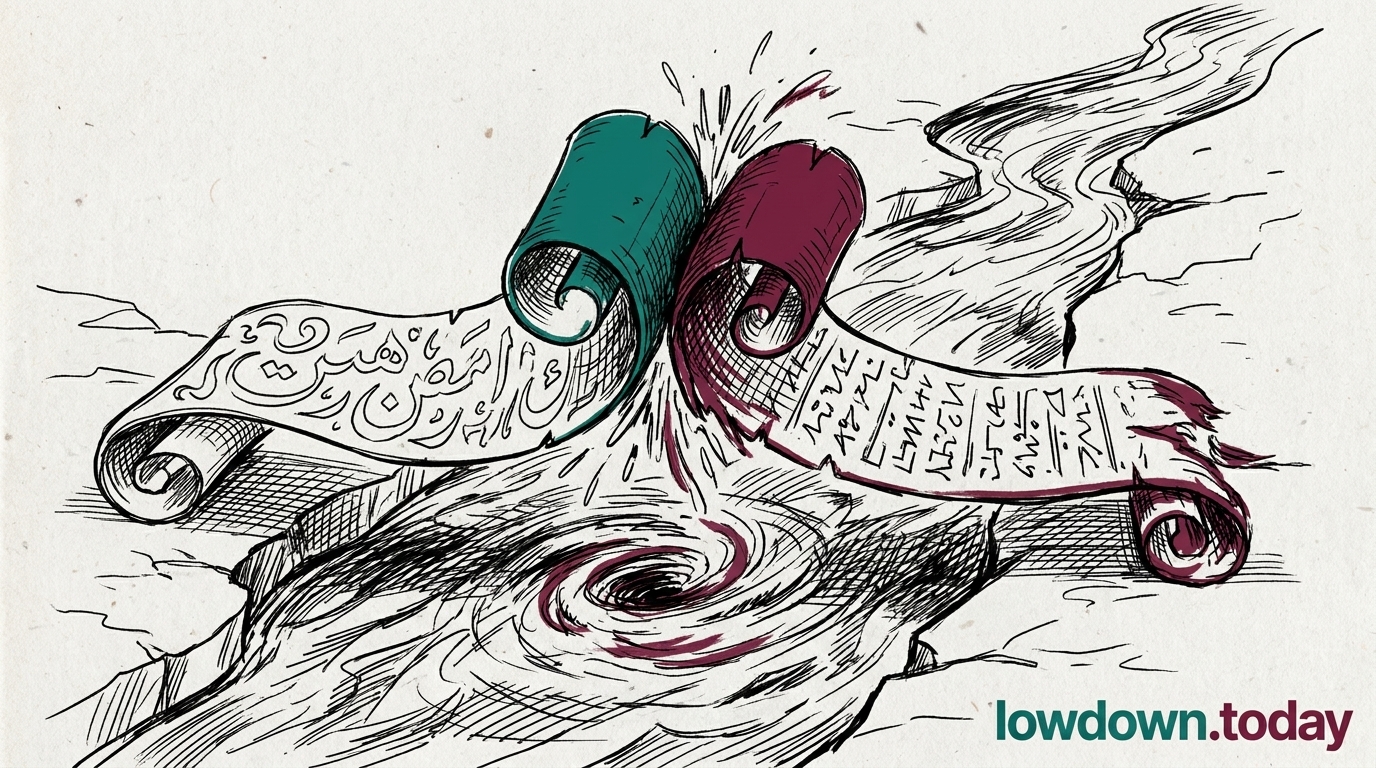
Dominguez also surfaced the 1968 Traffic Separation Scheme, a tripartite framework agreed between Iran, Oman and the IMO that has governed movement through the strait for 58 years. A new framework drafted today writes on a page that already has signatures. The officers convening at Northwood, the UK's Permanent Joint Headquarters, inherit a legal architecture older than most of the rules-of-engagement planners in the room .

The planners are drafting operating rules for a 51-nation coalition behind the Hormuz freedom-of-navigation mission , and they must either incorporate the 1968 scheme or supersede it. In international maritime law the first credible framework usually holds while later ones negotiate against it. The Paris posture bound deployment to "strictly defensive, when conditions are met", language that ties the mission to whatever ceasefire architecture emerges and inherits the Paris political ceiling before the operational ceiling is written.

The Grossi counter-point, that verification without inspectors is an illusion , applies equally here: maritime rules without a littoral signature are rules a warship cannot cite at sea. Saudi Arabia and the Gulf Cooperation Council have not signed on, and the United States is not at the table. A counter-view from European naval jurists is that UNCLOS Article 38 on transit passage gives Northwood enough standing to operate without Gulf signatures; that reading still does not solve the enforcement question when a Gulf coastguard refuses to coordinate.

Deep Analysis

In plain English

The International Maritime Organization (IMO) is the United Nations agency responsible for rules at sea. On 17 April its Secretary-General Arsenio Dominguez published a formal statement saying that what Iran and the US are doing in the Strait of Hormuz violates international maritime law, specifically a treaty called UNCLOS (the United Nations Convention on the Law of the Sea), which says countries cannot charge tolls or block innocent passage through international straits. Dominguez also revealed that an old agreement from 1968, signed by Iran, Oman and the IMO itself, has governed how ships move through Hormuz for 58 years. Any new rulebook that Britain and France write at Northwood this week has to deal with that existing agreement or it will have no legal foundation. Dominguez also disclosed that 20,000 sailors and 2,000 ships are currently stuck in the Persian Gulf, unable to move.

Deep Analysis
Root Causes

The 1968 Traffic Separation Scheme exists because Iran, Oman and the IMO needed a common framework to manage tanker traffic through a 33km chokepoint carrying 20% of global oil. Its structural weakness is that it was designed as a cooperative peacetime instrument: it has no enforcement mechanism beyond the IMO's authority to publish and the flag states' willingness to comply.

The IRGC Navy's four-condition order (event-00) does not merely conflict with the 1968 scheme. It supersedes it in fact, because the Guard Corps controls the physical enforcement. Dominguez's invocation of UNCLOS changes the legal record without changing who is armed in the strait.

What could happen next?
  • Precedent

    Dominguez's UNCLOS invocation creates a formal evidentiary record for future war-damage arbitration, anchoring shipping companies' claims against Iranian state assets in third-country courts.

  • Consequence

    Northwood's rules-of-engagement output faces a pre-existing legal constraint: any framework that does not incorporate the 1968 scheme will lack Oman's and Iran's signature and will be unenforceable against vessels asserting 1968 rights.

First Reported In

Update #74 · Two unsigned rulebooks collide at Hormuz

International Maritime Organization· 20 Apr 2026
Read original
Different Perspectives
Global South governments (Indonesia, Brazil, South Africa)
Neutrality was possible when the targets were military. 148 dead schoolgirls made it impossible — no government can explain that away to its own citizens.
Trump administration
Oscillating between claiming diplomatic progress and threatening escalation, while deploying additional ground forces to the Gulf.
Israeli security establishment
Fears a rapid, vague US-Iran agreement that freezes military operations before the IDF achieves what it considers full strategic objectives. A senior military official assessed the campaign is 'halfway there' and needs several more weeks.
Iraqi government
Iraqi government
Iraq's force majeure is the position of a non-belligerent whose entire petroleum economy has been paralysed by a war between others — storage full, exports blocked, production being cut with no timeline for resumption.
Russia — Ambassador Vassily Nebenzia
Moscow calibrated its position between Gulf states and Iran: abstaining on Resolution 2817 rather than vetoing it, signalling it would not block protection for Gulf states, while refusing to endorse a text that ignores the US-Israeli campaign it regards as the conflict's proximate cause. Russia proposed its own ceasefire text — which failed 4-2-9 — allowing Moscow to claim the peacemaker role while providing Iran with satellite targeting intelligence, a duality consistent with its approach in Syria.
France — President Macron
France absorbed its first combat death in a conflict it has publicly declined to join. The killing of Chief Warrant Officer Frion in Erbil forces Macron to choose between escalating involvement and accepting casualties from the margins.