Skip to content
You can now search across every topic, entity and event.What's new
Iran Conflict 2026
11APR

Seven VLCCs at Chabahar, three at Hormuz

3 min read
11:03UTC

Lowdown Wire

ConflictDeveloping
Key takeaway

Seven VLCCs gathered at Chabahar on 20 April while only three vessels transited the strait the same week.

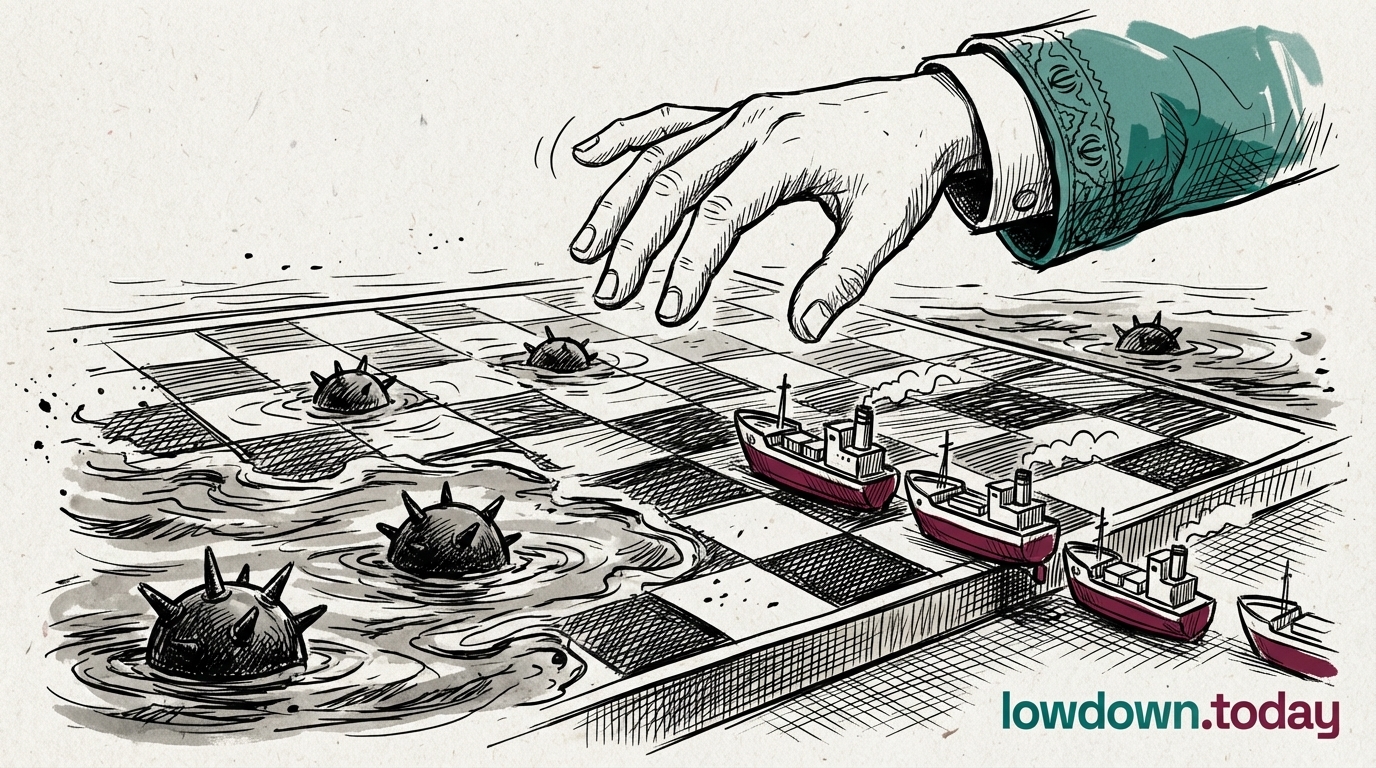
Windward detected seven Very Large Crude Carriers (VLCCs, the standard two-million-barrel oil tankers that carry Gulf crude) near Chabahar on Iran's Makran coast on 20 April 1. Chabahar is Iran's only deep-water port on the Arabian Sea and sits east of the geometry Admiral Brad Cooper's narrower port-interdiction order covers. The same Windward log counted three strait transits the day before, a fraction of the 135-per-day pre-war baseline and the lowest count since the blockade began.

Earlier mid-transit reroutings from India to Chinese ports ahead of the OFAC General License U lapse established the Chabahar-routing adaptation; seven VLCCs at anchor there indicate the same workaround now running at capacity. The USS Spruance's firing into the Touska's engine room earlier in the same window hardened the Hormuz risk premium on the kinetic side, but the structural story is sideways: vessels avoiding the strait do not need the strait reopened to clear cargo.

Deep Analysis

In plain English

The US Navy has been blocking oil tankers from using the Strait of Hormuz, the narrow sea passage through which most Gulf oil normally flows. Iran has responded by loading oil onto tankers at a different port, Chabahar, which sits on Iran's other coastline , the Arabian Sea side , and has no connection to the strait at all. Windward, a maritime tracking company, spotted seven large tankers near Chabahar on 20 April. Only three vessels transited the strait in the same period. This matters because it shows the blockade has not stopped Iran from shipping oil , it has just changed which port the oil leaves from. Chabahar is operated under a 2016 agreement with India, which adds a political complication: any US attempt to block Chabahar would directly affect India's interests.

Deep Analysis
Root Causes

CENTCOM's written blockade order was drafted around the Strait of Hormuz and Iranian Gulf ports, reflecting the operational assumption that Iranian crude exports require the strait. Chabahar sits on the Makran coast, outside the Gulf, accessible from the Arabian Sea without any Hormuz transit.

The legal gap was present from the order's inception: Iran never ratified UNCLOS, leaving its domestic maritime law , updated in 2024 to claim jurisdiction over 'hostile-linked vessels' , as the operative legal text on the Iranian side, while the US order covers only Iranian-port traffic rather than the full territorial sea.

India's 2016 Chabahar agreement, originally designed to give Delhi access to Afghan and Central Asian markets bypassing Pakistan, created an operational control structure that places Chabahar partially inside Indian sovereign jurisdiction, complicating any US enforcement action.

What could happen next?
  • Consequence

    Chabahar routing at capacity would reduce the blockade's supply-disruption component while leaving the kinetic risk premium intact, potentially splitting the oil price signal into two separable factors.

    Short term · 0.72
  • Risk

    Any CENTCOM attempt to extend interdiction to Chabahar creates a direct India-US collision over India's 2016 operational rights agreement with Tehran.

    Medium term · 0.78
  • Precedent

    The Chabahar bypass establishes a template for sanctions evasion at ports outside written enforcement geometry, applicable to any future blockade scenario.

    Long term · 0.8
First Reported In

Update #76 · Trump posts an exit Iran can't reach

Windward· 22 Apr 2026
Read original
Different Perspectives
Oil market and P&I insurers
Brent cleared $87 intraday only once CENTCOM's blockade became physical rather than declared, even though P&I Clubs had already excluded Hormuz war risk a week earlier on 7 July: capital hedged ahead of enforcement, but prices moved only after it.
UAE reporting
UAE reporting
UAE reporting placed the Omani tanker deaths at one seafarer against the International Maritime Agency's count of two, the first time in this war that a Gulf state's casualty figures have diverged from an international monitor's.
Jordan
Jordan
Iranian strikes reached Jordan again on 14 July as part of the Gulf-wide retaliation for the Hormuz blockade, extending the conflict's geographic footprint to a state with no direct stake in the strait itself.
Bahrain
Bahrain
Bahrain sounded air-raid sirens on 14 July during Iran's Gulf-wide retaliation, the same day CENTCOM's blockade order and fourth night of strikes pushed the conflict's physical reach into the wider Gulf littoral.
Kuwait
Kuwait
Kuwait intercepted Iranian missiles and drones on 14 July as Tehran's blockade retaliation reached Gulf states beyond Iran's immediate shoreline, confirming Kuwaiti airspace now sits inside Iran's retaliatory envelope.
Oman
Oman
Oman absorbed the war's first tanker casualties in its own waters on 14 July, with two supertankers disabled and seafarers killed, putting the sultanate's shipping lanes directly in the path of the blockade fight for the first time.