Skip to content
Briefings are running a touch slower this week while we rebuild the foundations.See roadmap
Iran Conflict 2026
29MAR

GL 134A lapses toward quiet extension

3 min read
09:10UTC

Treasury's Russian crude waiver expired on 11 April with wire reporting from Reuters, Semafor and Bloomberg pointing to renewal worth roughly $150 million a day to Moscow at current Urals prices.

ConflictDeveloping
Key takeaway

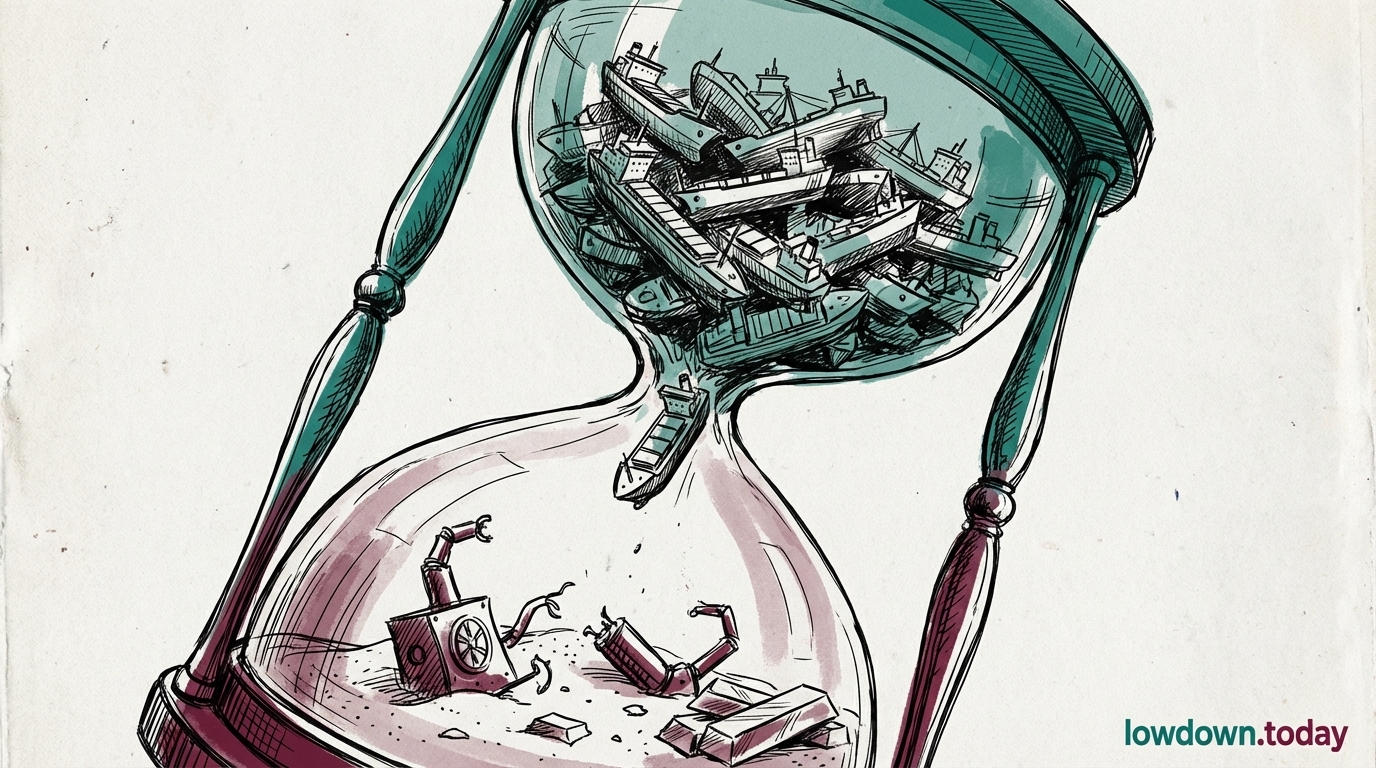
The Russian oil waiver is the same instrument doing the opposite job it was designed for.

General License 134A (GL 134A), the OFAC (Office of Foreign Assets Control) waiver that authorised transactions for Russian crude loaded before 12 March, expired on 11 April. Reuters, Semafor and Bloomberg report, citing people familiar with the discussions, that an extension is coming 1. A Treasury spokesperson offered only that the department "does not preview actions related to our sanctions."

Daniel Fried at the Atlantic Council called on Treasury Secretary Scott Bessent on 8 April to let the waiver lapse and fall back on the price cap. Asian governments led by India and the Philippines are pushing in the other direction. A week ago this was framed as a binary choice at $121 Urals . Bloomberg estimates the waiver is worth roughly $150 million a day in additional Russian budget revenue at $114 to $116 Urals.

One week of that uplift covers a fortnight of Kinzhal strikes. A full year covers a sum the EU has spent months trying to route to Kyiv against Hungarian opposition. The original GL 134 was defensible in March at $73 a barrel as market stabilisation after the Strait of Hormuz closed. At 64% above that price, and with the Iran ceasefire of 8 April partially reopening Hormuz, the same instrument now hands Moscow a surplus the sanctions architecture was designed to prevent. The Russia-Iran corridor that Israel struck at Bandar Anzali last month still runs.


Deep Analysis

In plain English

When the Iran conflict disrupted oil markets in March, the US Treasury issued a temporary waiver allowing banks and traders to continue processing payments for Russian crude already at sea. The idea was to prevent a sudden oil price spike. The waiver was set to expire on 11 April. The problem: when the waiver was issued, Russian oil was selling at $73 per barrel. By expiry it was trading at $114-116. That means every extra day of extension hands Russia roughly $150 million in war-funding revenue that sanctions were supposed to block.

Deep Analysis
Root Causes

GL 134A was issued on 12 March 2026 as a market-stabilisation measure when the Iran war disrupted Gulf crude flows. The structural problem is that the licence's dollar value is oil-price-sensitive: a barrel-price doubling since issuance means the waiver now hands Moscow a windfall the original policy never contemplated.

The secondary cause is bureaucratic path dependency. Once a sanctions waiver is issued to enable active market transactions, financial institutions and energy traders build positions around it. Lapse without a wind-down window triggers counterparty defaults that US regulators are reluctant to own.

What could happen next?
  • Consequence

    Each week of extension at current Urals prices transfers approximately $1.05 billion to Russia, partially offsetting the impact of the EU's phased gas import ban beginning 25 April.

  • Risk

    If the waiver is extended without a firm sunset date, it establishes precedent that sanctions can be indefinitely deferred when market conditions create lobby pressure, weakening the credibility of the entire OFAC architecture.

First Reported In

Update #12 · Three narrowings of US support for Kyiv

Reuters (via Kyiv Independent)· 11 Apr 2026
Read original
Different Perspectives
IAEA
IAEA
Director General Rafael Grossi appeared in person at the UNSC on 19 May and warned that a direct hit on an operating reactor 'could result in very high release of radioactivity'. The session produced a condemnation record but no resolution, and the Barakah perimeter was already struck on 17 May.
Hengaw (Kurdish rights monitor)
Hengaw documented three judicial executions and the detention of Kurdish writer Majid Karimi in Tehran on 19 May, establishing Khorasan Razavi province as the newest geography in Iran's wartime judicial record. The organisation's Norway-based operation continues to surface a domestic repression track running in parallel with every diplomatic and military development.
India
India
Six India-flagged vessels conducted a coordinated cluster transit under PGSA bilateral assurances during the 17 May window, paying no yuan tolls. New Delhi's inclusion in Iran's state-to-state passage track insulates Indian energy supply without requiring endorsement of the PGSA's yuan-toll architecture or alignment with the US coalition.
Pakistan
Pakistan
Pakistan is the only functioning diplomatic bridge between Tehran and Washington. Its role is relay, not mediation in the settlement sense: it conveyed Iran's 10-point counter-MOU in early May, relayed the US rejection, and is now passing 'corrective points' in the third documented exchange of this sub-cycle without either side working from a shared text.
UK and France (Northwood coalition)
Twenty-six coalition members have published no rules of engagement eight days after the Bahrain joint statement; Lloyd's underwriters have conditioned war-risk reopening on written ROE from either Iran or the coalition. Italian and French mine-countermeasures deployments are operating on the in-water clearance task CENTCOM Admiral Brad Cooper's 90% mine-stockpile claim does not address.
Saudi Arabia
Saudi Arabia
Riyadh has not publicly commented on the Barakah strike or the 50-47 discharge vote. Saudi output feeds the IEA's $106 base case; the $5 Brent premium above that model reflects institutional uncertainty no Gulf producer can compress through supply adjustment alone.



