Skip to content
You can now search across every topic, entity and event.What's new
Iran Conflict 2026
22MAR

Pentagon plans to seize Kharg Island

4 min read
05:50UTC

Three Pentagon sources describe an amphibious plan to take Kharg Island — which ships 90% of Iran's crude — even as the president denies any ground operation is coming.

ConflictDeveloping
Key takeaway

Kharg Island seizure would be the most consequential act of economic coercion since World War Two naval blockades.

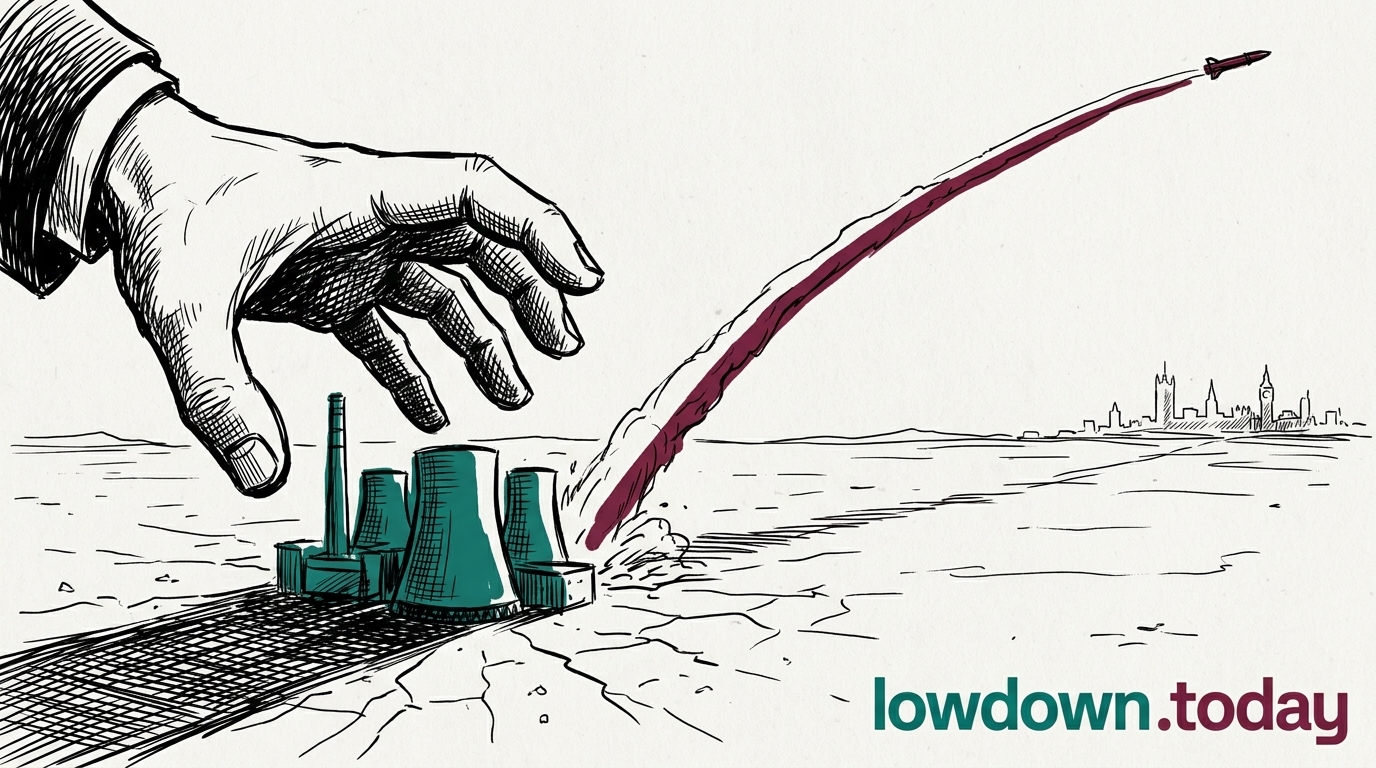
Three unnamed Pentagon sources told CBS News 1 and the Washington Post 2 that seizure of Kharg Island — which handles 90% of Iran's oil exports — is under active planning. The operational concept: Marines take the island by amphibious assault while combat engineers repair its damaged airstrip to receive airborne follow-on forces. Trump denied any ground deployment: "I'm not putting troops anywhere. If I were, I certainly wouldn't tell you."

The force posture assembling in theatre matches the plan described. Monday's deployment order sent the 82nd Airborne Division headquarters and Maj. Gen. Brandon Tegtmeier to the Middle East, with an additional 1,000–2,000 troops preparing to follow. The division's Immediate Response Force — roughly 3,000 paratroopers deployable within 18 hours — is on alert. Two Marine expeditionary units totalling approximately 4,400 personnel are already in the region, and the USS Boxer amphibious ready group carrying 2,200 Marines departed San Diego last week . CBS News had reported as early as 19 March that the Pentagon was making "heavy preparations" for ground forces including Kharg Island seizure options, cancelled 82nd Airborne training exercises, and detention planning for Iranian prisoners . That reporting has NOW been corroborated by additional Pentagon sources and a second major outlet.

Kharg Island sits approximately 25 kilometres off Iran's southern coast in the northern Persian Gulf — a flat, low-lying platform roughly nine kilometres long, with crude loading terminals, tank farms, and an airstrip. Seizing it would sever the Iranian government's primary revenue source at its point of origin rather than destroying the infrastructure outright, preserving the option to resume exports under different terms. But the island lies within range of Iranian shore-based anti-ship missiles, coastal artillery, and whatever remains of Iran's fast-attack craft fleet after CENTCOM reported 140 vessels destroyed . Iran has already stated its response. The Defence Council warned on 22 March that any attack on Iranian coasts or islands would "lead to the mining of all access routes in the Persian Gulf," citing Iran's mining of these waters during the 1980–88 war as "established military practice." That earlier mining campaign damaged the frigate USS Samuel B. Roberts in April 1988, triggering Operation Praying Mantis — the US Navy's largest surface engagement since the Second World War. A Kharg operation would fall squarely within the scope of Iran's stated threat, with consequences for every vessel transiting The Gulf — including tankers shipping crude from Saudi Arabia, Kuwait, and the UAE through the only export corridor not already disrupted.

The gap between presidential denial and military preparation has defined this conflict from its first week. Trump rejected ground troops and nation-building in Iran while the Pentagon cancelled training exercises and prepared detention facilities. Three unnamed Pentagon sources NOW providing a specific operational concept — amphibious assault, airstrip repair, airborne reinforcement — to two major outlets 3 4 points in one of two directions: a coercive signal aimed at Tehran's negotiating posture ahead of possible Islamabad talks, or the plan itself, surfaced by officials who want public debate before an order that would put American ground forces on Iranian sovereign territory for the first time.

Deep Analysis

In plain English

Kharg Island is effectively Iran's oil export tap — nearly all of Iran's oil revenue flows through its terminal facilities. Pentagon planners are reportedly considering having US Marines take the island by sea and then fly in additional troops once the airstrip is repaired. This would not be a bombing raid; it would be a prolonged military occupation of foreign sovereign territory designed to shut off Iran's economy at source. The operational detail in the leak is unusually specific, which itself carries significance.

Deep Analysis
Synthesis

The leak to CBS News and the Washington Post — citing three named Pentagon sources with operational specificity — bears the hallmarks of deliberate coercive signalling rather than a security breach. Publishing precise operational details maximises psychological pressure on Tehran's negotiators without committing to execution. It simultaneously signals to a sceptical Congress that a lower-cost alternative to the $200 billion supplemental exists: economic seizure rather than sustained bombardment. The leak and the diplomacy are not contradictory; they are the same pressure campaign operating on different audiences.

Root Causes

The Kharg planning reflects a strategic doctrine — prominent in AEI and Heritage Foundation national security circles — that Iran's clerical regime cannot survive the elimination of oil revenue, and that seizing the export node is faster than regime attrition through bombardment. This economic strangulation logic has been advocated since the 2018 maximum pressure campaign but never operationalised at this scale or with this degree of force.

Escalation

Planning for territorial seizure — as distinct from aerial strikes — crosses a categorical legal and operational threshold. Occupation of sovereign foreign territory without a UN mandate would constitute an act of war with no post-1945 US precedent outside formally declared conflicts. The 82nd Airborne deployment and Kharg planning together suggest the administration is preparing a ground option in parallel with the diplomatic track, not instead of it.

What could happen next?
1 meaning2 risk1 consequence1 precedent
  • Meaning

    Active Kharg planning confirms the Trump administration's primary negotiating lever is credible threat of economic annihilation, not diplomatic compromise or incremental military pressure.

    Immediate · Assessed
  • Risk

    US Marines operating in confined Gulf waters face sustained IRGC Navy and drone counterattack in an environment where Iran holds significant geographic and numerical advantages.

    Immediate · Assessed
  • Consequence

    Elimination of 90% of Iranian oil export capacity would accelerate regime economic crisis but simultaneously risk humanitarian deterioration affecting tens of millions of Iranian civilians.

    Short term · Assessed
  • Risk

    Chinese and Indian buyers losing Iranian supply would intensify diplomatic pressure on Washington from major powers, potentially including coordinated UN Security Council action.

    Short term · Suggested
  • Precedent

    US occupation of foreign sovereign territory for economic leverage, if executed, would establish a post-1945 coercion precedent with no modern parallel and uncertain long-term norm consequences.

    Long term · Suggested
First Reported In

Update #47 · 82nd Airborne to Gulf; Trump claims victory

CBS News· 25 Mar 2026
Read original
Different Perspectives
Oil market and P&I insurers
Brent cleared $87 intraday only once CENTCOM's blockade became physical rather than declared, even though P&I Clubs had already excluded Hormuz war risk a week earlier on 7 July: capital hedged ahead of enforcement, but prices moved only after it.
UAE reporting
UAE reporting
UAE reporting placed the Omani tanker deaths at one seafarer against the International Maritime Agency's count of two, the first time in this war that a Gulf state's casualty figures have diverged from an international monitor's.
Jordan
Jordan
Iranian strikes reached Jordan again on 14 July as part of the Gulf-wide retaliation for the Hormuz blockade, extending the conflict's geographic footprint to a state with no direct stake in the strait itself.
Bahrain
Bahrain
Bahrain sounded air-raid sirens on 14 July during Iran's Gulf-wide retaliation, the same day CENTCOM's blockade order and fourth night of strikes pushed the conflict's physical reach into the wider Gulf littoral.
Kuwait
Kuwait
Kuwait intercepted Iranian missiles and drones on 14 July as Tehran's blockade retaliation reached Gulf states beyond Iran's immediate shoreline, confirming Kuwaiti airspace now sits inside Iran's retaliatory envelope.
Oman
Oman
Oman absorbed the war's first tanker casualties in its own waters on 14 July, with two supertankers disabled and seafarers killed, putting the sultanate's shipping lanes directly in the path of the blockade fight for the first time.